
Community, Diversity, Sustainability and other Overused Words


Community, Diversity, Sustainability and other Overused Words
Brock, a second-generation Santa Monican and vocal advocate for fiscal restraint during his term, attributes the acceleration of the crisis to the council's progressive shift after last fall's election
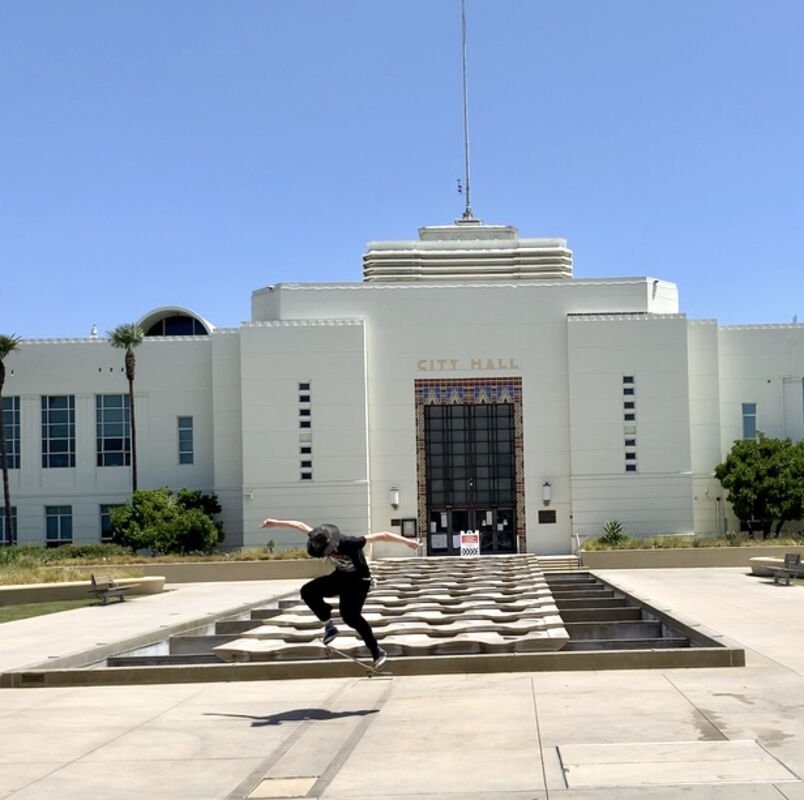
High school kid on a skateboard seems to hover in front of city hall
Once the glittering jewel of Southern California's coastline, Santa Monica now teeters on the edge of financial ruin. With cash reserves slashed to half their pre-pandemic levels and a structural budget deficit projected to persist for years, the city declared a state of fiscal distress just this week. The move, unanimously approved by the City Council on Tuesday, unlocks potential state aid and regulatory flexibility-but it also signals a desperate scramble to avoid deeper cuts or, in the worst case, bankruptcy. At the heart of this crisis? Critics point to the progressive new majority on the City Council, led by Mayor Pro Tem Caroline Torosis, whose policies since taking power in December have exacerbated long-simmering fiscal woes.
The numbers paint a grim picture. Santa Monica's 2025-26 budget, rubber-stamped by the council in June, forecasts $473.5 million in revenue against $484.3 million in expenditures-a $10.8 million shortfall that officials admit will widen. General fund reserves, once buoyed at $300-400 million, have plummeted to $150 million, with $60 million already earmarked for short-term stabilization. The declaration of fiscal distress, a rare step for a city synonymous with wealth and tourism, stems from a toxic brew: post-COVID revenue drops, skyrocketing pension liabilities, and a staggering $229 million in settlements tied to a decades-old sexual abuse scandal involving former police dispatcher Eric Uller. With 180 more claims pending-potentially costing "several million dollars" more-the city's bond rating has been downgraded by S&P Global, making borrowing costlier.
But while the scandal's roots predate the current council, former Mayor Phil Brock, who lost his re-election bid in November 2024, warns that the new leadership's spending spree has turned a manageable problem into a catastrophe. In an exclusive interview following his defeat, Brock pulled no punches: "The City of Santa Monica was broke." He predicted dire options ahead: "The City will either have to issue high interest bonds, a type that may be used for current expenses. Or they will have to consider bankruptcy options."
Brock, a second-generation Santa Monican and vocal advocate for fiscal restraint during his term, attributes the acceleration of the crisis to the council's progressive shift after last fall's election. The November 2024 vote ousted Brock and allies like Oscar de la Torre, paving the way for a new majority aligned with Torosis, newcomers Dan Hall, Ellis Raskin, Barry Snell, and Natalya Zernitskaya. Torosis, a consumer rights attorney and former Rent Control Board commissioner elected in 2022, ascended to mayor pro tem in December 2024, positioning her as the ideological driver of the council's direction.
Under this majority, Santa Monica has doubled down on expansive social programs amid shrinking revenues. Initiatives on homelessness outreach, mental health services, environmental upgrades, and age-friendly infrastructure-while well-intentioned-have surged costs without corresponding revenue boosts. The council's June budget hearing saw heated debates over employee wage hikes to combat rising living costs, even as tourism taxes lagged from pandemic scars and retail exits like Nordstrom's Santa Monica Place closure. "The city of Santa Monica has failed to reign in unnecessary spending for a number of years, and we've known this financial crisis has been looming for a while," Brock said in a recent statement, directly implicating the post-election leadership.
Torosis, who has championed tenant protections and workforce development, defended the approach during Tuesday's council meeting. "These liabilities are ongoing and significant, and they can't be ignored," she said, vowing to balance survivor justice with fiscal stability. Yet detractors argue her majority's reluctance to slash programs-coupled with ambitious plans like reservoir upgrades and a $1.1 million environmental impact report-has ignored Brock's earlier calls for austerity. The city has already nixed beach volleyball hosting for the 2028 Olympics, a blow to tourism revenue dreams.
City Manager Oliver Chi, installed in July under the new regime, called the situation "certainly serious" but stopped short of endorsing cuts. A "budgetary stabilization and overall city realignment plan" is due in late October, promising tough choices on services, staffing, and perhaps parking rate hikes to claw back funds. Employee unions, still smarting from 2020's 400-plus layoffs, brace for more pain.
As Santa Monica marks its 150th anniversary next year, residents wonder if the party's over. Brock's stark post-election warning rings truer than ever: Without swift course correction, high-interest bonds or bankruptcy aren't just options-they're inevitabilities. The new council's idealism, while noble, may have mortgaged the city's future. Time will tell if Torosis's majority can steer the ship before it sinks.


Reader Comments(0)