
Community, Diversity, Sustainability and other Overused Words


Community, Diversity, Sustainability and other Overused Words
Twenty Years Later, It's Time to Face Reality and Derail California's High Speed Rail. It's obvious to any intelligent person that this is just not happening
How Can California Get Rid of Its $18 Billion Train to Nowhere? Who Can Be the Adult in the Room? You Can!
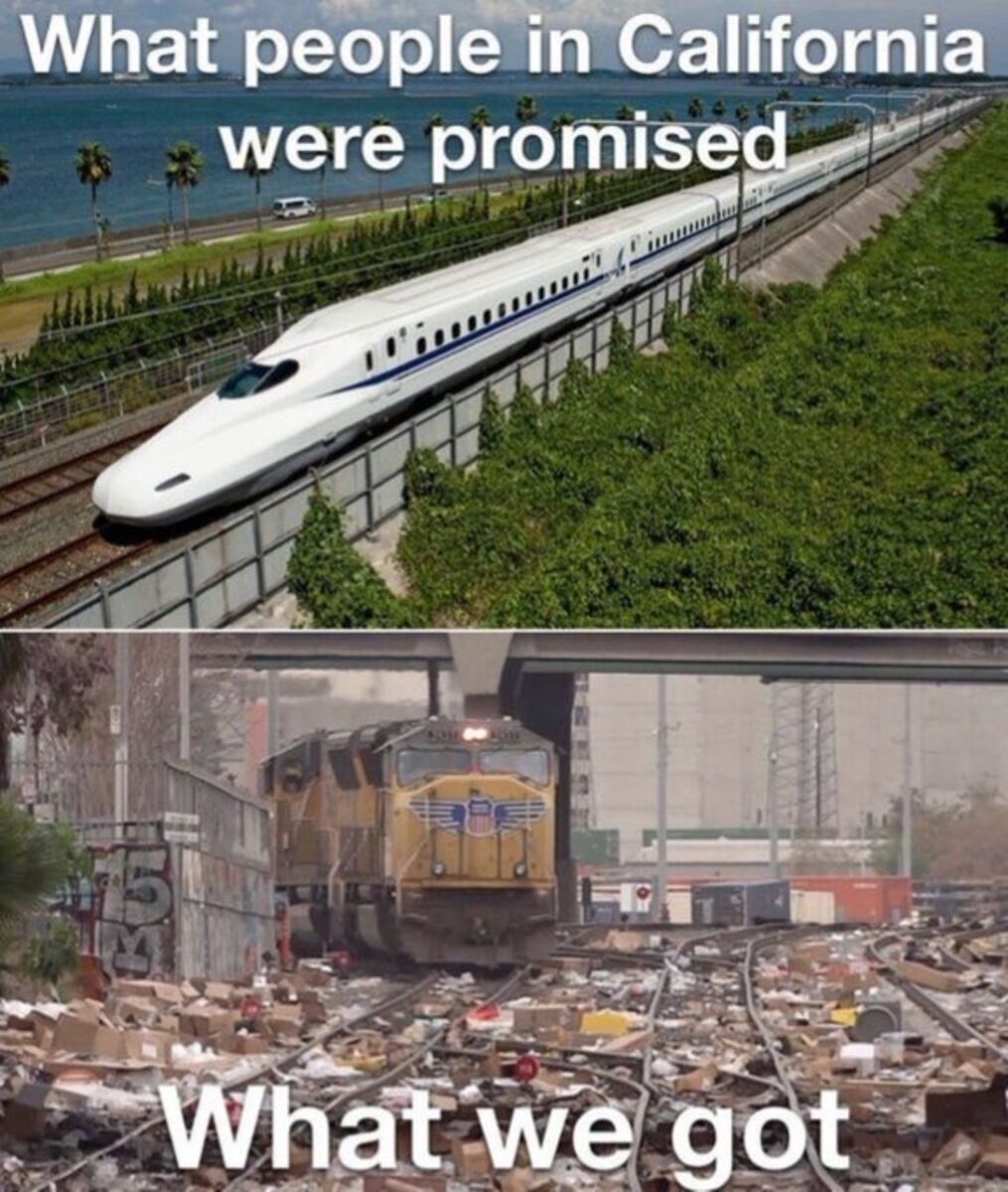
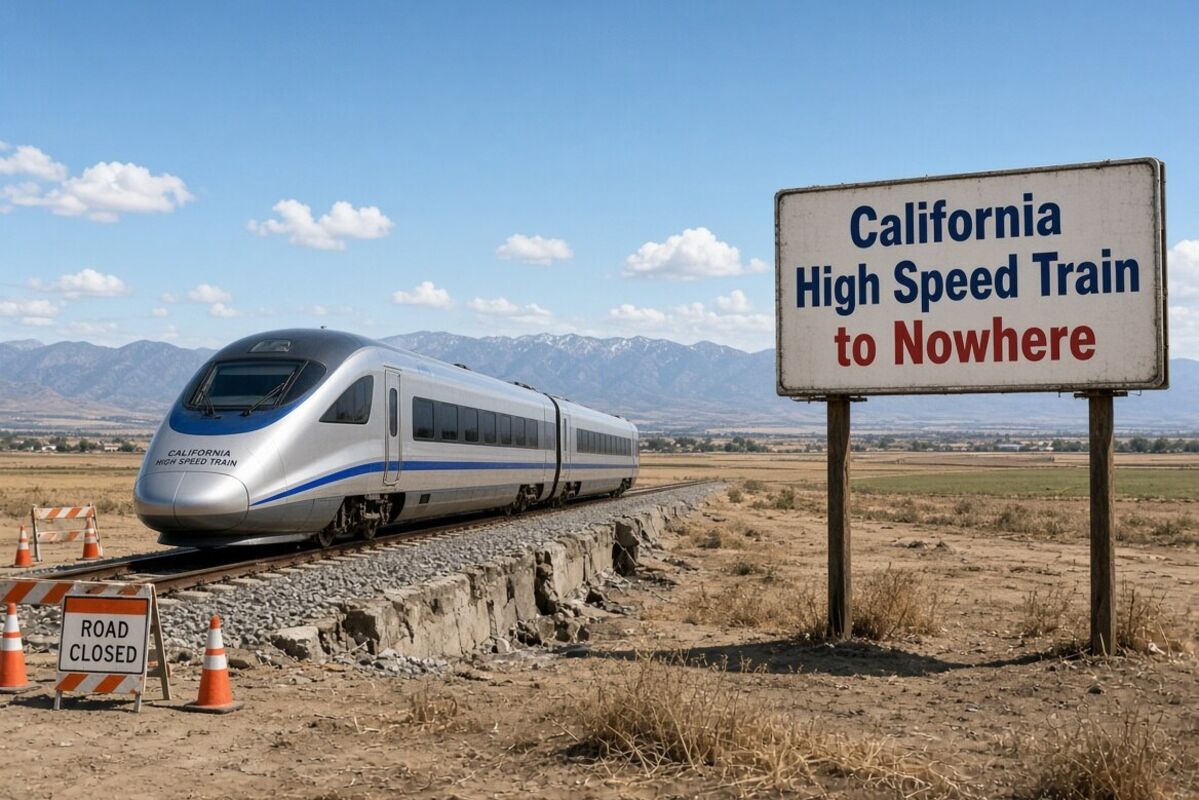
It's obvious now that California's roughly 18-year-old High-Speed Rail Project (authorized by voters in 2008), which has spent on the order of $15–18 billion and still has not laid a single mile of actual high-speed track on the main alignment, is a train to nowhere.
Practically speaking, how can Californians derail it permanently?
The project has produced substantial civil work-about 80 miles of guideway and dozens of structures in the Central Valley-but no operational high-speed rail, no trains ordered after repeated missed deadlines, ballooning costs for even the scaled-back Merced-to-Bakersfield segment (now estimated at $35–36 billion or higher once financing and contingencies are included), and a looming cash crunch.
The project's own Inspector General recently warned that current resources could be exhausted as soon as December 2027 without new financing or borrowing that would add billions more in interest. Federal funding of about $4 billion has already been terminated. Full Phase 1 (San Francisco to Los Angeles area) estimates range from roughly $126 billion upward. Original 2008 promises of a complete system for about $33 billion by 2020 are long gone.
Stopping it for good is not simple because it rests on a voter-approved bond measure (Proposition 1A) and state statutes creating the California High-Speed Rail Authority. No single person can flip a switch. Here is what would actually be required.
1. Starve it of money through the Legislature and Governor (the most direct near-term lever)
Ongoing funding depends heavily on annual state Cap-and-Invest (formerly Cap-and-Trade) allocations-currently structured at about $1 billion a year through 2045-plus any remaining bond proceeds and hoped-for private capital. The State Legislature controls appropriations. It can refuse to continue or redirect those funds, pass legislation prohibiting further expenditures on the project, or amend the Authority's enabling statutes.
The Governor proposes the budget, signs or vetoes bills, and appoints five of the nine voting members of the Authority board. A governor and legislative majority willing to end the project could cut off the cash flow. Without continued state money, construction contracts would wind down, new work would stop, and the project would effectively die of fiscal starvation. This is the practical path with the highest leverage right now, especially given the Inspector General's warning of a near-term funding cliff. But it's obvious that this isn't happening, unless lightning strikes and Steve Hilton is elected Governor.
2. Direct the Authority board to halt work
The board can terminate existing contracts (many include termination-for-convenience provisions, though the state would still owe costs for work performed and wind-down expenses) and refuse to award new ones for track, systems, trains, or extensions. Because the Governor appoints the majority of the board, a change in gubernatorial priorities can rapidly shift the board's direction toward pause or termination. A full statutory dissolution of the Authority would still require legislative action, but the board can stop new spending and construction on its own authority in practice.
3. Take it back to the voters via initiative
Californians could qualify and pass a statewide ballot measure that repeals or amends the remaining operative portions of Proposition 1A, explicitly terminates the project, redirects remaining funds or assets, or dissolves/restructures the Authority. This is the cleanest democratic route and the one that most closely matches how the project was originally authorized. It would override legislative and gubernatorial reluctance if enough signatures and votes are gathered.
Real-world complications
Sunk costs are large. Partial infrastructure (guideways, rights-of-way, environmental clearances) already exists in the Central Valley. Ending the project would involve contractor claims, potential litigation, decisions about what to do with incomplete assets (convert segments to conventional rail? abandon? repurpose?), and political resistance from those who benefit from the spending and jobs. Past attempts by critics to defund it have failed under Democratic legislative majorities that have repeatedly sustained the project, even after ambitions were scaled back.
In short, permanent derailment requires coordinated action by the Legislature and Governor to cut funding and board direction, or a successful voter initiative. Without one of those, the project can limp along on residual state money and partial construction until the next funding crisis forces another reckoning. The current Inspector General warning about a possible 2027 cash shortfall may create the political opening; whether Californians and their elected officials seize it is the practical question.



Reader Comments(0)