
Community, Diversity, Sustainability and other Overused Words


Community, Diversity, Sustainability and other Overused Words
The two charging stations, located at the intersection of Euclid Street and Broadway in Santa Monica, began operations in January 2025
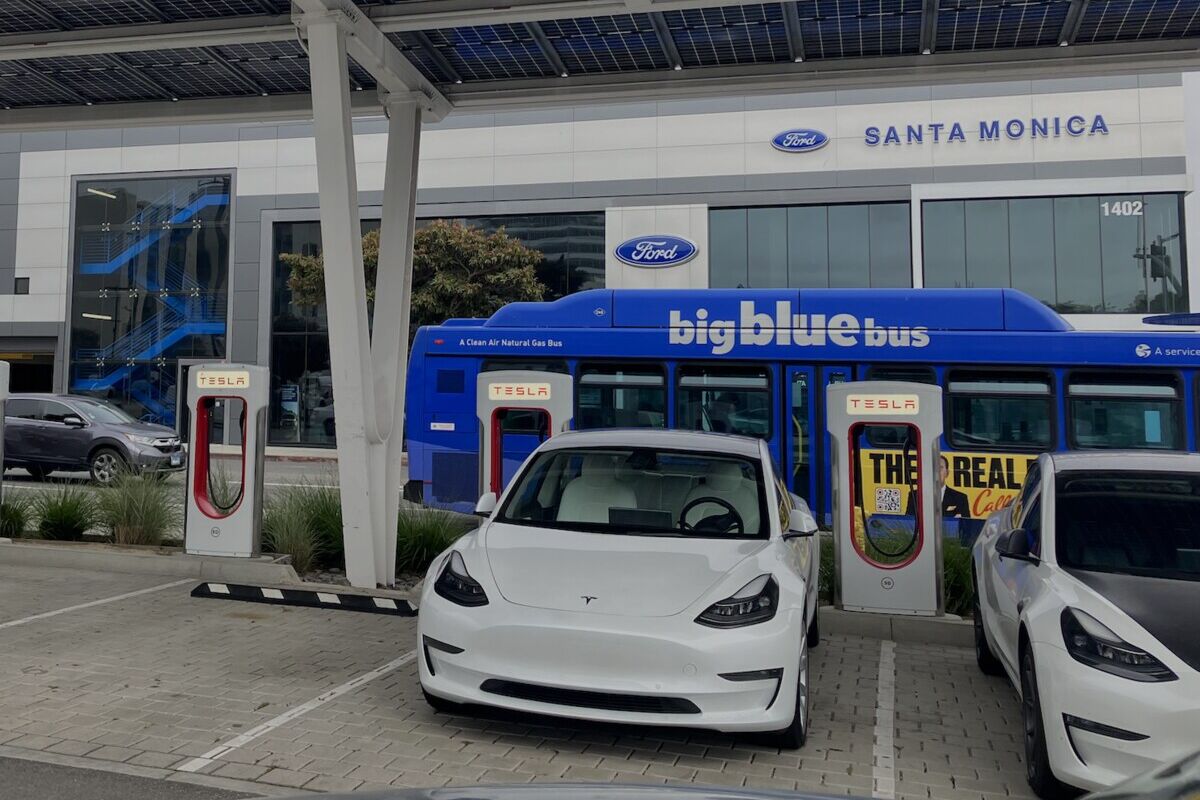
Santa Monica's council is packed with progressive ideologues who love to tout their green credentials. They've passed resolutions on everything from banning plastic straws to declaring climate emergencies. Yet here they are, targeting Tesla
In a escalating dispute highlighting the tensions between technological innovation and residential quality of life, the City of Santa Monica has filed a lawsuit against Waymo, the autonomous vehicle subsidiary of Alphabet Inc., over two electric vehicle charging facilities. The conflict centers on complaints from local residents about noise, lighting, and traffic disruptions caused by the 24-hour operations of these stations, which the city has declared a public nuisance. Waymo, in turn, preemptively sued the city to block any restrictions, setting the stage for a court battle in Los Angeles County Superior Court.
Background of the Dispute
The two charging stations, located at the intersection of Euclid Street and Broadway in Santa Monica, began operations in January 2025. Operated by Voltera on behalf of Waymo, these facilities serve as dedicated hubs for recharging approximately 50 battery-electric autonomous vehicles that form part of Waymo's fleet in the greater Los Angeles area. The sites were approved by the city with permits that explicitly allowed for 24/7 operations, a point Waymo has emphasized in its legal arguments.
However, shortly after the stations opened, nearby residents began voicing concerns. The facilities involve vehicles maneuvering in and out throughout the night, producing high-pitched beeping sounds from reverse alerts, humming motors, flashing lights, and increased traffic on what was previously a quiet residential street. Residents have described the scene as a "mini-Las Vegas," "living next door to a spaceship," or "a circus," with noise echoing off buildings and bright lights disrupting the neighborhood's tranquility.
Specific complaints include sleep disturbances affecting families and individuals. For instance, Paula Achter, a 69-year-old resident who works from home, reported having to adjust her sleeping habits and even relocate her workspace due to the incessant noise. She noted that birds, which once sang in the mornings near her apartment, seem to have relocated elsewhere because of the activity. Victoria Benchuk, a single mother of a 5-year-old autistic child, described how the sounds from motors, beeping, and workers wake her son two to four nights a week, forcing her to sleep in the living room to comfort him—a problem that did not exist before the stations opened.
Protests emerged as early as May 2025, with some residents blocking vehicle paths using orange cones in a tactic dubbed "stacking the Waymos." This led to police involvement, though no arrests were made. Waymo sought but failed to obtain a temporary restraining order against one resident for repeated obstructions.
Timeline of Events Leading to Litigation
January 2025: Charging stations commence operations, prompting initial resident complaints.
May 29, 2025: Public protests intensify, including obstructions of Waymo vehicles.
November 19, 2025: Santa Monica issues an order to Waymo and Voltera to cease overnight charging or face legal action, citing the operations as a public nuisance.
Post-November 2025: Waymo implements mitigations, such as software updates to alter vehicle paths, additional staffing, noise and light barriers, and behavioral changes for vehicles. Negotiations with the city ensue but fail to resolve the issues.
December 15, 2025: A final meeting between the parties ends without agreement.
December 17, 2025: Waymo files a lawsuit against Santa Monica, seeking to declare its operations non-nuisance and prevent enforcement of the city's order.
December 19, 2025: Santa Monica countersues Waymo and Voltera, requesting a court order to limit operations from 11 p.m. to 6 a.m.
Legal Arguments from Both Sides
Santa Monica's position is rooted in protecting public health, safety, and quality of life under long-standing nuisance laws that apply to all businesses. The city argues that the facilities' overnight activities—hundreds of noisy vehicle trips daily, bright lights, and obstructive traffic—interfere unreasonably with residents' well-being. Officials, including City Manager Oliver Chi, have stressed that the lawsuit is not an opposition to electric vehicles or innovative mobility but a necessary enforcement action after months of unsuccessful cooperative efforts. The city remains open to mediation and has proposed operational changes that would not require a full shutdown.
Waymo counters that the city's actions are inconsistent with the original permits, which approved 24-hour operations, and that state laws protect electric vehicle infrastructure. The company denies the existence of a public nuisance and highlights its mitigations, which it claims have reduced noise, light, and congestion. Waymo argues that restrictions would cause irreparable harm to its operations, employees, and customers, emphasizing the stations' role in enabling over a million safe, sustainable rides in Santa Monica, including 50,000 in November 2025 alone. A Waymo spokesperson stated, "Waymo has demonstrated a consistent commitment to being a good neighbor... the City has been unwilling to authorize simple improvements."
Current Status and Implications
As of January 5, 2026, both lawsuits remain pending, with the cases expected to proceed in court. No trial dates have been set, and while both parties express willingness for mediation, negotiations have stalled. The dispute underscores broader challenges in integrating autonomous vehicle technology into urban environments, balancing economic benefits and innovation against community impacts. Santa Monica, facing fiscal pressures, has been criticized by Waymo for potentially deterring investment, while residents continue to advocate for quieter nights.



Reader Comments(0)