
Community, Diversity, Sustainability and other Overused Words


Community, Diversity, Sustainability and other Overused Words
Over 180,000 Chinese came to give birth in America in just one year, including Chinese military officers and high ranking CCP officials
Pregnant chinese woman on the beach in Guam.
WASHINGTON, D.C. — For the first time in U.S. history, a sitting president personally attended Supreme Court oral arguments. President Donald J. Trump was present Tuesday as the justices heard Trump v. Barbara, the high-profile challenge to his January 2025 executive order that seeks to limit birthright citizenship under the 14th Amendment.
The executive order directs federal agencies not to recognize U.S. citizenship for children born in the United States after a certain date if their mother was either unlawfully present or on temporary lawful status — and the father is not a U.S. citizen or lawful permanent resident.
This is the merits stage of the case. The core legal question is whether the order complies with the 14th Amendment’s Citizenship Clause (“All persons born or naturalized in the United States, and subject to the jurisdiction thereof, are citizens”) and the related federal statute, 8 U.S.C. § 1401. Lower courts had blocked the order, citing the longstanding precedent of United States v. Wong Kim Ark (1898).
Massive Scale of Chinese Birth Tourism Spotlighted
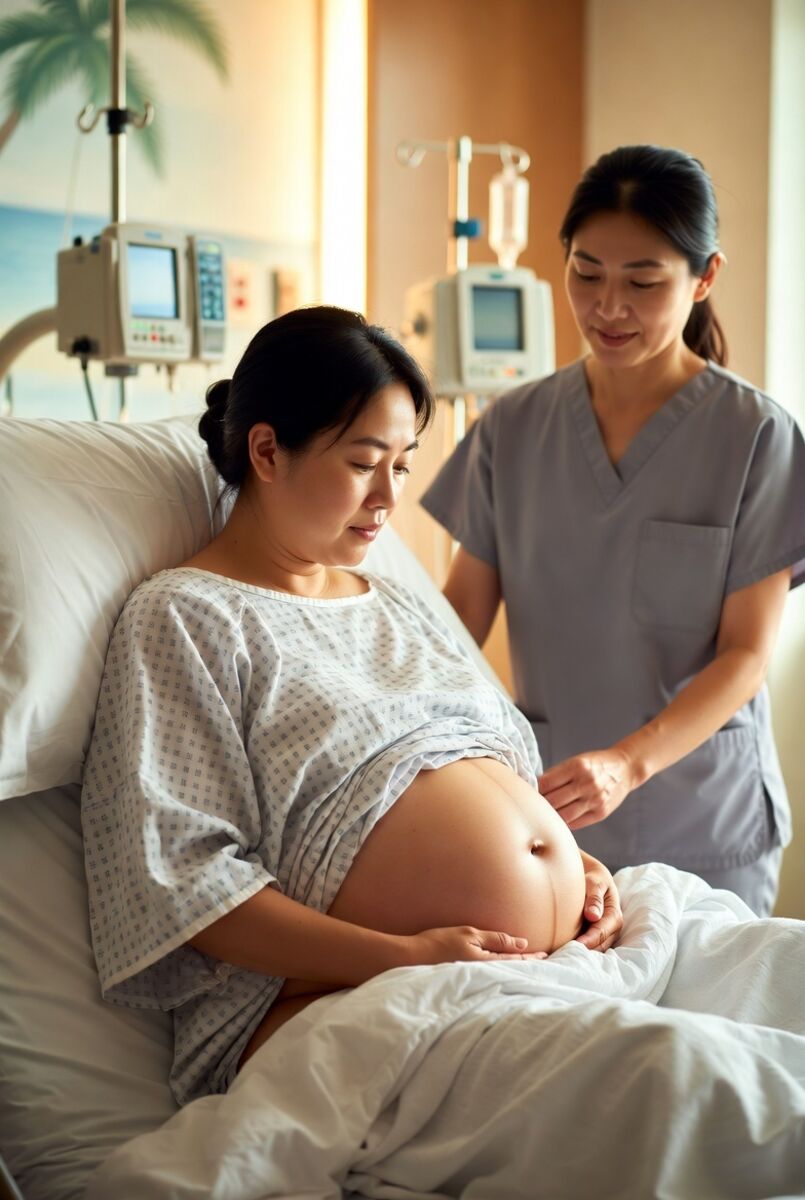
The case has thrown a national spotlight on birth tourism — especially from China. Over 180,000 Chinese citizens came to give birth in America in just one year, including Chinese military officers and high-ranking CCP officials.
“In China alone, we have identified more than 1,000 birth tourism companies that are almost exclusively focused on the United States,” experts noted. “Our federal government does not track this information because there is no centralized collection of information on the nationality of parents who are giving birth.
“China, however, has done estimates themselves and the numbers are eye-popping. The Chinese government gave an estimate a few years ago. Their estimate was that on average, 50,000 Chinese citizens a year were giving birth in the United States or at U.S. territories like Saipan.”
Australian Professor Salvatore Barbonis believes the number is higher — closer to 100,000. A Chinese research firm estimated that in 2018 alone, 180,000 Chinese managed to give birth in the United States.
Birth tourism agency websites openly advertise to clients who are “military officers, people from the Ministry of Propaganda, high ranking officials in the Chinese Communist Party… These are part of the CCP establishment.”
Government’s Position: Restoring Original Meaning of the 14th Amendment
Solicitor General D. John Sauer argued that the executive order restores the original meaning of the Citizenship Clause. That clause was primarily intended to overturn Dred Scott and secure citizenship for formerly enslaved people and their descendants — not to grant automatic citizenship to children of “temporary” or “illegal” aliens.
“Subject to the jurisdiction thereof” requires complete political jurisdiction and “direct and immediate allegiance” to the U.S., not merely being subject to its criminal laws, Sauer said.
Children of temporary visitors (tourists, students, short-term visa holders) owe primary allegiance to their parents’ home country. Children of undocumented immigrants are similarly not fully subject because their parents entered in violation of U.S. law.
Historical support includes pre-14th Amendment English common law exceptions for children of “traveling or sojourning” aliens, congressional debates excluding temporary sojourners, and cases such as Elk v. Wilkins (1884) and Slaughter-House Cases (1873).
The administration interprets Wong Kim Ark narrowly: it involved parents with permanent domicile, not temporary or illegal status. The order is therefore an executive restoration of the clause’s text and history — no constitutional amendment needed.
Challengers’ Position: Unconstitutional Executive Overreach
Counsel for the plaintiffs, including the ACLU’s Cecillia Wang, argued that the order is an unconstitutional executive rewrite of the 14th Amendment and a 150-year understanding of birthright citizenship. It would “cast a shadow” over the citizenship status of millions.
The clause uses broad language (“all persons born… in the United States”) with only narrow historical exceptions — mainly children of foreign diplomats or invading enemy forces.
“Subject to the jurisdiction” has long meant simply being subject to U.S. laws generally (territorial jurisdiction), not full political allegiance. Undocumented immigrants and temporary visitors are still prosecuted under U.S. criminal law and pay taxes in many cases.
Wong Kim Ark broadly reaffirmed citizenship by birth within the dominion and rejected narrower allegiance-based limits. Post-ratification practice, statutes, and executive actions under multiple administrations have treated nearly all U.S.-born children as citizens regardless of parental status.
Allowing the president to unilaterally redefine the clause via executive order undermines the Constitution’s supremacy and separation of powers. Changes to citizenship rules require legislation or amendment. Practically, the order would create chaos, risks of statelessness, and discrimination.
Broader Context from Today’s Arguments
Justice Ketanji Brown Jackson’s “wallet-in-Japan” analogy defended the traditional view: temporary presence subjects a person to local laws and a form of “local allegiance,” but that does not automatically confer full citizenship or permanent allegiance. Critics called the explanation convoluted for the birth context.
Justices pressed both sides on historical exceptions, potential conflicts with the Immigration and Nationality Act, practical impacts on millions of births, and the balance of executive versus congressional power over immigration and naturalization.
The arguments were heated, given the stakes: the ruling could reshape U.S. citizenship policy for tens of thousands of births annually, intensify the “anchor baby” debate, and test originalist interpretations of the post-Civil War amendment.
No decision was issued today. Opinions are expected by late June.
The case follows last year’s Trump v. CASA ruling, which limited nationwide injunctions but left the constitutional question open for this round.
Live blogs and full transcripts will be available shortly on SCOTUSblog and the Supreme Court’s website. The debate ultimately turns on whether “subject to the jurisdiction thereof” means mere territorial presence or requires complete political allegiance — and whether the president can enforce the original public meaning of the 14th Amendment without waiting for Congress or a constitutional amendment.



Reader Comments(0)