
Community, Diversity, Sustainability and other Overused Words


Community, Diversity, Sustainability and other Overused Words
What followed was one of the most audacious combat search-and-rescue (CSAR) missions in modern U.S. history-a 48-hour ordeal that took U.S. forces deep inside hostile Iran
Dozens of aircraft poured into Iranian airspace under the cover of darkness and overwhelming U.S. air superiority
Dozens of aircraft poured into Iranian airspace under the cover of darkness and overwhelming U.S. air superiority.
In one of the most complex and daring U.S. special operations missions in recent history, American forces successfully extracted a wounded Air Force colonel—the weapon systems officer (WSO) of a downed F-15E Strike Eagle—from deep inside Iranian territory on April 5, 2026. The colonel had evaded capture for approximately 24–48 hours after his jet was shot down over the rugged Zagros Mountains in southwestern Iran during Operation Epic Fury, the ongoing U.S.-led campaign against Iran.
The F-15E was brought down by Iranian air defenses on April 3, 2026, near Dehdasht in Kohgiluyeh and Boyer-Ahmad Province. Both crew members ejected safely. The pilot was rescued quickly in a separate operation, but the WSO, identified by President Trump as a “highly respected Colonel,” landed several miles away in more isolated high terrain. He activated his emergency beacon, hiked up a steep 7,000-foot ridgeline, and hid in a mountain crevice while Iranian Revolutionary Guard Corps (IRGC) forces and local armed Bakhtiari tribesmen closed in. U.S. intelligence, including the CIA, helped pinpoint his location.
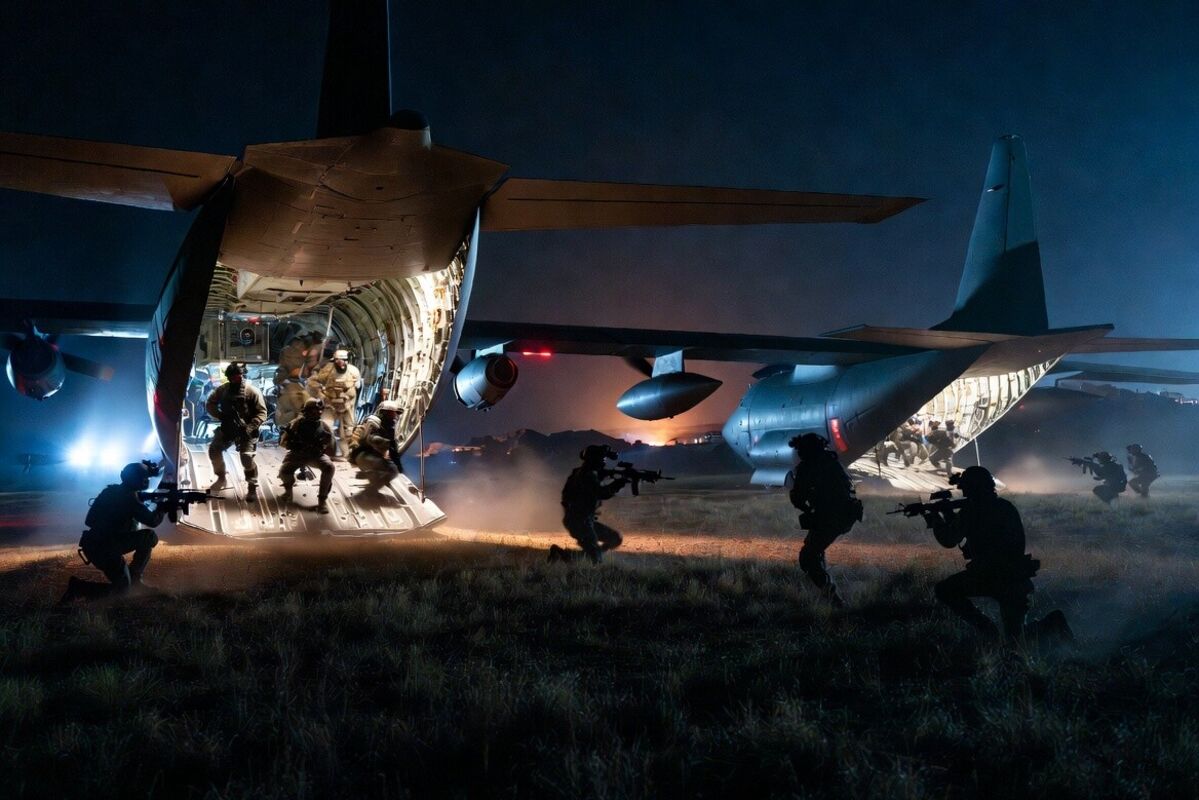
According to details shared by journalist Michael Weiss, citing a U.S. military official, the combat search-and-rescue (CSAR) effort unfolded as follows on the ground:A rescue team of roughly 100 personnel, supported by special operations forces (including elements from DEVGRU/SEAL Team Six, Night Stalkers, and Air Force Pararescue), inserted via two AFSOC C-130s that landed on a makeshift dirt airstrip in the mountains. The C-130s carried or were accompanied by four MH-6 Little Bird helicopters. One Little Bird flew to the colonel’s hiding spot on a nearby mountaintop (approximately five miles northwest of the strip), extracted the injured WSO, and returned him to the landing zone.
At that point, complications arose: the nose gears of both C-130s became stuck in the soft dirt of the improvised strip. With Iranian forces advancing, the decision was made to abandon the two C-130s and the four Little Birds on site. U.S. aircraft later destroyed the stranded assets with multiple bombs to prevent capture. Three AFSOC Dash-8 aircraft were then brought in to extract the rescued colonel and the entire 100-person rescue team.
Throughout the operation, U.S. attack aircraft and missiles struck IRGC vehicles attempting to reach the mountain site and the airstrip, suppressing the threat and ensuring safe extraction. Iranian forces shot down two U.S. MQ-9 Reaper drones during the mission. No American personnel were killed or wounded.
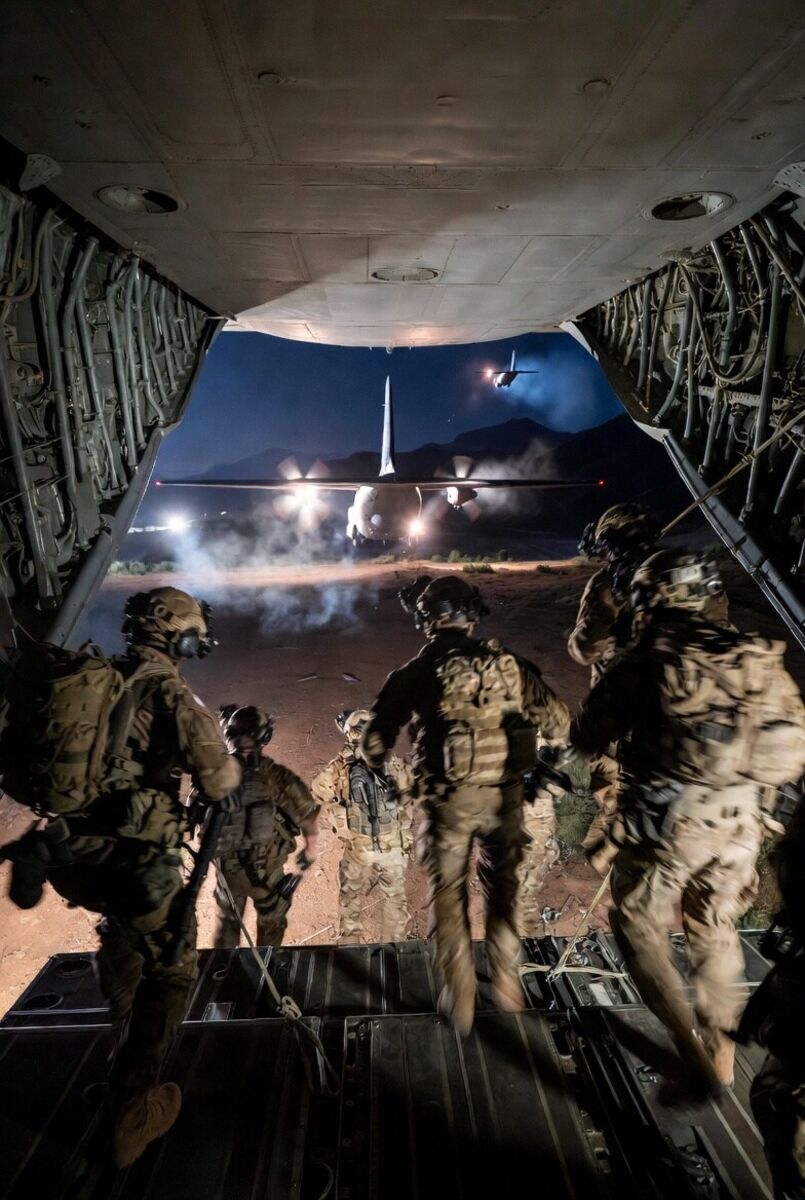
Dozens of aircraft poured into Iranian airspace under the cover of darkness and overwhelming U.S. air superiority.
The total cost of the operation was estimated at roughly $300 million, largely due to the loss of the abandoned aircraft (two C-130s and four MH-6 Little Birds), which were depreciated assets but required destruction in place. Broader reporting confirms the mission involved dozens of aircraft, hundreds of special operations troops, close air support (including A-10 Warthogs), and intense coordination to outpace Iranian pursuers in hostile terrain.
President Trump announced the success shortly after the extraction, stating the colonel had sustained injuries but was “safe and sound” and would recover fully. He emphasized the operation as proof of U.S. air dominance and commitment to the principle of “no one left behind.” The WSO’s rescue marked the second successful recovery of F-15E crew members from the same incident, both conducted deep behind enemy lines with zero U.S. casualties.
Military analysts described the mission—conducted amid a race against IRGC ground forces and local tribesmen—as one of the most challenging CSAR operations in modern U.S. history. It underscored the risks of operating inside Iran while highlighting the effectiveness of integrated special operations, intelligence, and airpower in a high-threat environment. The colonel is now receiving medical care outside Iran.



Reader Comments(0)