
Community, Diversity, Sustainability and other Overused Words


Community, Diversity, Sustainability and other Overused Words
I lost my brother to fentanyl when he was at the age of 23. The day I carried my brother's casket I started a mission to help those like him
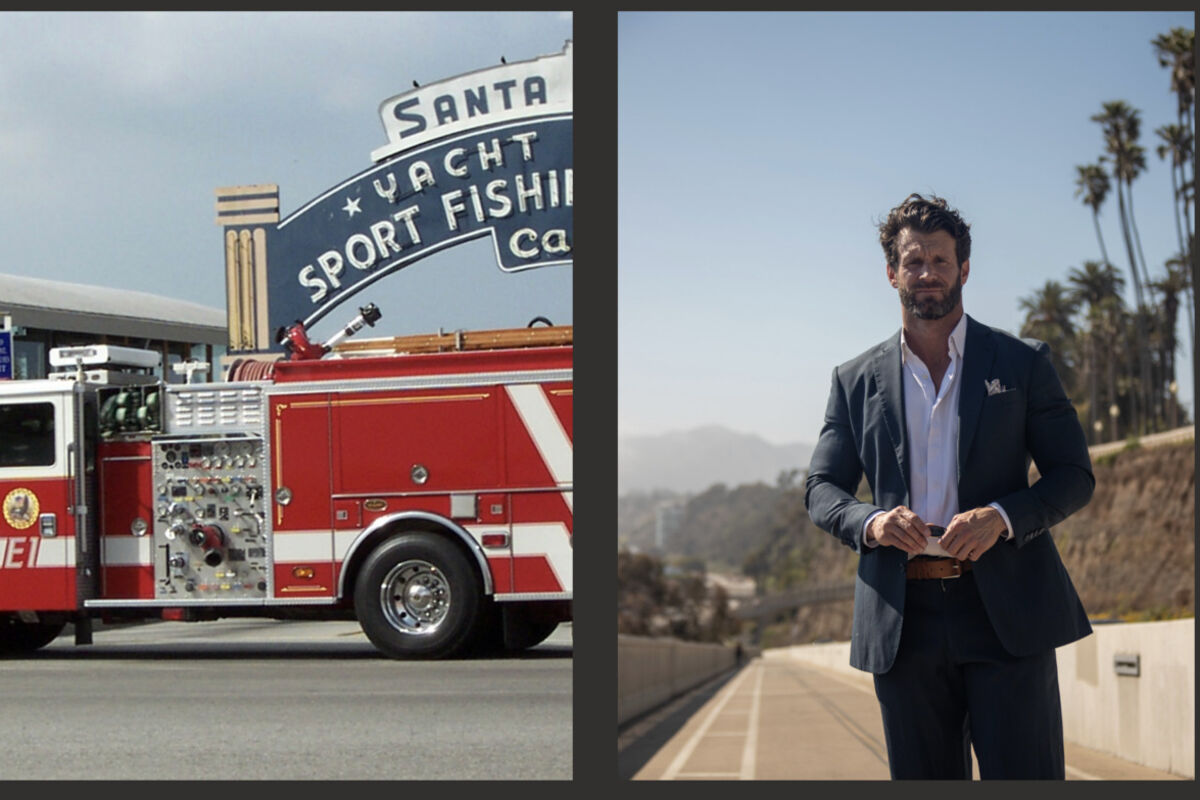
Roughly one-third of all fires LAFD responded to between 2018 and 2024 involved at least one homeless person, and in early 2021 more than half of all fires were classified as homelessness related
As a candidate for Santa Monica City Council, I walk our streets every day and see what "suicidal empathy" has done to our city. Imagine a single loose thread in a finely woven garment. If you address it immediately, the fabric remains strong. But if you let that thread catch and pull slowly over time, it unravels the entire garment until it loses all strength and integrity. That is exactly what is happening to the social fabric of Santa Monica. I lost my brother to fentanyl when he was at the age of 23. The day I carried my brother's casket I started a mission to help those like him, and my mission continues to this day.
We call it compassion when we allow people suffering from severe mental illness or addiction to wander our sidewalks, sleep in doorways, and slowly deteriorate in public view. We would never leave someone with a broken leg lying on the pavement, insisting it is their right to refuse help while their condition worsens. Yet we do precisely that with our most vulnerable neighbors, treating them not as human beings who need intervention, but as statistics we must accommodate. This is not kindness. It is abandonment disguised as empathy, and it is unraveling our community.
For eighteen years I have worked in healthcare, including traumatic brain injury and acute care facilities. I have stood at the bedside of people at their absolute lowest, with broken bodies and minds, and have worked with a team of medical professionals to help rehabilitate them back to their prior self. I was there every step along the way. Every patient was treated as an individual, not a number. I have also buried my own brother, who died from a fentanyl overdose. I learned the hard way that handing someone the tools of their addiction does not protect them, it enables them and it endangers everyone around them.
A small, yet identifiable portion of the population, those with untreated severe mental illness and addiction, now generates the majority of public disorder. In Santa Monica, arrests involving persons experiencing homelessness reached 2,465 in 2025, up 52% from the prior year, and homeless suspects have accounted for a large share of all arrests according to police data. Roughly onethird of all fires LAFD responded to between 2018 and 2024 involved at least one homeless person, and in early 2021 more than half of all fires were classified as homelessnessrelated. Our current policy asks the many to absorb unlimited costs to avoid confronting the few.
Santa Monica's 2025 Point-in-Time Count recorded 812 people experiencing homelessness, up from 774 the year before. Of those, 475 remain unsheltered on our streets and beaches. Statewide, California has spent approximately $24 billion on homelessness programs since 2019, yet the problem has persisted in many areas amid ongoing questions around fraud, waste, and effectiveness.
We must separate the distinct challenges of homelessness, drug addiction, and mental illness, because each requires different treatments and approaches. Not everyone on the street is simply "homeless" in the traditional sense of lacking housing due to economic hardship. Many struggle primarily with severe substance use disorders that demand structured recovery programs, sobriety requirements, and accountability. Others face serious mental illness that needs clinical intervention, medication management, and sometimes conservatorship for their own safety. Still others may need temporary support and work training to regain stability after job loss or family breakdown. One-size-fits-all policies fail when they ignore these critical differences. True compassion means tailoring solutions to the individual's actual needs rather than lumping everyone into the same "homeless" bucket.
Meanwhile, our "housing first" model, which prioritizes shelter with no conditions on treatment, often places active drug users in the same buildings as those fighting to stay sober. This is not compassionate. It is chaos. Multiple studies and audits show Housing First has failed to reduce overall homelessness despite enormous costs. California's homelessness rose sharply while the national figure declined, and in Los Angeles, billions spent produced high vacancy rates in supportive housing, high recidivism, and no meaningful drop in street homelessness. Harm reduction supplies such as needles and pipes, along with cash transfers, are distributed under the banner of safety, yet they frequently fuel the very behaviors that keep people trapped.
Encampment fires, theft to support habits, and open-air drug use have become daily realities. Businesses close or relocate. Shoppers stay away. Insurance premiums and city costs for extra policing and fire response rise for every resident. Foot traffic on the Third Street Promenade has declined sharply, falling from 875,000 visitors in July 2017 to 438,811 in July 2024. Many retailers report revenue drops of 50% or more due to customer fears over safety, theft, and visible disorder. One in six storefronts now sits empty. In Santa Monica, a significant portion of the Fire Department's emergency call volume involves people experiencing homelessness, adding substantial strain to emergency resources and taxpayer costs. Illegal camp dumping and debris also not only effects our pocket books, it wrecks our environment and ocean.
Our children's innocence is another casualty. They walk over limp bodies, see exposed individuals, and public degradation that no society should normalize. This is not the Santa Monica we want to hand to the next generation. When we ignore the humanity of those suffering on our streets, we also erode our own. A low-trust society emerges, one where parents hesitate to let kids walk unsupervised, merchants repeatedly fix broken windows, and neighbors lock their doors midday.
We must treat every person as an individual. That person is someone's brother, mother, or child. That means mandating participation in mental health and substance-use treatment. Help is not optional when someone is a danger to themselves or others. Conservatorship (LPS/OPC), court-ordered treatment, and recovery-focused housing that separates active users from those in sobriety are proven tools used successfully elsewhere. A Los Angeles outpatient conservatorship (OPC) pilot program demonstrated real results: at 12 months, 81% of participants were no longer experiencing unsheltered homelessness, and 65% accessed an LPS conservatorship. Mandated care does not strip dignity. It restores it. It turns scared, lonely, confused individuals into participating, purposeful members of society.
The alternative is continued degradation. In Los Angeles County, 2,208 people experiencing homelessness died in 2024, more than six per day, with drug overdoses (heavily involving fentanyl) remaining the leading cause. Women are trafficked and raped in encampments. Dogs are tied up in filth, some dying of fentanyl exposure or used as ashtrays. We stand by and call it compassion.
My brother, mthan a policy failure, some Point-in-Time statistic, a person I loved, consumed by something no one compelled him to confront until it was too late. I learned then what I have seen confirmed in eighteen years of provisioning real healthcare: the kindest thing you can do for someone in crisis is refuse to let them stay there.
This is not who we are, it's certainly not who I am.
Santa Monica has always been a city of innovation, compassion, and high standards. It is time to reclaim those values with clear-eyed realism. I am running for City Council because I refuse to accept a future of managed decline. We can fund targeted, accountable programs that get people off the streets permanently through treatment first, housing that requires sobriety and participation, and enforcement that protects everyone. We can stop the thread from pulling further and make sure our money goes to those who need it, not big salaries.
I ask you to look inside yourself. I also challenge you to take action. If like me, you believe we can do better, treating people with real help rather than performative gestures, then join me. Vote for policies that put people over profits, accountability over abandonment, and hope over hopelessness.
Our city's strength is still there. Taking action on the unraveling thread can begin the repair. Together, we can restore safety, trust, and humanity to Santa Monica.
Derrick Townsend's Santa Monica City Council candidate website is http://www.dt4sm.com

Reader Comments(0)