
Community, Diversity, Sustainability and other Overused Words


Community, Diversity, Sustainability and other Overused Words
0 Bancroft Avenue, Lot 17, in the Bayview District, consists of roughly 4,996 square feet of San Francisco Bay seabed. Listed on Zillow as a "rare underwater parcel"
0 Bancroft Avenue, Lot 17, in the Bayview District, consists of roughly 4,996 square feet of San Francisco Bay seabed. Listed on Zillow as a "rare underwater parcel"
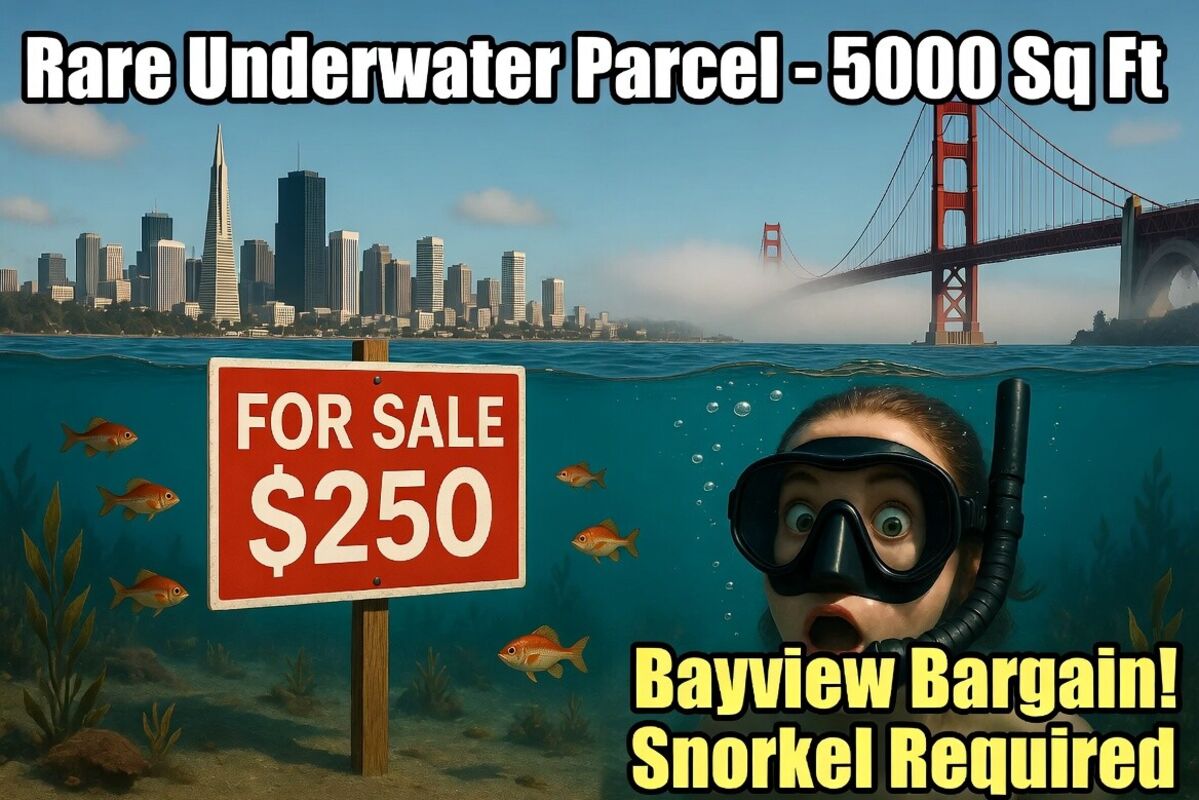
**San Francisco** - In a city where parking spots can fetch six figures and tech millionaires bid up multimillion-dollar homes, a 5,000-square-foot "lot" near Candlestick Point just sold for a jaw-dropping $250 - with one major caveat: it's entirely underwater.
The parcel at 0 Bancroft Avenue, Lot 17, in the Bayview District, consists of roughly 4,996 square feet of San Francisco Bay seabed. Listed on Zillow as a "rare underwater parcel" offering "unique opportunity for creative ownership and long-term speculative investment," it was pitched for potential future waterfront uses, boat docking, environmental projects, or simply land banking - all subject to heavy regulatory hurdles from city, state, and coastal agencies.
The sale, part of a small batch of similar submerged parcels auctioned recently (including others on Fitzgerald Avenue and Tevis Street), closed for under $1,000 each in some cases - with the Bancroft lot reportedly fetching around $250 to $800 depending on final bids.
"This is classic San Francisco," said one local real estate observer. "Where else can you buy Bay views that literally require a snorkel?"
### Speculative Plays in a Flood-Prone Future?
Buyers of these tidelands are often betting on long-shot development scenarios: future landfilling, sea-level rise adaptation projects, or broader waterfront redevelopment in areas like Bayview-Hunters Point. Similar underwater or tideland parcels have traded hands in the Bay Area for years, sometimes as speculative flips or curiosities.
Realtors emphasize the properties come with no guarantees of buildability or even practical use. "Ownership of underwater parcels in major metropolitan markets remains limited," the listing noted, highlighting their rarity for unconventional investors.
### Luxury Boom Above Water, Squeeze Below
The underwater fire sale stands in sharp contrast to the surging ultra-luxury market fueled by the AI boom. San Francisco saw more homes sell above $20 million in recent periods than in any prior year on record, with luxury sales jumping 22% year-over-year in some months and median prices hitting records around $1.7 million to over $2 million.
AI wealth from companies like OpenAI, Anthropic, and others has created fresh fortunes, driving demand for trophy properties while inventory remains tight at the high end. Condo prices in premium segments have climbed nearly 30% in some reports.
Meanwhile, middle-class residents face the ongoing squeeze. Typical home values hover near $1.2 million, rents for a two-bedroom average over $3,300, and many families are downsizing, doubling up, or leaving the region altogether. Lower- and mid-tier home values have stagnated or declined in places even as luxury segments thrive, exacerbating the "missing middle" housing gap.
Critics argue the disparity reflects deeper structural issues: chronic underbuilding, zoning restrictions, and a winner-take-all tech economy that inflates the top while pricing out teachers, nurses, and service workers.
In the end, the $250 seabed deal may be little more than a quirky headline or tax-basis play. But it perfectly encapsulates the Bay Area's real estate paradox: absurd affordability at the ocean floor, and stratospheric prices just a few feet above it. In San Francisco, even the bottom of the market comes with a view - if you don't mind getting wet.


Reader Comments(0)