
Community, Diversity, Sustainability and other Overused Words


Community, Diversity, Sustainability and other Overused Words
Video footage shows the cat sniffing and circling the actor portraying Romeo, even gently clawing at his hair
Video footage shows the cat sniffing and circling the actor portraying Romeo, even gently clawing at his hair
Video footage shows the cat sniffing and circling the actor portraying Romeo, even gently clawing at his hair
İzmir, Turkey - In a moment that blended high art with everyday charm, a ginger cat wandered onto the stage during the tragic finale of a *Romeo and Juliet* ballet, delighting audiences and quickly going viral.
The incident occurred on June 10, 2026, at the Aşık Veysel (or Bornova) Open-Air Theater in İzmir during a performance by the Imperial Russian Ballet Company. As the ballet reached its poignant climax - with Romeo lying motionless after taking poison and Juliet mourning her lost love - the uninvited orange tabby strolled casually across the set.
Video footage shows the cat sniffing and circling the actor portraying Romeo, even gently clawing at his hair, before hopping onto a prop bench. Prima ballerina performers, including those playing Juliet, remained fully in character and continued the choreography without interruption as the audience erupted in laughter and applause. The cat eventually wandered off, allowing the show to conclude as planned.
The Imperial Russian Ballet Company, founded in 1994 by former Bolshoi soloist Gediminas Taranda, was on a Turkish tour presenting Sergei Prokofiev's classic adaptation of Shakespeare's tale. The production had previously played in Ankara and continued to Istanbul afterward.
Social media users embraced the lighthearted disruption with a flurry of puns, dubbing the scene "Romeow and Juliet" and debating whether the feline was a "Montague or Cat-pulet." The moment resonated particularly in Turkey, where stray cats are a beloved part of daily life and culture.
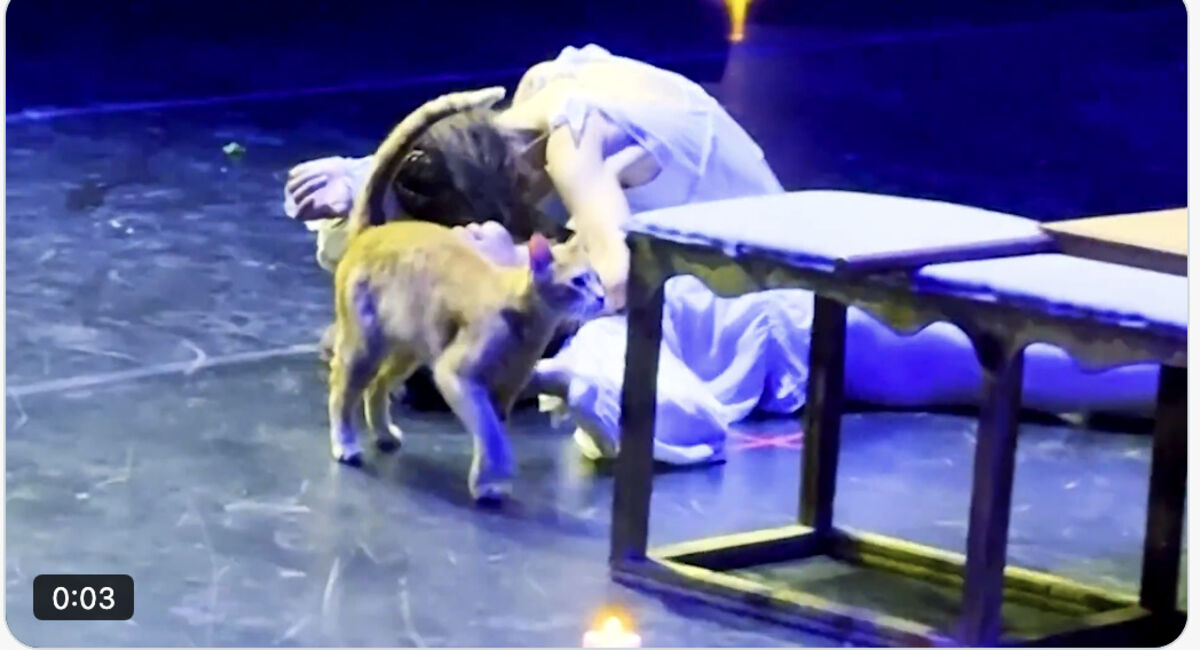
Video footage shows the cat sniffing and circling the actor portraying Romeo, even gently clawing at his hair
This unexpected interlude highlights ballet's enduring appeal as live theater - where, despite meticulous planning, nature (or in this case, neighborhood wildlife) can create unforgettable memories. For many, it served as a charming reminder that sometimes the best performances come from those who steal the show without even trying.
Turkish Stray Cat Culture: A Deep-Rooted Bond Between Humans and Felines
Turkey, particularly Istanbul, is renowned worldwide for its large population of stray cats, often called "community cats" or treated as collective neighborhood pets rather than unwanted strays. Estimates suggest tens to hundreds of thousands roam the streets, especially in Istanbul, earning the city the affectionate nickname "Catstanbul."
Historical Roots
Cats have been part of Turkish urban life for centuries. Their presence dates back to ancient trading ships (Phoenician, Roman, and Ottoman eras), where felines controlled rodents on vessels carrying spices and silk. In Ottoman Constantinople (now Istanbul), wooden houses attracted mice and rats, making cats essential for pest control. Local foundations and residents actively cared for them, even establishing cat hospitals and gardens in some accounts.
Islam, the predominant faith in Turkey, reinforces this positive view. Cats are considered ritually clean (*tahir*), unlike dogs in some interpretations. Stories of Prophet Muhammad's affection for cats-such as cutting his sleeve to avoid disturbing one-underscore this reverence. A Turkish saying reflects the depth: harming a cat might require building a mosque as atonement.
Modern Communal Care
Turks often view stray cats as shared community animals rather than ferals. Residents, shopkeepers, and locals routinely provide food, water, and shelter. This tradition once supported full-time "mancacı" (cat feeders) who sold or distributed food. Today, people leave bowls outside homes and businesses, and neighborhoods may collectively fund veterinary care.
Municipalities offer free or low-cost neutering and veterinary services, with a national no-kill, no-capture policy for street animals. Private clinics and volunteers assist, and feeding strays is a common daily act of kindness. Cats are often friendly and tolerant of humans due to this regular interaction, lounging on cars, in parks, mosques, ferries, and even shops.
Cultural Significance
Cats embody Turkish values of compassion, hospitality, and coexistence. The 2016 documentary *Kedi* (Turkish for "cat"), directed by Ceyda Torun, beautifully captures this by following individual street cats and their human caregivers, highlighting how caring for them reflects broader humanity.
Indigenous Turkish breeds like the Turkish Angora and Turkish Van further tie cats to national heritage. Their presence adds charm to daily life and tourism-visitors often note the relaxed, affectionate interactions. Recent animal welfare laws have strengthened protections, reclassifying animals beyond mere property.
Nuances and Challenges
While the culture is overwhelmingly positive, challenges exist. Overpopulation can strain resources, and not all cats thrive-some face health issues or uneven care across regions. During events like the COVID-19 pandemic, fears led to temporary abandonments. Urban modernization sometimes clashes with traditional tolerance.
Nevertheless, Turkey's approach stands out globally as a model of compassionate coexistence. The recent ginger cat interrupting a *Romeo and Juliet* ballet in İzmir perfectly illustrates how seamlessly these felines integrate into everyday life-even high culture-without disruption being unwelcome.
This feline-friendly ethos makes Turkey a standout for animal lovers and offers a heartwarming lens into its society.




Reader Comments(0)