
Community, Diversity, Sustainability and other Overused Words


Community, Diversity, Sustainability and other Overused Words
saw flames jump the Spokane River and push into residential neighborhoods on the city's northern and northwestern edges. Strong winds gusting 35 to 45 mph, combined with high temperatures, a record-setting drought, and dry vegetation
Subdivision with burned homes in Spokane Washington. saw flames jump the Spokane River and push into residential neighborhoods on the city's northern and northwestern edges. Strong winds gusting 35 to 45 mph, combined with high temperatures, a record-setting drought, and dry vegetation
Subdivision with burned homes in Spokane Washington. saw flames jump the Spokane River and push into residential neighborhoods on the city's northern and northwestern edges. Strong winds gusting 35 to 45 mph, combined with high temperatures, a record-setting drought, and dry vegetation
SPOKANE, Wash. — Fast-moving wildfires driven by high winds and dry conditions have destroyed hundreds of structures, primarily homes, in and around Spokane, Washington’s second-largest city, forcing tens of thousands of residents to evacuate in what local officials have described as the region’s worst natural disaster.
Three blazes—collectively referred to as the Spokane Area Fires or Spokane Complex (Old Trails, Autumn Lane, and Fairview)—ignited on Saturday, August 1, 2026, and rapidly expanded. As of Wednesday, August 5, they had burned a combined 10,546 acres, with containment progress reported for the first time: Old Trails at 3,621 acres (13% contained), Autumn Lane at 5,603 acres (13% contained), and Fairview at 1,056 acres (5% contained). California Interagency Incident Management Team 7 has managed the fires under a full-suppression strategy since August 2.
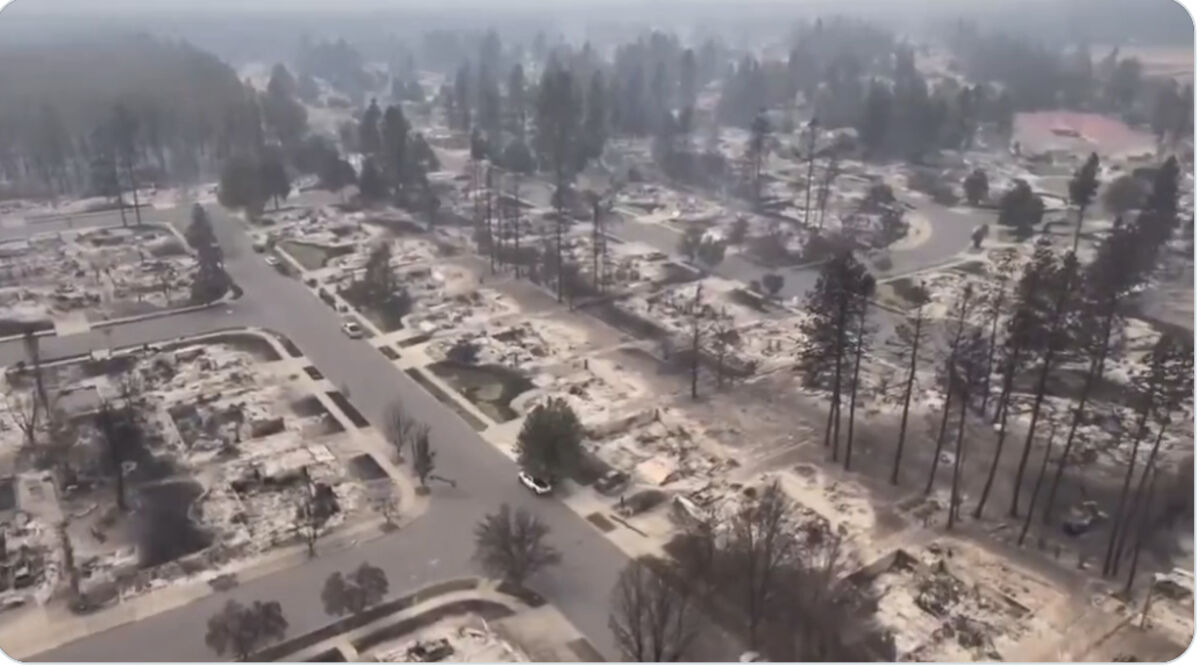
Subdivision with burned homes in Spokane Washington. saw flames jump the Spokane River and push into residential neighborhoods on the city's northern and northwestern edges. Strong winds gusting 35 to 45 mph, combined with high temperatures, a record-setting drought, and dry vegetation
Spokane, home to approximately 230,000 residents and ranking as the state’s second-most populous city after Seattle, saw flames jump the Spokane River and push into residential neighborhoods on the city’s northern and northwestern edges. Strong winds gusting 35 to 45 mph, combined with high temperatures, drought, and dry vegetation, allowed the fires to spread quickly through areas including Indian Trail, Five Mile Prairie, and surrounding neighborhoods.
Officials estimated that about 60,000 to 67,000 people were under evacuation orders, many at the highest “Go Now” level. Shelters, including one at the Spokane Convention Center (pets welcome), Northwood Middle School, and others, remained open for displaced residents. Power outages affected thousands; by midweek, roughly 1,600 Avista customers were still without power.
Spokane Mayor Lisa Brown called the event “the worst natural disaster our region has faced.” Preliminary tallies put structures destroyed or heavily impacted at around 700–850 (with some early assessments ranging higher, up to 1,100 pending full surveys), including hundreds of homes; damage assessments continued and numbers remained subject to change. No deaths or serious injuries had been confirmed. All previously unaccounted-for individuals had been reached and confirmed safe.
More than 1,400 personnel, including out-of-state resources and the California team, were engaged. Governor Bob Ferguson declared a statewide emergency and burn ban; a federal emergency declaration was later approved, enabling FEMA support. A 37-year-old Spokane man, Aaron F. Farinacci, was arrested and charged with first-degree arson in connection with the Old Trails Fire; the causes of the other two fires remained under investigation (both human-caused but not necessarily intentional).
Firefighters made significant progress establishing and strengthening containment lines, aided by cooler temperatures and higher humidity earlier in the week, while focusing on mop-up and protecting remaining structures. Weather was forecast to turn hotter and drier later in the week (temperatures into the mid-to-upper 90s with low humidity), raising fire danger again. Officials cautioned that full damage assessments and return timelines for residents could still take days to weeks. Residents were urged to follow evacuation orders, avoid restricted zones, and refrain from unauthorized drone flights that had previously interfered with aerial operations.




Reader Comments(0)