
Community, Diversity, Sustainability and other Overused Words


Community, Diversity, Sustainability and other Overused Words
Orange County Financier Faces Federal Bank Fraud Charges in Nearly $100 Million Case Against Mahender Makhijani, 44, an Immigrant
Mahender Makhijani plays the piano while Anna Delvey sings in this AI image from Grok.
Mahender Makhijani is a 44-year-old Indian-born lawful permanent resident (green card holder) of the United States, living in Corona del Mar, California. Official statements from the U.S. Attorney's Office for the Central District of California and multiple news reports consistently describe him as "a lawful permanent resident from India" and an "Indian-origin" or "Indian-born" financier.
Anna Delvey was an attractive, brainy young woman who convinced New York Socialites and magnates that she was a German Heiress and a financial genius.
Western Alliance Bank was the target of alleged $100 million fraud effort, by Mahender Makhijani, an employee
SANTA ANA, Calif. - Mahender Makhijani, a 44-year-old Corona del Mar financier and real estate investor, was arrested on June 10, 2026, on a federal criminal complaint charging him with bank fraud. Prosecutors allege he defrauded a federally insured bank out of nearly $100 million by falsifying title insurance documents to inflate the value of collateral.
According to the U.S. Attorney's Office for the Central District of California and an accompanying affidavit, Makhijani controlled Newport Beach-based Cantor Group V LLC. In 2024, the bank-identified in multiple reports as Western Alliance Bank-advanced nearly $100 million to the company under a warehouse lending facility so it could originate or purchase real estate-secured loans. Cantor was required to pledge those loans and their underlying collateral to the bank, with the bank holding a first-lien position.
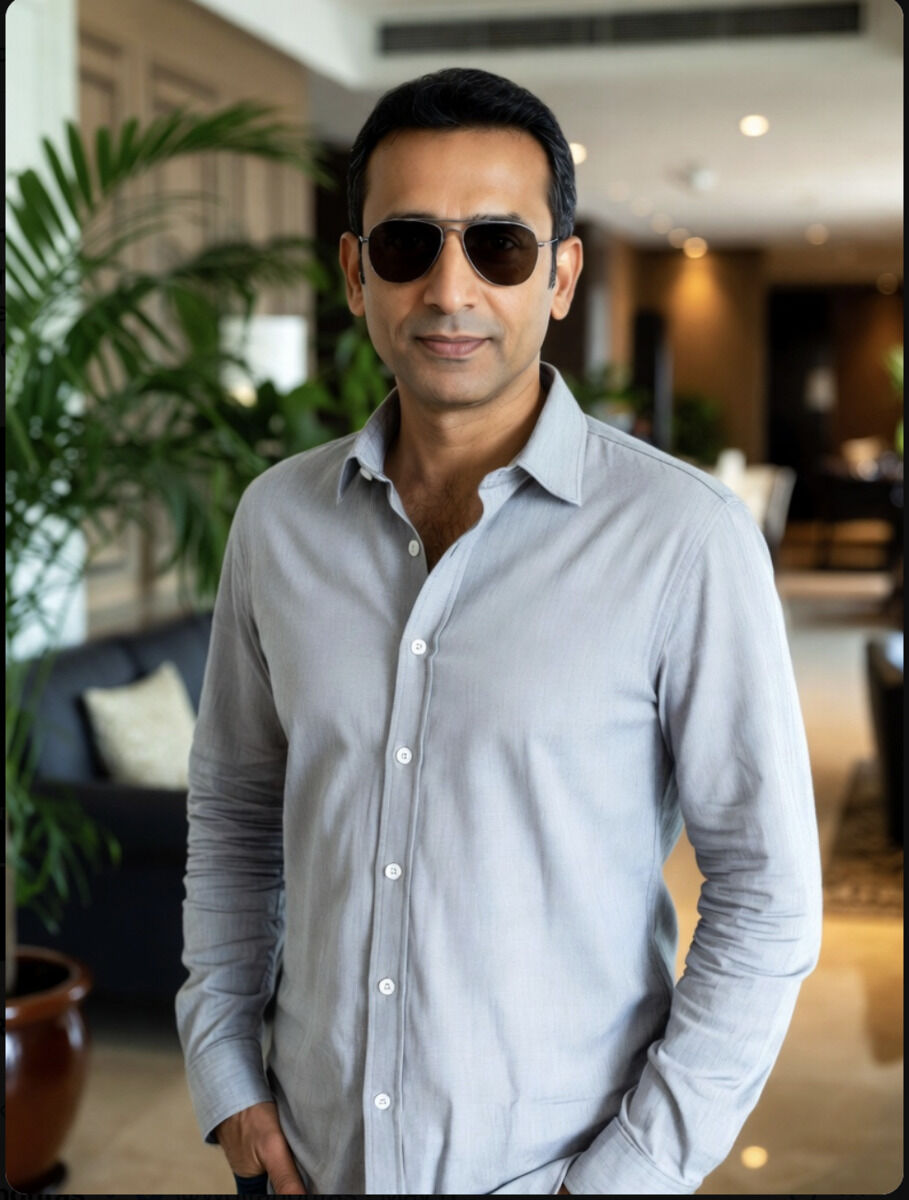
Mahender Makhijani is a 44-year-old Indian-born lawful permanent resident (green card holder) of the United States, living in Corona del Mar, California. Official statements from the U.S. Attorney's Office for the Central District of California and multiple news reports consistently describe him as "a lawful permanent resident from India" and an "Indian-origin" or "Indian-born" financier.
Prosecutors say that between September 2024 and April 2025, Makhijani or a subordinate used Adobe software to alter title insurance policies, making it appear that Cantor held first-lien priority on certain properties when other creditors actually ranked ahead. Metadata was allegedly removed or altered, sometimes by printing and rescanning the documents. An employee then submitted the falsified policies. Makhijani is also accused of providing false explanations during calls with bank representatives and submitting a misleading spreadsheet. Had the bank known the true lien positions, it would have declared a default and demanded immediate full repayment, according to the complaint.
Makhijani pleaded not guilty. A trial was scheduled for August 11, 2026, before U.S. District Judge David O. Carter. If convicted of bank fraud, he faces a statutory maximum of 30 years in prison. The bank has a related civil lawsuit seeking roughly $98–99 million. Makhijani remains in custody after issues arose with proposed bail funds.
The criminal case comes amid other legal troubles. In a separate civil arbitration, Makhijani and related entities, including Continuum Analytics, were ordered to pay approximately $1.34 billion to Laguna Beach businessman Mohammad Honarkar over an allegedly fraudulently induced joint venture involving commercial properties.
Comparison to the Anna Delvey Case
The Makhijani allegations invite comparison to the high-profile case of Anna Sorokin, better known as Anna Delvey, the Russian-born woman who posed as a wealthy German heiress in New York City.

Anna Delvey was an attractive, brainy young woman who convinced New York Socialites and magnates that she was a German Heiress and a financial genius.
Sorokin, then in her mid-20s, lived a glamorous lifestyle of boutique hotels, designer clothes, private jets, and elite social circles from roughly 2016 to 2017. She was convicted in 2019 of multiple counts of grand larceny, attempted grand larceny, and theft of services after defrauding hotels, banks, a private jet company, and others of more than $200,000 (prosecutors had alleged around $275,000 in total losses and attempts). She forged bank statements, overdrew accounts (including obtaining a $100,000 line of credit she did not repay), skipped out on large hotel and service bills, and attempted to secure multimillion-dollar loans for a private arts club while claiming a large overseas trust fund. A jury acquitted her of the most serious charge related to a $22 million loan attempt. She was sentenced to 4 to 12 years in prison, ordered to pay nearly $200,000 in restitution and a $24,000 fine, served roughly four years (including time at Rikers Island), and later faced immigration proceedings.
Key similarities include the use of falsified financial documents (forged bank statements in Delvey's case; altered title policies in Makhijani's), efforts to secure large sums from financial institutions through deception about assets or collateral, and a lifestyle associated with luxury. Both cases involved real estate or development ambitions-Delvey's proposed arts foundation/club and Makhijani's real estate lending and property ventures.
Major differences stand out in scale, method, and context. Delvey's scheme was primarily a personal social and lifestyle fraud targeting hotels, services, and smaller bank facilities totaling in the low hundreds of thousands, executed through persona fabrication and interpersonal charm in New York high society. It was prosecuted as state-level theft and larceny charges. Makhijani's case involves a sophisticated alleged commercial bank fraud approaching $100 million, centered on institutional lending, real estate collateral, lien priority, and document manipulation in a warehouse facility arrangement. It is a federal bank fraud prosecution with far higher potential sentencing exposure. Makhijani was an established Orange County financier operating through companies, not someone inventing an heiress identity from scratch.
While both highlight how document fraud and misrepresentation can exploit financial systems, the Makhijani case centers on alleged large-scale commercial real estate lending deception rather than a personal social climb built on unpaid luxury bills. The outcome of Makhijani's case remains pending. He is a 44-year-old Indian-born lawful permanent resident (green card holder) of the United States, living in Corona del Mar, California. Official statements from the U.S. Attorney's Office for the Central District of California and multiple news reports consistently describe him as "a lawful permanent resident from India" and an "Indian-origin" or "Indian-born" financier.






Reader Comments(0)