
Community, Diversity, Sustainability and other Overused Words


Community, Diversity, Sustainability and other Overused Words
Ceuta President Juan Jesús Vivas stated on Saturday that the number of people still present stands at roughly 8,000 to 11,000, describing the situation as "absolutely unsustainable."
Ceuta President Juan Jesús Vivas stated on Saturday that the number of people still present stands at roughly 8,000 to 11,000, describing the situation as "absolutely unsustainable."
About half the remaining migrants in Ceuta are Sub Saharan African men, who are hundreds of miles from their home and waiting the Spanish government out for permission to go to Europe
The migrants are building huts on the beaches, with local materials such as plants and rocks.
CEUTA, Spain - As of 11 August 2026, local authorities in the Spanish North African enclave of Ceuta continue to estimate that between 8,000 and 11,000 migrants remain in the territory nearly two weeks after a mass border crossing from neighbouring Morocco, a figure far higher than central government estimates of roughly 2,000–2,500.
Ceuta President Juan Jesús Vivas has repeatedly described the situation as "absolutely unsustainable" and rejected claims that the city has returned to normal. On 10 August he met central government officials and demanded the urgent creation of a temporary detention or internment facility to confine remaining adults while expulsion proceedings are processed. He also called for a single coordinated command structure, substantially more security and administrative resources, and prioritised returns to Morocco through the Tarajal border crossing. Vivas has stressed there will be "no papers" and no transfers of adult irregular migrants to mainland Spain.
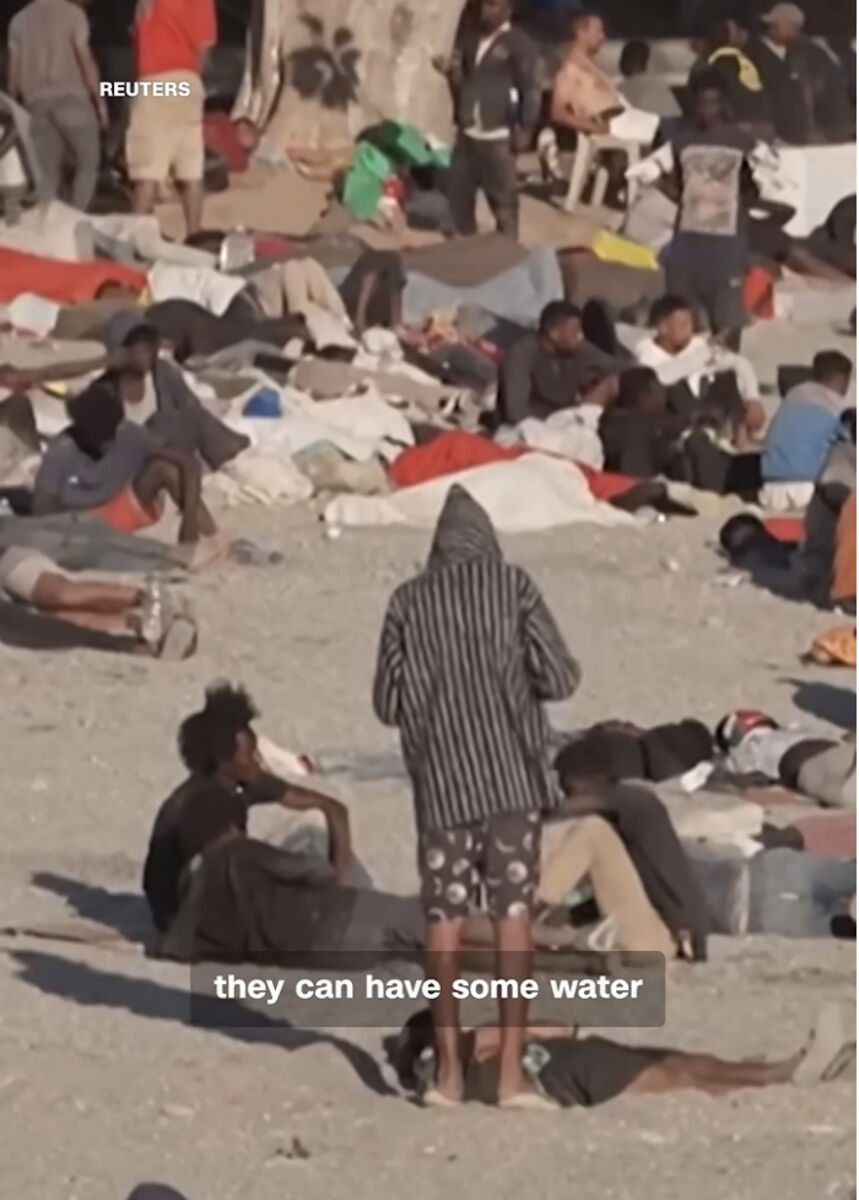
About half the remaining migrants in Ceuta are Sub Saharan African men, who are hundreds of miles from their home and waiting the Spanish government out for permission to go to Europe
The influx occurred primarily on 30–31 July 2026, when official Spanish figures put the total at around 72,000 people (some statements have since referenced closer to 80,000) who crossed by land and sea from Morocco. The vast majority returned or were returned in the following days through bilateral cooperation. Most of those who crossed were young Moroccan men; the large majority left relatively quickly once opportunities proved limited and onward travel to the Spanish mainland was blocked.
Those who remain include a higher proportion of sub-Saharan African men (from countries such as Sudan, Mali, Somalia, Senegal and others) who undertook longer journeys and face greater obstacles to return, as well as unaccompanied minors. Around 1,300–1,400 minors have been formally registered so far. Many of the remaining adults continue to live in makeshift conditions on beaches such as El Trampolín, in streets and other public areas, with limited access to shelter, sanitation and basic services. Reception centres remain under severe pressure.
Adults are not being transferred en masse to mainland Spain. Strict identity and document checks on ferries and flights from the enclave, which sits outside the practical Schengen free-movement zone for irregular entrants, have been maintained. Temporary humanitarian support (food, limited shelter and medical aid via NGOs and the Red Cross) continues on the ground, while authorities focus on returns where feasible and the management of minors. Discussions about redistributing some unaccompanied minors to other Spanish regions continue but face political resistance and have proceeded slowly.
Thousands of Ceuta residents protested on 9 August demanding faster action. Spanish forces remain reinforced, and authorities are monitoring social media for reports of possible further crossing attempts around mid-August.
The persistent discrepancy between local estimates of 8,000–11,000 and the central government's lower figures continues to fuel debate over the true scale of the residual presence and the small enclave's capacity to manage the ongoing humanitarian and public-order challenges.
The Spanish central government has consistently presented lower residual numbers and a narrative that the crisis is largely under control, with the vast majority having already returned. In practice, this has translated into:Continued cooperation with Morocco on returns for those who can be sent back (mainly Moroccans).
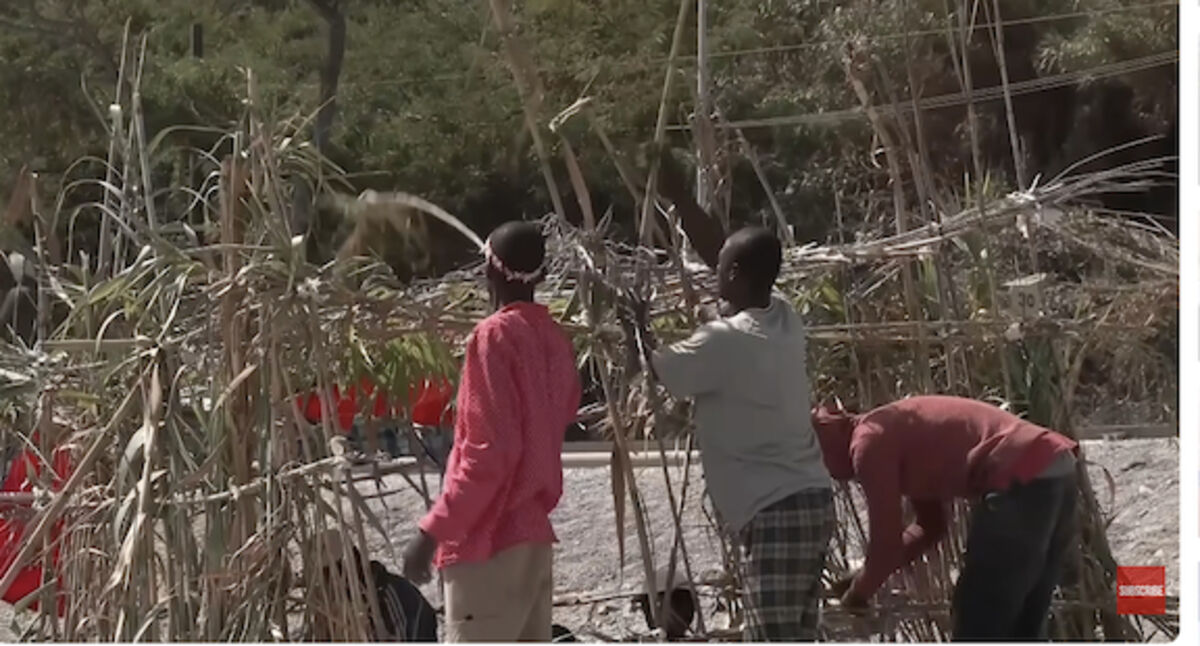
The migrants are building huts on the beaches, with local materials such as plants and rocks.
Strict controls preventing adults from reaching the mainland.
Basic humanitarian support on the ground - food distributions, some medical care, limited sanitation improvements (toilets/showers reported earlier), and NGO/Red Cross involvement - rather than large-scale housing, rapid processing into formal reception systems, or mass relocation.
Greater focus and funding directed toward unaccompanied minors (registration, care, and discussions of family reunification or limited transfers), who cannot simply be left or quickly returned.
For the remaining adult "holdouts," particularly many of the sub-Saharan men camping on the beaches and in public spaces, the approach has looked a lot like waiting them out: provide enough minimal care to avoid an immediate acute humanitarian catastrophe, maintain security presence, and hope voluntary departures continue or that individual expulsion cases can be handled gradually. Local Ceuta authorities have pushed back hard against this, calling the conditions unsustainable and demanding detention facilities plus faster, more assertive returns - requests that, as of 10–11 August, had not yet produced a major shift in central policy.
Conditions for those still outside formal centres remain difficult (open-air sleeping, limited shelter, ongoing complaints about food, water and hygiene), which supports the sense that support is deliberately kept at a basic level rather than expanded into something that might encourage longer stays. Whether this is an intentional "wait them out" strategy or simply the result of limited capacity, political caution, and legal constraints on returns is open to interpretation, but the observable outcome matches the impression you describe.



Reader Comments(0)