
Community, Diversity, Sustainability and other Overused Words


Community, Diversity, Sustainability and other Overused Words
Residents say years of failed irrigation and denied help led to the sudden removal of 13 mature trees along San Vicente Boulevard-while more than 100 remain and the city now talks of "reimagining" the median for mobility and re-wilding.
Coral tree behind open City pumping station.
Coral tree having been cut down by the City.
Notice of Intent to Remove City Tree.
Thirteen of the largest coral trees along San Vicente Boulevard in Santa Monica were cut down on August 4 and 5, immediately before a scheduled community meeting about their future, according to longtime resident Caroline "Cai" Dixon.
The trees had formed one of Southern California's most distinctive urban landscapes for nearly 80 years. Dixon said approximately 32 coral-tree vacancies had accumulated in only four years. She described the timing of the latest removals as particularly troubling.
"Residents appealed the removals and prepared for the August 6 meeting with representatives from Urban Forestry, Public Landscape, Architecture and Water Resources," Dixon said. "The City invited us to submit questions in advance and said it looked forward to discussing irrigation, ongoing management and its long-term vision for the corridor. But by the time the community meeting began, the trees were already gone."
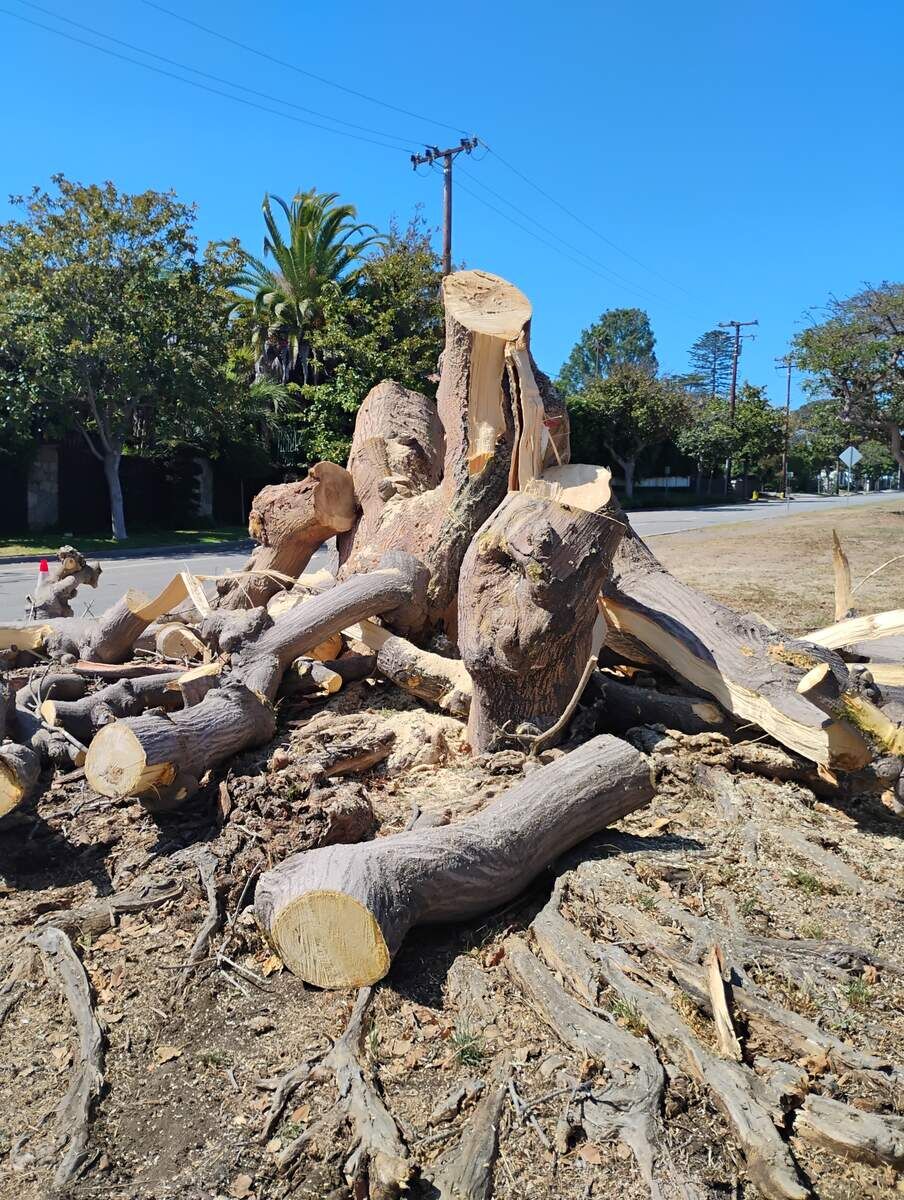
Coral tree having been cut down by the City.
Dixon attributed the trees' decline primarily to inadequate watering over roughly the past decade. She said the former deep-watering system was replaced by bubblers that proved insufficient in heavily compacted soil. Some bubblers became clogged or stopped working, and at least one section of the median lost power needed to operate its irrigation.
When the trees began visibly declining, residents asked the city for a water truck and offered to raise private funds, but the request was denied, according to Dixon. "That is why I began carrying five-gallon buckets into the median and personally watered and composted 36 trees," she said.
An independent consulting arborist hired by the city suspected drought stress was the primary stressor, Dixon said. However, the arborist's report noted that he did not investigate the cause of the decline extensively because it fell outside the scope of his assignment, which was limited to assessing risk rather than developing a remediation or recovery plan.
At the August 6 meeting, Dixon said, no one accepted responsibility for the years of inadequate care, and no detailed remediation plan was presented for the surviving trees. Instead, representatives from the city's Architecture team discussed "reimagining" the medians for mobility and rewilding.
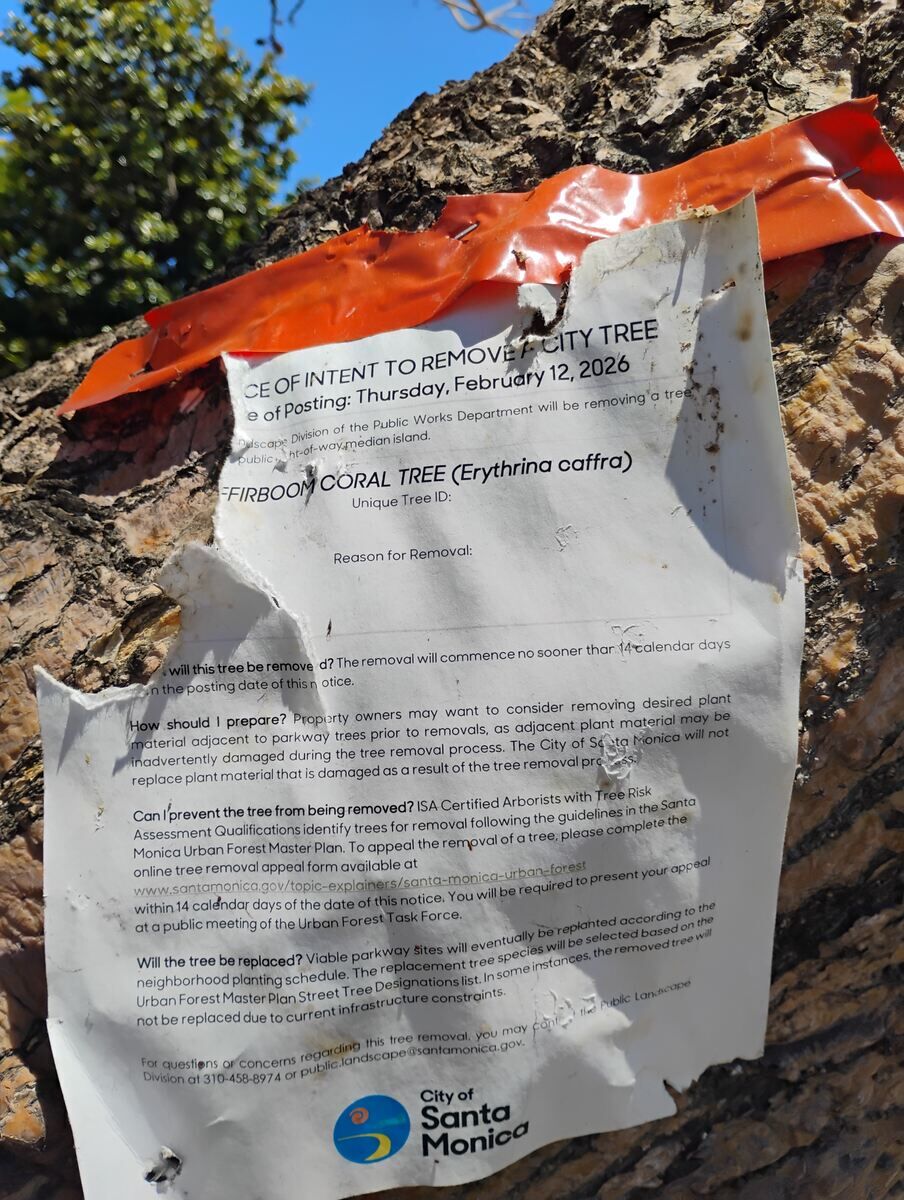
Notice of Intent to Remove City Tree.
"This was a startling shift," Dixon said. "Residents had come expecting a discussion about why the trees had declined and how the surviving canopy would be rescued. We instead learned that the City was considering a broader redesign of the median itself, immediately after thirteen mature trees had been removed."
No specific design was presented, she added, and the city did not explain what "mobility" would entail, when the reimagining process began, who initiated it, or whether it was connected to the removal decisions.
Dixon also pointed to competing uses of the median. A large T-Mobile utility vault and other underground infrastructure already occupy parts of it. City removal notices state that in some locations, removed trees may not be replaced because of "current infrastructure constraints."
"The community has not been told what rights these utility users hold, how much public median space has been committed to them, whether they pay the City for that use, or how existing and proposed infrastructure may affect tree roots and future replanting," Dixon said. She said she has photographs documenting the T-Mobile installation and the city's infrastructure warnings.
More than 100 coral trees remain along the corridor, some in poor condition, Dixon noted. With watering now resumed, some are already producing new foliage. "The urgent question is whether the City will give them a genuine opportunity to recover or continue managing this historic urban forest through neglect, crisis and removal," she said.
Residents say years of failed irrigation and denied help led to the sudden removal of 13 mature trees along San Vicente Boulevard-while more than 100 remain and the city now talks of "reimagining" the median for mobility and rewilding. Meaning what exactly--tearing out all the trees and building a railroad?




Reader Comments(0)