
Community, Diversity, Sustainability and other Overused Words


Community, Diversity, Sustainability and other Overused Words
LA County Lost 50,000 people a year for the last 3 years. So why are we frantically building housing?
Tower going up at 26th and Wilshire is entirely out of scale with the neighborhood.
Tower going up at 20th St. and Wilshire is, you guessed it, also entirely out of scale with the neighborhood.
Construction cranes are swinging over Santa Monica even as Californians vote with their feet and leave the state. A mixed-use apartment complex is rising on the old Pico Bowl site near Pico Boulevard and Third Street. Senior “affordable” and supportive housing is underway at 14th and Wilshire. Another 78-unit affordable project is climbing at 20th Street near Wilshire. Related towers are advancing toward 26th and Wilshire. All of this is happening while California lost roughly 9,500 residents between 2024 and 2025 and Los Angeles County hemorrhaged tens of thousands more, driven by domestic out-migration, high costs, and recent wildfires.
The official story is that the state forced Santa Monica’s hand. California’s Regional Housing Needs Allocation (RHNA) handed the city a massive sixth-cycle target of about 8,895 units for 2021–2029, with the bulk earmarked for lower-income households. Fail to plan for them and the city risks losing local control, facing lawsuits, and getting cut off from state cash. Santa Monica’s Housing Element obligingly points to city-owned parking lots and other sites. Progress reports boast thousands of units approved and hundreds under construction. The 14th-and-Wilshire senior project (82 units, including permanent supportive housing) and the 20th Street complex (78 units for households at 30–60% of area median income) are sold as meeting the “very low” and low-income quotas. The Pico project throws in 19 deed-restricted units alongside market-rate apartments.
Yet the towers going up at 20th and Wilshire and near 26th and Wilshire are wildly out of scale with the surrounding neighborhoods. Residents who actually live here notice. So what exactly is being built, and for whom?
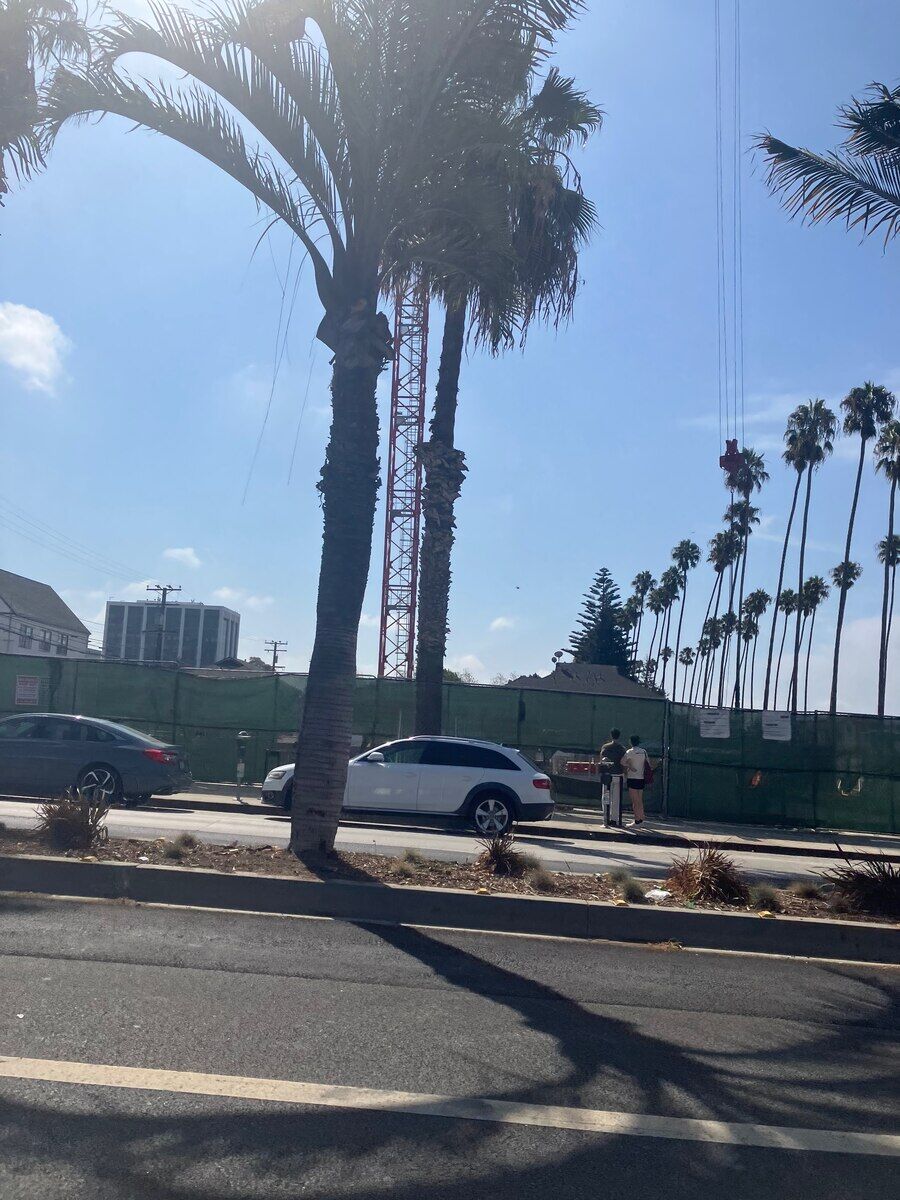
Tower going up at 20th St. and Wilshire is, you guessed it, also entirely out of scale with the neighborhood.
Look closer and the political incentives become clearer. Santa Monica’s left-leaning City Council is not simply responding to abstract state mandates or “chronic shortage” talking points about shrinking household sizes. By controlling the pipeline of heavily subsidized, income-restricted, and supportive units—especially on public land with Housing Trust Fund loans, tax credits, and ground leases—the council and its nonprofit partners get to shape who moves in. Waitlists managed by the Santa Monica Housing Authority and favored operators mean local politicians and bureaucrats effectively pick the winners. Permanent supportive housing for seniors and the formerly homeless adds a ready-made constituency that depends on continued government programs and progressive governance.
Market-rate portions still get density bonuses and streamlining under state laws the same progressive lawmakers championed. The result is taller, denser buildings dropped into established areas while longtime residents who pay the taxes watch the character of their neighborhoods change. Population is flat or declining regionally, yet the city keeps adding units that let officials claim they are “solving the housing crisis” and “addressing homelessness”—even as overall costs remain punishing and ordinary working families continue to leave California.
Project timelines stretch over years, so some of this was set in motion earlier. But the simultaneous push, the reliance on city-owned sites, the off-site affordable consolidation programs, and the heavy emphasis on restricted units all serve a convenient purpose: they expand the number of people whose housing depends on the current political order. Continuous production of tightly controlled affordable and supportive towers helps lock in a voter and activist base that benefits from the status quo.
Whether any of this meaningfully lowers costs for the broader public is an open question the council prefers not to dwell on. What is clear is that Santa Monica is building aggressively while the surrounding region loses people. The cranes keep rising. The political math is not hard to see.



Reader Comments(0)