
Community, Diversity, Sustainability and other Overused Words


Community, Diversity, Sustainability and other Overused Words
From Madrid's Cibeles to Ceuta itself, protesters demand returns after thousands of migrants remain in a city of 85,000 - search: Ceuta migrant crisis, Pedro Sánchez resignation, Spain protests September 2026, Morocco border crossing.
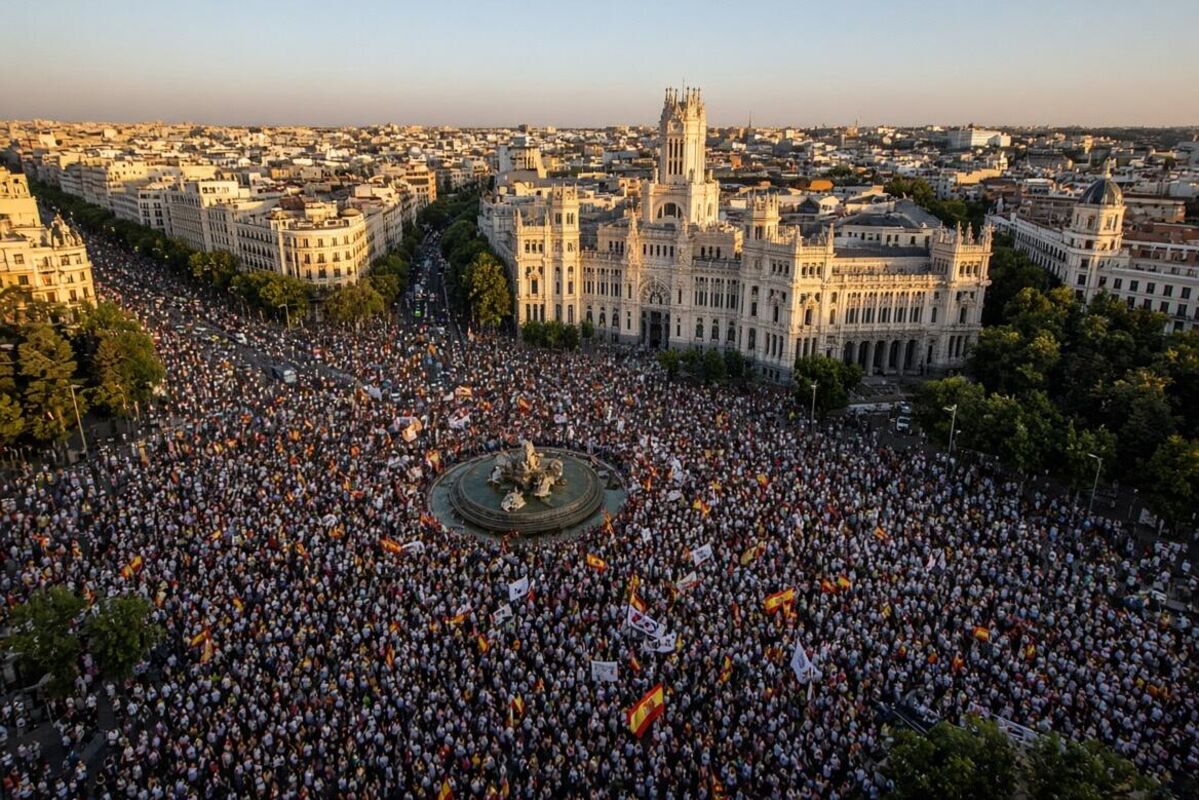
A wide aerial view of Madrid's Plaza de Cibeles packed wall to wall with Spanish protestors- the scale people mean when they say the square was full
A wide aerial view of Madrid's Plaza de Cibeles packed wall to wall with Spanish protestors- the scale people mean when they say the square was full
Tens of thousands of people filled plazas across Spain on Wednesday night, from Madrid's Cibeles to Valencia, Barcelona, Seville and Ceuta itself, demanding that Prime Minister Pedro Sánchez act on the migrant crisis that has left a Spanish city of about 85,000 residents overwhelmed for more than a month. Spaniards are chanting that Interior Minister Marleska must resign immediately.
The official count in Madrid was about 50,000. City Hall put the figure closer to 150,000. Opposition-friendly outlets spoke of hundreds of thousands nationwide across more than 250 municipalities. Claims of "millions" spread fast on social media; they are not backed by police or municipal tallies. The scale was still large enough to turn Ceuta Day into a national revolt against the government.
The trigger is not abstract immigration policy. On July 30–31, Spanish and local officials said roughly 50,000 to 72,000 people crossed from Morocco into Ceuta by land and sea, the largest such surge in the enclave's history. At least dozens died trying. Within about 36 hours, more than 48,000 had gone back. Weeks later the problem that remained was the people who did not. Madrid has said about 5,000 are still there. Ceuta's authorities and aid counts have put the figure nearer 9,000 to 10,000, including unaccompanied minors, camped on beaches, streets and lots. In a city that size, either number is a civic emergency.
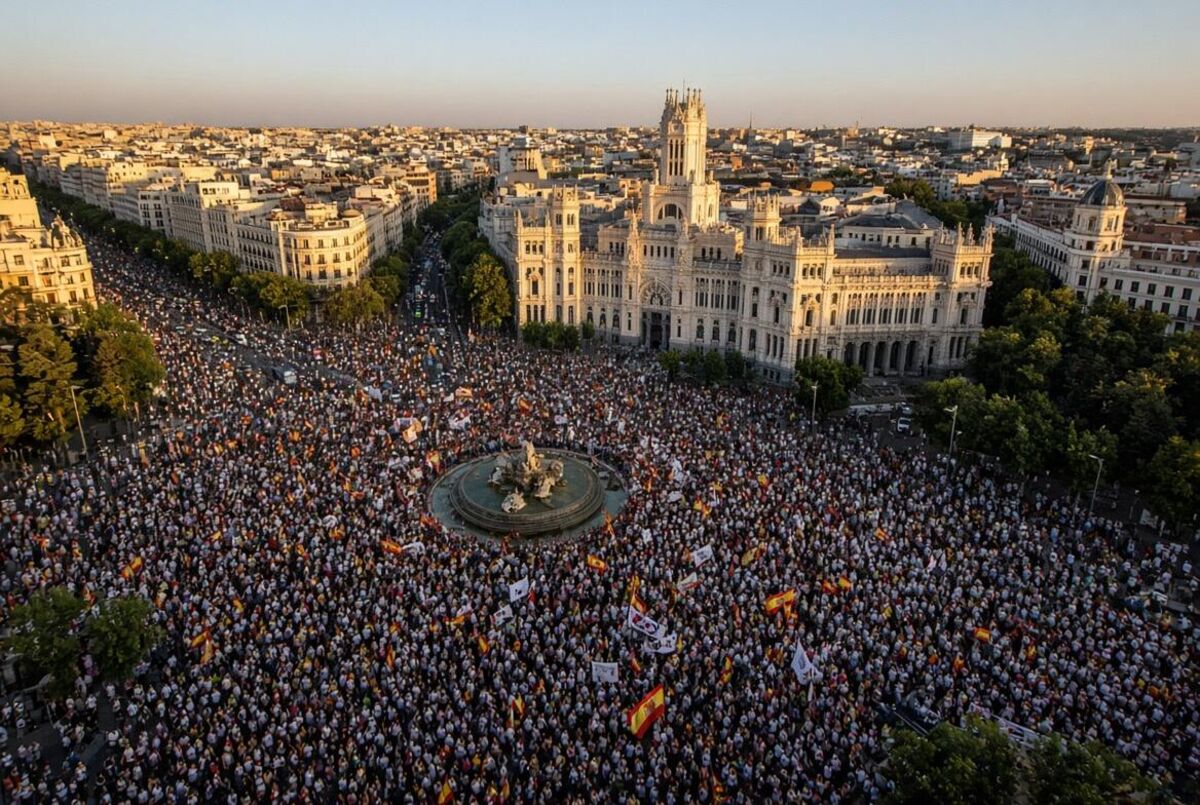
A wide aerial view of Madrid's Plaza de Cibeles packed wall to wall with Spanish protestors- the scale people mean when they say the square was full
That is why the chants were blunt: "Sánchez, resign," "Ceuta is not for sale," "invaders, go home." The rallies were convened as solidarity with Ceuta by the Spanish Federation of Municipalities and Provinces, dominated by the opposition People's Party. The government called the day a political ambush. On the ground it looked like exhausted residents and mainland Spaniards who think the state has lost control of a European border.
The remaining population is mixed. Most of the original wave were Moroccan. Many of those still in Ceuta are Moroccans who did not turn around, plus people from Sudan, Mali, Somalia and other African countries who cannot be returned under the usual Spain-Morocco arrangement, and minors Spanish law will not simply push back.
A circulating claim that the holdouts are mostly convicts released from Moroccan jails on Throne Day has not been substantiated; Morocco's mass pardons that week were for a different category of cases, and fact-checks found no evidence of a prison-to-border pipeline. The verified problem is simpler and worse: a small city left with thousands of people sleeping rough, strained services, burned camps, street clashes, and a government arguing over the headcount instead of ending it.
The diplomatic backdrop matters, but not in the way some protest posts have it. Spain left Western Sahara in 1975–76. Morocco then took most of the territory; Algeria backs the Polisario Front. Sánchez did not recently switch Spain onto Algeria's side. Since 2022 he has treated Morocco's autonomy plan as the most realistic basis for a settlement, and he kept that line even while visiting Algiers in July to repair energy ties. If Moroccan forces eased the border, as Spanish police reporting and earlier 2021 precedent suggest they can, it fits a pattern of migration used as leverage, not a sudden Spanish conversion to Polisario.
Sánchez has been prime minister since 2018 and last assembled a government after the 2023 election. Critics say a politics of moral language has substituted for returns. His government says smugglers, online rumors of an "open border," and a court ruling against summary sea pushbacks caused the surge, and that most arrivals left of their own accord. Both can be partly true. Neither answers the people in Cibeles: a Spanish city cannot live indefinitely with thousands of new street-sleepers while Madrid waits for the problem to become someone else's.
The comparison protesters keep making is crude and effective. Drop 10,000 destitute arrivals onto a beach neighborhood in San Francisco or Santa Monica and the argument would not be about empathy in the abstract. It would be about whether the government still governs. That is what the Spanish crowds were saying on September 2.



Reader Comments(0)