
Community, Diversity, Sustainability and other Overused Words


Community, Diversity, Sustainability and other Overused Words
Nuuk and Copenhagen say the deal strengthens alliance defenses while affirming Greenland's self-determination; Trump calls it an "infinite life" arrangement giving Washington permanent security control
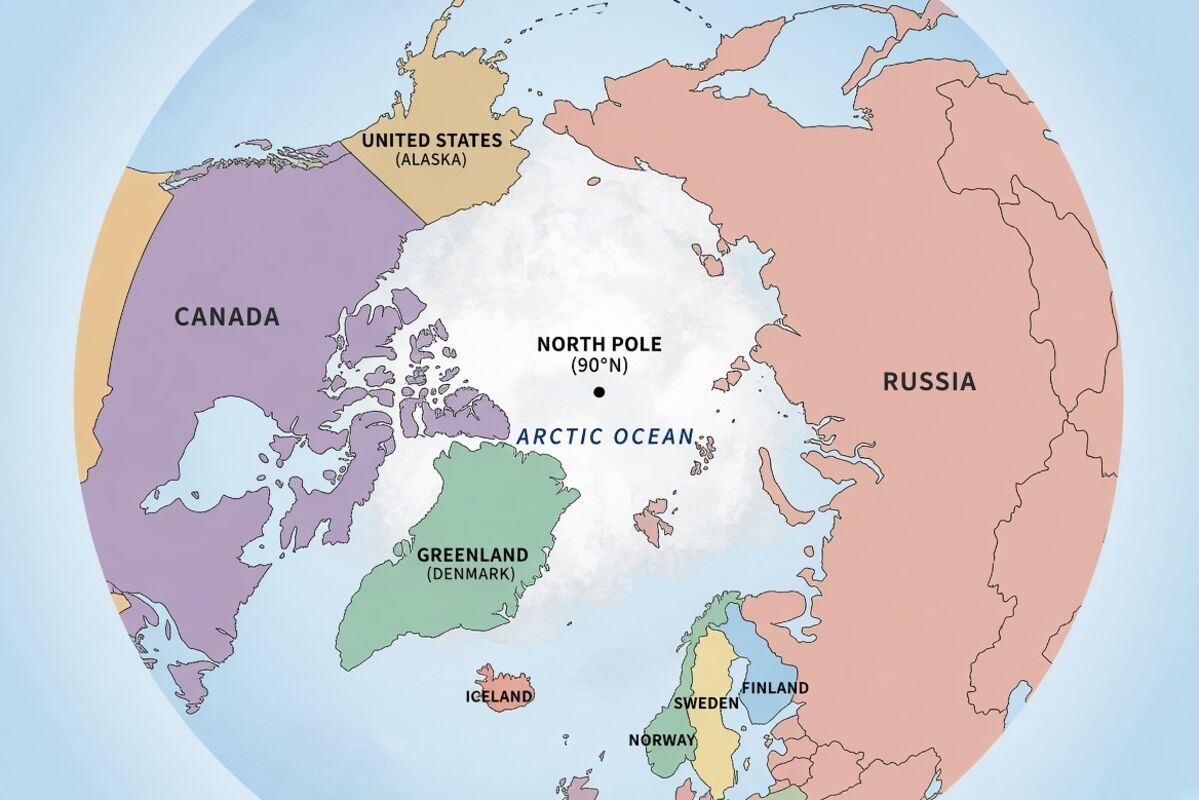
Map of the Arctic Ocean showing the major countries ringing the polar sea.
Pres. Trump tweeted this map of Greenland, with the US flag superimposed.
Summary: While the US already had the right under a 1951 treaty to place military bases in Greenland, this treaty gives the US "the exclusive right," and also bans "countries that could pose a security risk" i.e. China, from operating in Greenland. This is an unexpected win for the Trump administration in a million square kilometer territory that has fewer people than Santa Monica, CA.
Greenland, Denmark and the United States are expected to sign an agreement next week on strengthened security in the Arctic and North Atlantic, according to a joint announcement from the governments in Nuuk and Copenhagen. The signing is planned on the sidelines of the United Nations General Assembly in New York. After signature the pact would still need to complete national parliamentary procedures before entering into force.
Chairman of Naalakkersuisut Jens-Frederik Nielsen said the agreement "will ensure and strengthen the security of Greenland, the Kingdom of Denmark, the United States, and the Western Alliance" and "recognizes Greenland's interests and our place in the international cooperation." Danish Prime Minister Mette Frederiksen described it as "a great agreement" that "strengthens our common security in the Arctic and the North Atlantic Area and therefore is great for NATO and Europe as well," while also recognizing "the sovereignty and territorial integrity of the Kingdom and the Greenlandic people's right to self-determination."
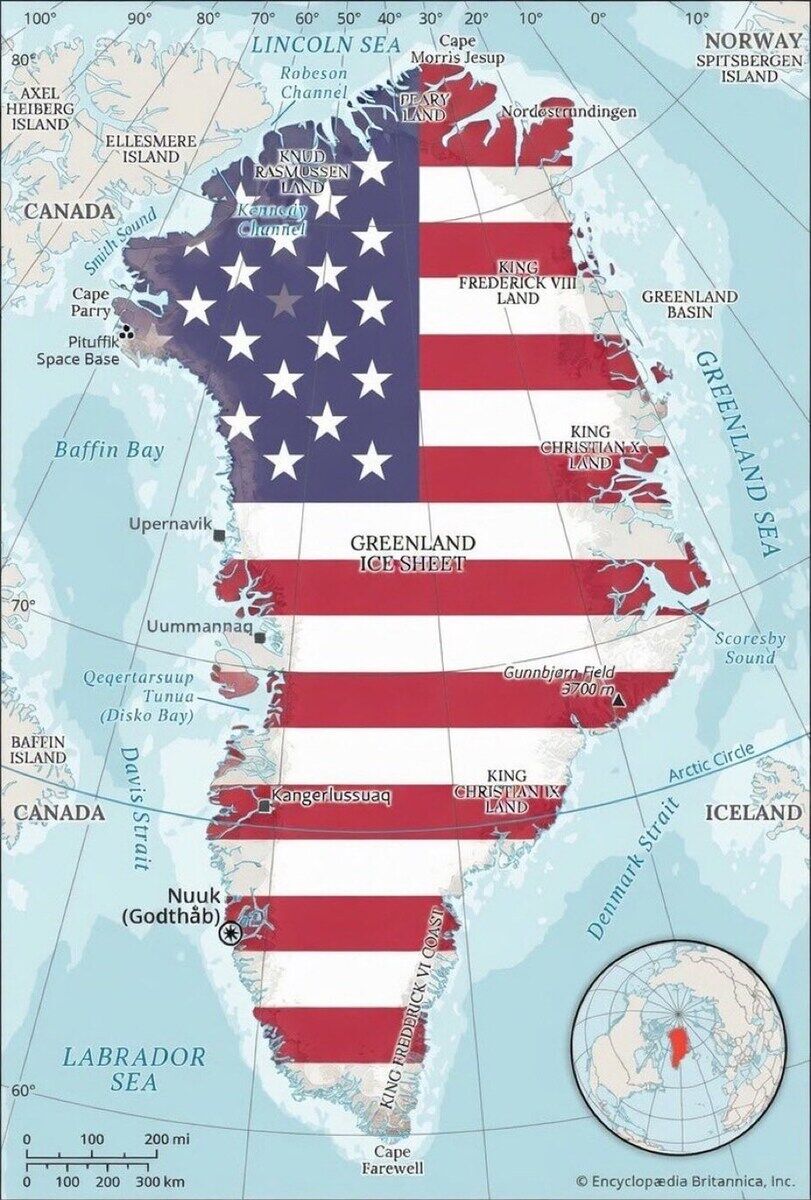
Pres. Trump tweeted this map of Greenland, with the US flag superimposed.
President Donald Trump separately announced that the United States had entered an agreement giving it "permanent control over security, and all other needs, in Greenland," with "no cost to the United States." He said the arrangement would prevent any U.S. adversary from establishing a base, maintaining a military presence or making sensitive investments in Greenland without Washington's written approval, and that the United States would begin developing a larger military presence on the island. Trump called it an "Infinite Life" agreement with no expiration.
U.S. officials have described the terms as guaranteeing permanent access, basing and overflight rights and allowing an increase in American military facilities, while barring non-NATO countries from building bases and restricting adversary investments that could pose a security threat. The United States has maintained a military presence in Greenland since World War II and operates under a 1951 defense agreement with Denmark that already granted broad rights to installations on the island.
The announcement follows months of heightened attention on Greenland's strategic location amid growing great-power interest in the Arctic. Danish and Greenlandic leaders have repeatedly stated that Greenland is not for sale and that its future will be decided by Greenlanders. The forthcoming text of the agreement has not been released, and both sides have said further details will wait until after the planned signing.
The months of purchase and annexation talk did not produce a sale. Reuters reported Friday that the emerging pact would expand the American military footprint while stopping well short of President Trump's long-stated ambition to acquire the island. Danish and Greenlandic leaders have said throughout that Greenland is not for sale and that any arrangement must recognize the Kingdom's sovereignty and Greenlanders' right to self-determination-language both capitals repeated in Friday's statements. That gap between Trump's public demand and the deal now on offer has led some diplomats and analysts to argue that last year's rhetoric functioned as leverage: a maximalist opening bid that forced Copenhagen and Nuuk to the table on security, basing and investment rules they had already privately signaled they were willing to discuss.
The record is more complicated than a simple bluff. Trump refused in early 2025 to rule out military or economic pressure, appointed an envoy who described the goal as making Greenland part of the United States, and kept acquisition language in play even as confidential talks began in Washington. Those talks, according to later reporting, were also framed inside NATO capitals as an offramp from a crisis that risked splitting the alliance. What is clear is the outcome now being prepared for signature: not a transfer of territory, but a permanent security arrangement that both sides can describe in their own terms-Washington as "control over security," Nuuk and Copenhagen as strengthened Arctic defense that leaves Greenlandic self-rule intact.



Reader Comments(0)