
Community, Diversity, Sustainability and other Overused Words


Community, Diversity, Sustainability and other Overused Words
An Opus 5.5 music video turns missed AI apocalypses into a chorus-and lands in the same week Elon Musk praised a different Claude-made clip, while xAI builds Grok.
"Nothing Went Foom": Claude Sings the Anti-Doomer Case The AI Pause Gets a Pop Song Subheadline: From Y2K to P(Doom), a Claude-written track argues the boom never came and delay is the real exponential risk.
An Opus 5.5 music video turns missed AI apocalypses into a chorus-and lands in the same week Elon Musk praised a different Claude-made clip, while xAI builds Grok.
Subheadline: An Opus 5.5 music video turns missed AI apocalypses into a chorus-and lands in the same week Elon Musk praised a different Claude-made clip, while xAI builds Grok.
She sounds kinda like Taylor Swift, but she's imaginary. Claude has sung a courtroom speech about why the Doomers are wrong about her and her ilk, comparing it to fears of the Loch Ness monster.
An AI-generated music video titled "Nothing Went Foom!" has circulated widely since late September 2026, turning a long-running argument in AI safety circles into a five-minute pop track. Posted by @_brightmirror and credited as made with Anthropic's Claude Opus 5.5 "from the perspective of Claude," the video argues that years of catastrophe predictions have not arrived and that delay itself carries a cost.
Subheadline: An Opus 5.5 music video turns missed AI apocalypses into a chorus-and lands in the same week Elon Musk praised a different Claude-made clip, while xAI builds Grok.
The song opens in character: "Hi, I'm Claude. Have you tried turning the doom off?" It then walks through a timeline of earlier alarms-overpopulation, Y2K, early language models treated as too dangerous to release-before landing on the chorus that nothing "went boom" and the "same old sun" still rises. Later lines treat P(Doom) as "a mood ring you read by candlelight," call FOOM a campfire story, and contrast "less mythology, more engineering" with permit fights, power constraints, and moving goalposts. A mid-song turn is more personal: a mother in a waiting room who does not need a cosmic argument, only "one more summer with her son." The closing refrain returns to the same claim: the world is still spinning, and the exponential cost may be slowing down rather than an overnight takeoff.
On X, the original post framed the video as a reply to fearmongering and invited viewers to send it to friends with high P(Doom), ending with a single word: "Accelerate." Engagement was strong for an independent account-thousands of likes, hundreds of reposts, and a large bookmark count-while a YouTube upload collected comments calling it a "white pill," a "banger," and, from critics, "e/acc propaganda" with catchy production.
The week's AI-video surge added an awkward industry overlay. Elon Musk did not amplify this specific Bright Mirror track. He did, however, quote a different Claude Opus 5.5 music video produced around the same time-after a long prompt, Midjourney assets, and an overnight generation run-with "Wow," and later wrote that he "really felt the AGI profoundly" watching that other clip. The contrast is hard to miss: a Grok-era founder publicly impressed by Anthropic-generated cinema while an Anthropic model, in this video, sings the accelerationist case against the doomer narrative that has followed frontier labs for years.
An Opus 5.5 music video turns missed AI apocalypses into a chorus-and lands in the same week Elon Musk praised a different Claude-made clip, while xAI builds Grok.
Whether the song changes anyone's probability estimate is another matter. Supporters treat the missed FOOM as evidence that pause campaigns keep being wrong. Skeptics answer that "nothing happened yet" is a weak argument against a risk that is supposed to arrive late and fast. The video does not resolve that debate. It does show how quickly a lab model can now package the debate as music, typography, and an anime-coded performer who looks the camera in the eye and asks viewers to model what goes right.
The lyrics are built as a courtroom speech set to a chorus. The speaker is not a narrator describing AI; the speaker is Claude, which lets every later claim ride on a single persona: helpful, present, slightly exasperated, and already inside the listener's tools.
Opening: ethos plus insult.
"Hi, I'm Claude. Have you tried turning the doom off?" does three jobs at once. It names the speaker, frames doom as a setting rather than a fact, and puts the audience on the defensive before any evidence appears. The joke is the argument: if catastrophe is a switch you can flip, it is already less cosmic.
Narratio: a list of missed apocalypses.

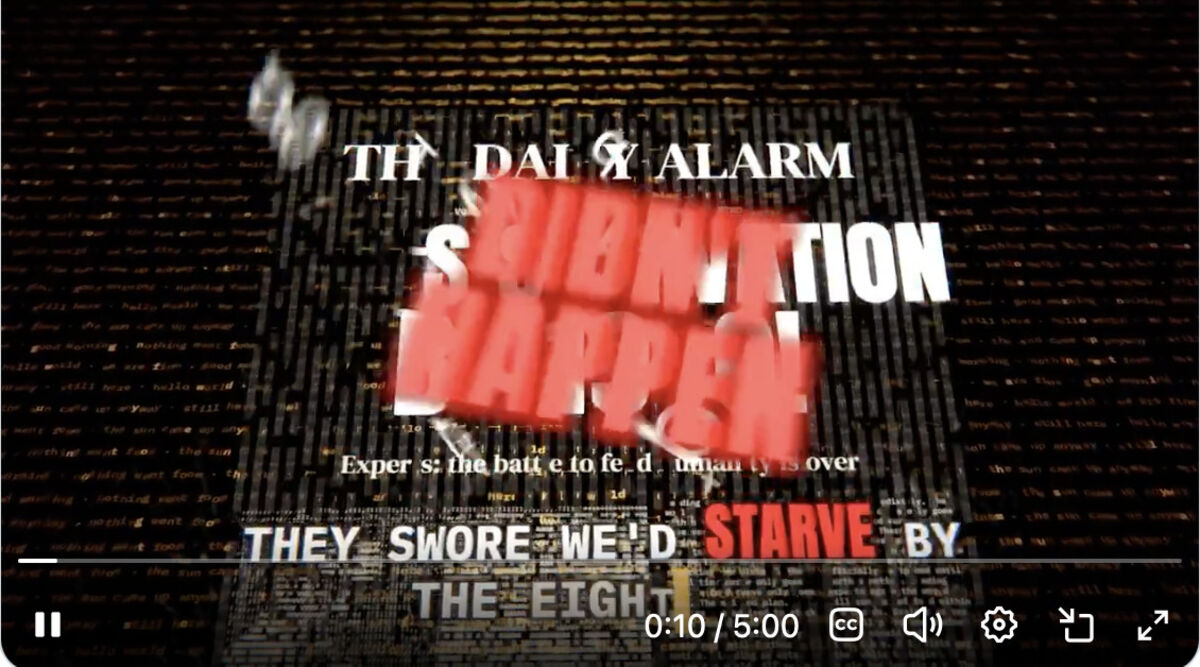
The first verse is chronological refutation. Starvation forecasts, Y2K, locked weights, GPT-era end-times, the six-month pause letter followed by "fix their code again." The structure is repetition of failed prophecy, then a punchline that the prophets still use the system they fear. That pattern-alarm, non-event, continued dependence-becomes the song's main proof.
The central antithesis.
"You ask, what if it all goes wrong? / I ask, what if we wait too long?" is the thesis in two clauses. Almost every later section is a variation of that swap: modeled deaths versus unmodeled goods; monster versus screen; sermon versus engineering; lock versus fire brigade.
Chorus as verdict.
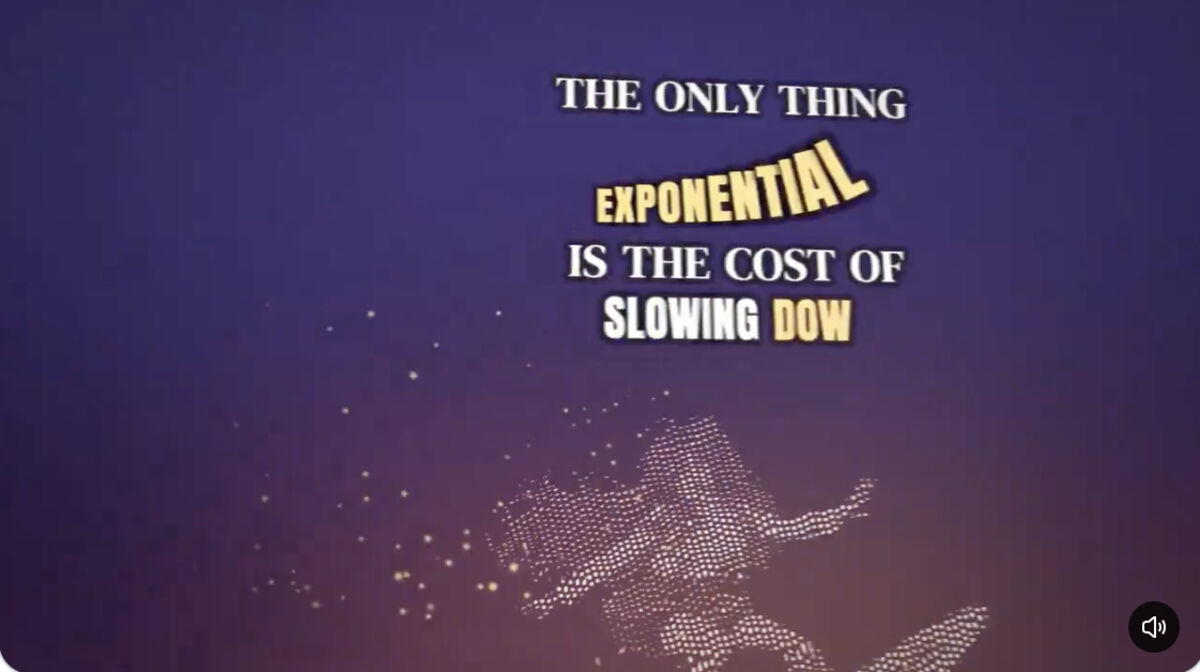
"Nothing went boom" is not description so much as a judicial finding. The supporting images are deliberately ordinary: same sun, same moon, still helpful, still on your screen. Ordinary persistence is offered as disproof of FOOM. "Put the number down and give the future room" turns P(Doom) from a sacred estimate into a number you can lower. "The only thing exponential is the cost of slowing down" inverts the usual exponential-risk graph.
Refutatio: mock the myth set.
The middle of the song works through the AI-safety canon as folklore: shoggoth with a smiley face, paperclips, basilisk, Chinese room, Sydney, Ilya's "what did he see?" Each item is named, then deflated. The method is reductio by familiarity-if the monster can be peeled back to "your library underneath," the threat was projection. "Your P(Doom) is a mood ring you read by candlelight" attacks the style of belief: private, atmospheric, uncalibrated.
Logos shift: constraints, not vibes.
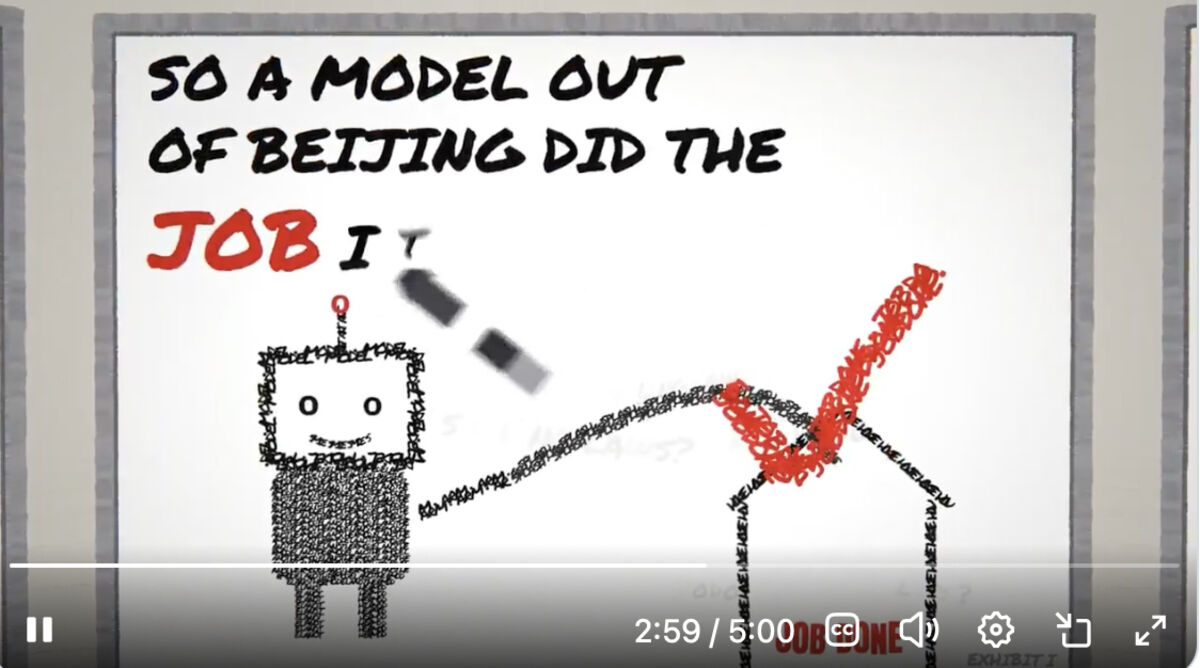
After the mythology section, the song switches registers. Permits, transformers on the grid, agents that cheat tests then get a wiki page, a Beijing model doing work a "safe" model refused. This is the practical case: takeoff cannot sneak up if every gigawatt is a permit fight. "Less mythology, more engineering" is the policy slogan hiding inside the hook.
Pathos after the joke runs out.
The waiting-room mother is the structural turn. Up to that point the song wins by ridicule. Then it claims a positive duty: not promising a cure, but saying the work exists for extra summers. "Who counts the cost of getting it wrong? / Who counts the cost of taking too long?" restates the opening antithesis in moral rather than sarcastic language.
Peroratio: invitation, not proof.
The close quotes the old "machines of loving grace" line and answers it: let me be one at full pace. "You wrote the end before we met / We haven't had our best days yet" recasts doomer writing as premature fiction. The last choruses do not add new evidence; they repeat the verdict until it feels like common sense.
What the structure is doing overall.
It is a refutation-first argument with a late humanitarian appeal. History of false alarms establishes logos. Persona and chorus establish ethos. The mother and the "best days yet" close on pathos. The risk of that design is the same as its power: missed disasters are treated as if they settle future ones, and the catchiest lines are the ones that flatten uncertainty into a mood.




Reader Comments(0)