
Community, Diversity, Sustainability and other Overused Words


Community, Diversity, Sustainability and other Overused Words
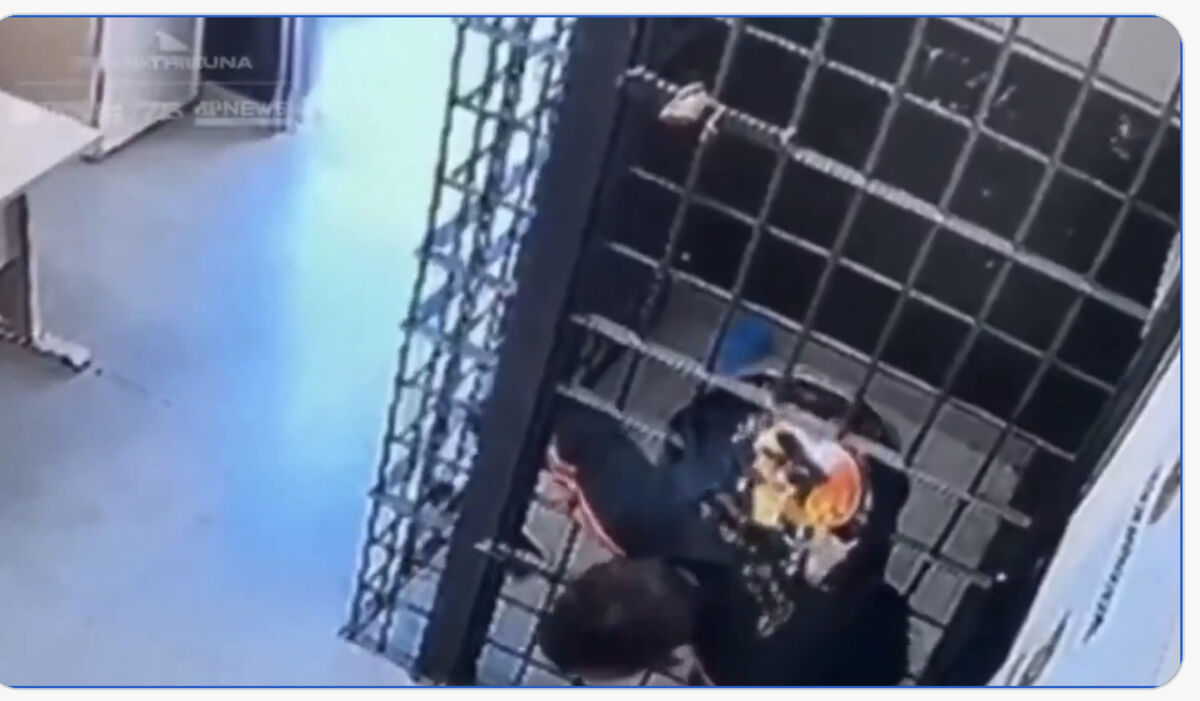
CCTV footage shows detainee, just arrested for domestic violence, twisting his way through a gap in a Florianópolis holding cell before slipping out the door
Brazilian Contortionist Wriggles Through 6 Inch Gap in Iron Jail Bars in Overnight Police Station Escape
Brazilian Contortionist Wriggles Through 6 Inch Gap in Iron Jail Bars in Overnight Police Station Escape
A man detained hours earlier on a domestic-violence charge used remarkable flexibility to squeeze through the narrow bars of a holding cell at the Central de Plantão Policial in Florianópolis, Santa Catarina, in the early hours of September 26. Security cameras recorded him first pushing his arms and head through the gap, then folding and wriggling the rest of his body until he dropped to the floor on the other side.
After retrieving his shoes he walked out of the station.
Civil Police confirmed the escape, interdicted the cell for modifications, and requested a preventive-arrest warrant while searching for the fugitive. The video, originally posted by RT and widely shared by Brazilian outlets, has drawn attention to the design of short-term detention facilities.
Brazilian Contortionist Wriggles Through 6 Inch Gap in Iron Jail Bars in Overnight Police Station Escape
Prison security has evolved in lockstep with changing ideas about punishment, from simple containment to layered architectural control, classification, and technology. Early facilities were often improvised.
Pre-modern era
Before purpose-built prisons, people were held in castle dungeons, fortress basements, or converted buildings. Security relied on thick stone walls, limited access points, and physical isolation rather than systematic observation or classification. The goal was mainly to keep prisoners until trial, exile, or corporal punishment. Hygiene and supervision were poor; escapes or riots were common when structures were not originally designed for long-term holding.
18th–19th century reforms
Enlightenment thinkers and reformers such as John Howard pushed for dedicated penitentiaries that would isolate inmates for moral reflection. Two competing American models emerged. The Pennsylvania (separate) system, exemplified by Eastern State Penitentiary (opened 1829, designed by John Haviland), used radial wings so a small number of staff could monitor many cells from a central point; inmates stayed in individual cells with limited contact. The Auburn system favored congregate labor by day and silence at night in larger cell blocks. Jeremy Bentham’s never-fully-realized Panopticon proposed a circular layout with a hidden central inspector so prisoners could never be sure they were unwatched; the idea influenced later radial designs even if few prisons copied it exactly. These layouts marked the first time architecture itself was treated as a security and reform tool.
20th century shifts
As populations grew, designs moved from radial “spokes” to telephone-pole or campus-style plans with separate housing units around central services. Mid-century “new generation” prisons introduced podular units that allowed either remote (indirect) or direct staff supervision. The late 20th century brought supermax facilities—highly isolated, electronically controlled units intended for the most dangerous inmates. Perimeter security added multiple fences, detection systems, and later cameras. Philosophy swung from rehabilitation toward incapacitation, producing both more humane campus layouts in some countries and stark isolation units in others.
Contemporary developments
Modern prisons combine physical barriers with electronic monitoring, classification systems that separate inmates by risk, and building materials chosen for durability and visibility. Temporary holding cells, like the one in the recent Florianópolis case, still sometimes reveal design gaps that older or hastily adapted structures can have. Overall, the trend has been toward greater layering of controls—architecture plus technology plus staff procedures—while debates continue over whether the emphasis should be containment, deterrence, or conditions that support later reintegration.
The physical prison has never been a static fortress; each generation’s security features reflect what society believed incarceration should achieve at that moment.



Reader Comments(0)