
Community, Diversity, Sustainability and other Overused Words


Community, Diversity, Sustainability and other Overused Words
Visitor volume in 2025 was about 3.9 million, against 8.41 million in 2019. Day visitors accounted for 88 percent of the 2025 total but only 27 percent of spending
Santa Monica has erected electronic billboards on the Promenade, to cover the number of vacancies.
Movie theatre on Montana Avenue
A RAND study released this week concludes that Santa Monica's economy has declined more sharply since the mid-2010s than the comparison areas examined, even as citywide crime and homelessness trends are more mixed than the downtown experience alone would suggest. The report supplies a quantitative baseline for debates over commercial vacancy, visitor spending, and the spatial distribution of unsheltered homelessness.
From 2015 to 2025, clothing and accessories sales fell 75 percent and food-services sales fell 24 percent.
The decline began around the pandemic, recovered only partially, and then resumed. Visitor volume in 2025 was about 3.9 million, against 8.41 million in 2019. Day visitors accounted for 88 percent of the 2025 total but only 27 percent of spending, so the composition of arrivals matters as much as the headcount for taxable sales and lodging revenue. Ground-floor occupancy on the Third Street Promenade stood at 75 percent as of April 30, 2026; Santa Monica Place entered receivership in early 2025, and its Nordstrom closed that August.
Homelessness, by contrast, edged down. The 2026 count recorded 718 people experiencing homelessness, an 11.6 percent decline from 812 in 2025, while the city of Los Angeles rose 3.4 percent and the county rose 1.2 percent over the same period. Counts have been relatively stable over the past decade. The incidence remains heavily concentrated downtown and along the beachfront-the locations where businesses and visitors encounter it most-with only Venice showing comparable concentration among the areas studied.
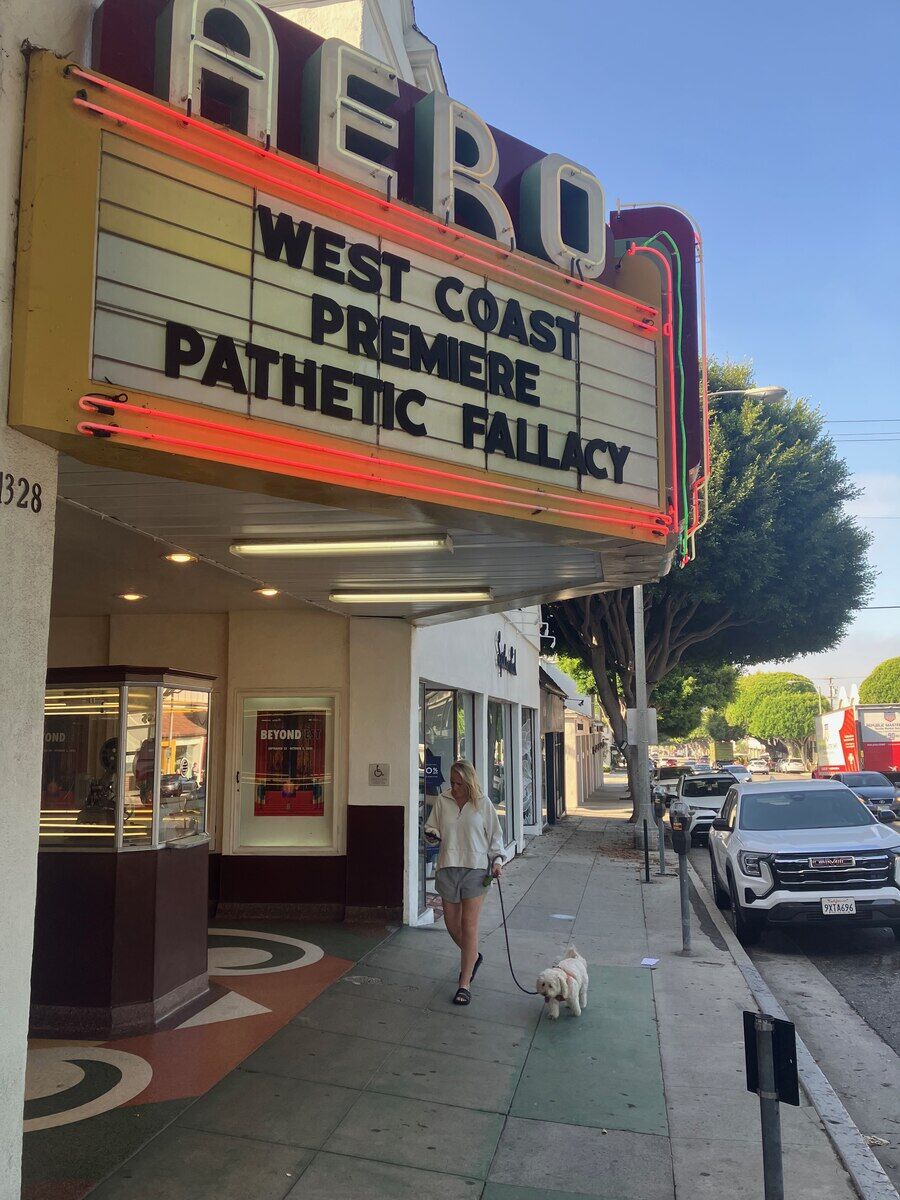
Movie theatre on Montana Avenue
That spatial pattern helps explain why aggregate improvement can coexist with persistent commercial complaints. Business owners told researchers that unsheltered individuals with significant mental-health or substance-use conditions reduce customer traffic.
The city is relocating key homelessness services out of downtown, a shift the report suggests may ease that concentration, and in August the council voted to close the SaMoShel shelter and build a city-controlled housing-focused system of care. In March the council also approved an eight-point economic package that includes a $3 million recruitment fund and elimination of a $1,000-per-seat wastewater fee for restaurants.
RAND's recommendations emphasize measurement: more frequent and detailed homeless counts, with public performance indicators, so policymakers can separate citywide trends from the localized conditions that drive retail performance and visitor expenditure. The study's central empirical claim is narrower than the political argument around it-Santa Monica's sales and visitor base have lagged peers, while homelessness has not risen in step with the broader county, but remains clustered where the commercial district is weakest.
RAND is a think-tank located across from SM City Hall.




Reader Comments(0)