
Community, Diversity, Sustainability and other Overused Words


Community, Diversity, Sustainability and other Overused Words
Factual summary on FGM prevalence in Somalia, U.S. legal status, and Rep. Ilhan Omar's legislative and public statements
Medical textbook showing practitioners the types of Female Genital Mutilation common in Somalia, Djibouti and Mauritania.
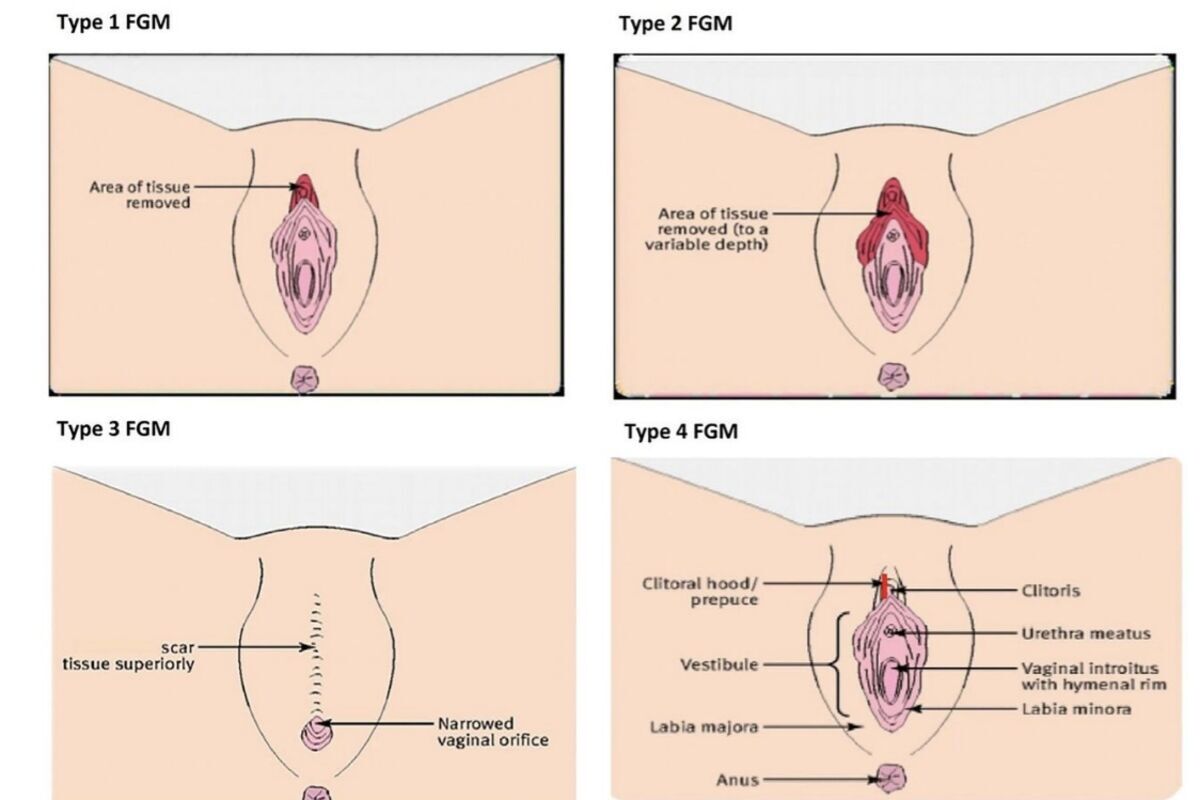
Medical textbook showing practitioners the types of Female Genital Mutilation common in Somalia, Djibouti and Mauritania.
Does Ilhan Omar have a clitoris? The genitalia of public figures are not usually available. But on a statistical basis, the answer is probably not. She has supported national legislation, passed by Congress twice, to ban the practice, which has a 98% prevalence in Somalia. Which doesn't answer the question one way or the other; but it shows the gal who's heart is in Mogadishu, still condemns a cultural practice almost universal in her home country.
Prevalence data (Somalia)
Nationally representative surveys place FGM prevalence among girls and women aged 15–49 in Somalia at approximately 99% (99.2% in the most commonly cited recent figure from the 2020 Somali Health and Demographic Survey). UNICEF and UNFPA compilations continue to report roughly 99%, describing the practice as nearly universal.
Prevalence among those aged 15–19 rose slightly from 97% (2006) to 99% (2020). It is high across regions and population groups (urban, rural, and nomadic). Most procedures occur in childhood (commonly ages 5–9 or 10–14). There has been little measurable decline over recent decades. Somalia ranks highest among countries with available data. Common forms include Types I–III (with Type III/infibulation historically prevalent in many communities).
Other high-prevalence countries (women 15–49) include Guinea (94.5%), Djibouti (90%), Mali (89%), Egypt (87%), Sudan (87%), Eritrea (83%), and Sierra Leone (~83%), based on the latest available UNICEF-aligned surveys.
Legal status in the United States
FGM is a federal crime under 18 U.S.C. § 116. The original 1996 statute was ruled unconstitutional by a federal district court in 2018 on Commerce Clause grounds. Congress responded with the Strengthening the Opposition to Female Genital Mutilation Act of 2020 (STOP FGM Act of 2020, Public Law 116-309), signed January 5, 2021.
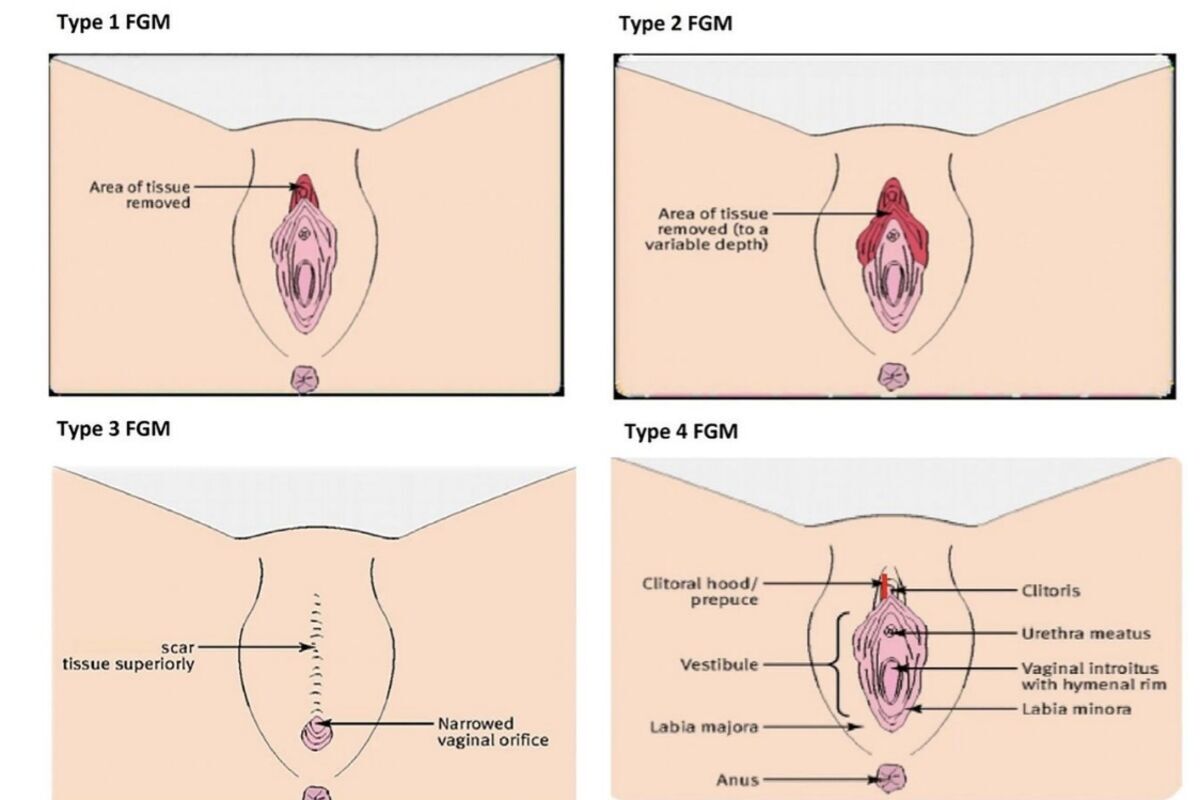
Medical textbook showing practitioners the types of Female Genital Mutilation common in Somalia, Djibouti and Mauritania.
The amended law: Requires a nexus to interstate or foreign commerce. Prohibits performing, attempting, or conspiring to perform FGM on anyone under 18; parents/guardians/caretakers facilitating or consenting to it; and transporting a minor for the purpose of FGM. Sets a maximum penalty of 10 years in prison. States that religion, custom, tradition, ritual, or standard practice is not a defense. Includes limited medical exceptions for necessary health procedures performed by licensed practitioners.
Most U.S. states (roughly 41–42 as of the mid-2020s) have their own specific criminal statutes against FGM, often with additional provisions such as parental liability or bans on travel for the purpose of FGM. A small number of states lack a dedicated statute, though general assault or child-abuse laws may still apply. The FBI treats FGM as a federal crime when jurisdictional elements are met.
Rep. Ilhan Omar's legislative record and public statements
Omar (born in Somalia in 1982; left as a child) has publicly described FGM as "heinous" and has referenced the trauma and PTSD experienced by survivors.
As a Minnesota state legislator in 2017, she voted in favor of a bill increasing penalties for FGM (making parental involvement a felony in certain cases and raising sentences). She expressed reservations during committee consideration, preferring the use of existing criminal laws over a new statute driven by "flashy headlines," and raised concerns about automatic custody removal. Fact-checks confirmed she ultimately voted for the bill's referral and passage in the Minnesota House (it later failed in the Senate).
In Congress she has co-sponsored or supported measures addressing FGM, including a resolution condemning the practice, and has stated that she has voted for multiple related bills at the state and federal levels.
At a 2019 Muslim Caucus Education Collective conference, when asked by a progressive Muslim activist (Ani Zonneveld of Muslims for Progressive Values) to make a statement condemning FGM, Omar called the question "appalling" and "frustrating." She said Muslim legislators are repeatedly asked to condemn FGM (along with groups such as al-Qaeda or Hamas) in ways other politicians are not, that the assumption is they support it, and that her legislative record and prior statements already address the issue. She has made similar points on other occasions. Coverage of the exchange appeared in multiple outlets, including accounts noting both her votes and the criticism from some survivors and advocates that she treated the question as a demand rather than an opportunity for public education.
There is no medical or health purpose for female genital mutilation (FGM). It has no health benefits and is performed for non-medical sociocultural reasons.
According to the World Health Organization (WHO), UNICEF, and UNFPA, the stated reasons vary by community but generally fall into these categories:
Social norms and conformity**: In communities where it is nearly universal, strong social pressure to conform exists. Families fear rejection, ostracism, or loss of social status if they do not practice it. It is often treated as a prerequisite for social acceptance, marriage, or inheritance.
Control of female sexuality**: A common motivation is to reduce sexual desire, ensure premarital virginity, promote marital fidelity, and uphold family honor. Removal of the clitoris (or more extensive cutting) is believed by some to curb "promiscuity."
Rite of passage and preparation for adulthood/marriage**: It is viewed as a necessary step in raising a girl, marking transition to womanhood, and increasing marriageability.
Hygiene, aesthetics, and femininity**: Some believe external genitalia are unclean, unfeminine, or that an uncut clitoris will grow excessively. Cutting is claimed to promote cleanliness, beauty, or modesty.
Religious justifications (misconceptions)**: Practitioners sometimes claim religious support. However, no major religious text (Quran, Bible, etc.) requires or endorses FGM. It predates both Islam and Christianity, is practiced by some communities of multiple faiths (and none), and is not practiced in many Muslim-majority countries. Religious leaders hold varying positions; many have actively opposed it.
These reasons are deeply rooted in gender inequality and are transmitted intergenerationally. Social pressure is often the strongest driver once the practice is established as a norm, making it difficult for individual families to abandon it without collective change.
In short, the "purpose" is cultural and social control rather than any therapeutic or health-related goal. International health authorities and human rights bodies classify it as a harmful practice and a violation of the rights of girls and women.



Reader Comments(0)