
Community, Diversity, Sustainability and other Overused Words


Community, Diversity, Sustainability and other Overused Words
5.0 magnitude shaker struck at 9:30 am PST and lasted around 20 seconds. Social media posts described it as a strong or sudden jolt-some calling it the strongest they had felt in recent years
Moderate Earthquake Rattles Los Angeles Area Saturday Morning, Felt Strongly in Santa Monica and South Bay
A moderate earthquake struck offshore in Santa Monica Bay on Saturday morning, November 28, 2026, around 9:30 a.m. PST, sending a noticeable jolt through much of the Los Angeles region, including Santa Monica, Manhattan Beach, Redondo Beach, Inglewood, and surrounding communities.[](
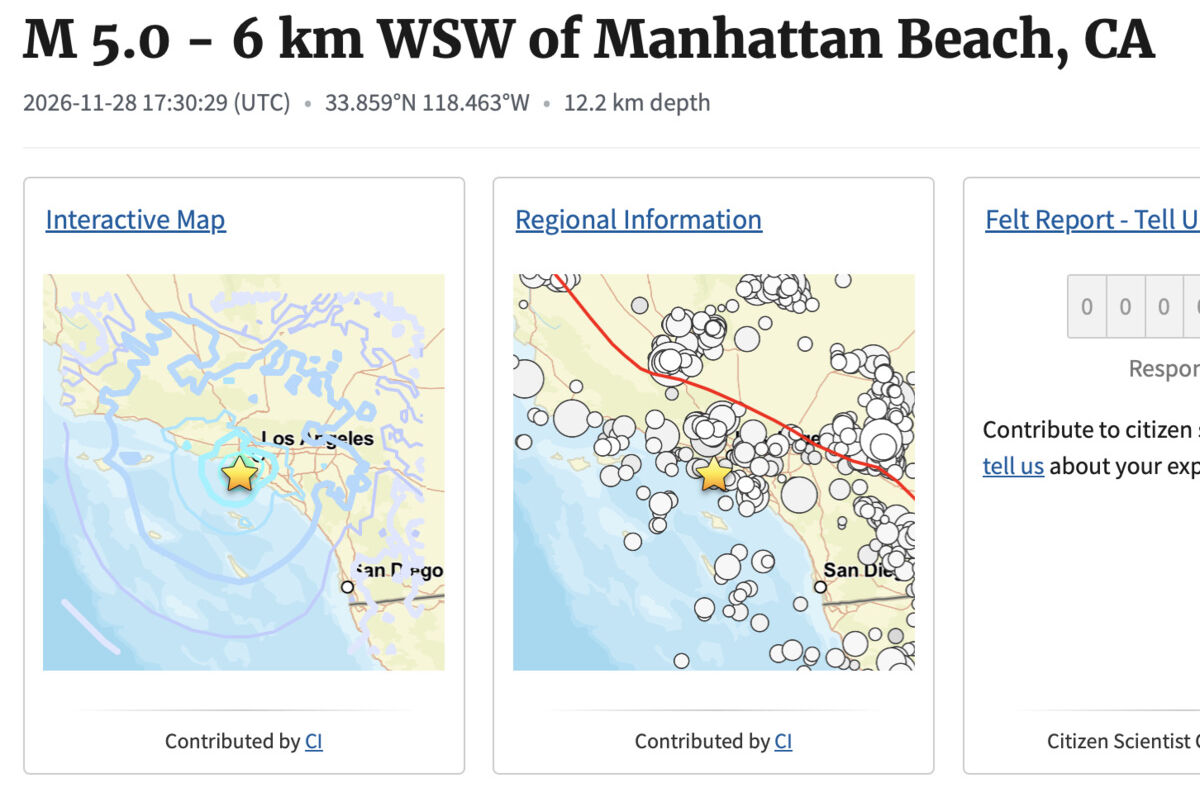
According to the U.S. Geological Survey (USGS), the event registered a preliminary magnitude of 5.0 (initially reported by some automated systems and trackers as high as 5.2 before revision). It occurred at 17:30:29 UTC (9:30 a.m. PST) approximately 6 km (about 3–4 miles) west-southwest of Manhattan Beach, California, at a depth of roughly 12 km (about 7.5 miles). The epicenter lies under Santa Monica Bay, offshore from the South Bay coastline. The solution remains automatic/preliminary and has not yet been fully reviewed by a seismologist; magnitudes and locations can be revised with additional data.[](
Residents across the greater Los Angeles area reported feeling the shaking. Social media posts described it as a strong or sudden jolt-some calling it the strongest they had felt in recent years-while others noted it felt like a clear warning reminder of the region's seismic risks. Early "Did You Feel It?" reports began coming in quickly after the event. No tsunami warning was issued, consistent with the moderate size and location of the quake.[](
At this magnitude and offshore location, significant structural damage is generally not expected in modern California buildings, though light shaking can still cause minor items to fall, rattle windows, or startle people. As of the latest available information shortly after the event, there were no immediate confirmed reports of injuries or widespread damage. Local emergency services typically activate monitoring protocols after such events to check critical infrastructure.
This quake follows a period of elevated seismic activity in Southern California. In the preceding week, the region experienced several smaller events, including a magnitude 3.9 near Commerce on November 20 that was widely felt and woke many residents, a magnitude 3.3 offshore near San Pedro on November 21, and another magnitude 3.3 off Manhattan Beach on November 22. A magnitude 1.9 microearthquake also occurred near Pacoima/San Fernando earlier on Saturday.[](
Southern California sits along a complex network of faults, including the nearby Palos Verdes and Cabrillo fault zones, which are capable of generating much larger events. While a magnitude 4.7 is moderate by California standards and far smaller than the region's potential for a major quake, it serves as a routine reminder to maintain earthquake preparedness: drop, cover, and hold on during shaking; secure heavy furniture and water heaters; and have emergency supplies ready.
USGS and the Southern California Seismic Network continue to monitor the area for aftershocks, which are possible in the hours and days following the main shock. Residents who felt the earthquake are encouraged to submit reports via the USGS "Did You Feel It?" system to help refine shaking intensity maps.
Information is based on preliminary USGS data and is subject to update as the event is reviewed.



Reader Comments(0)