
Community, Diversity, Sustainability and other Overused Words


Community, Diversity, Sustainability and other Overused Words
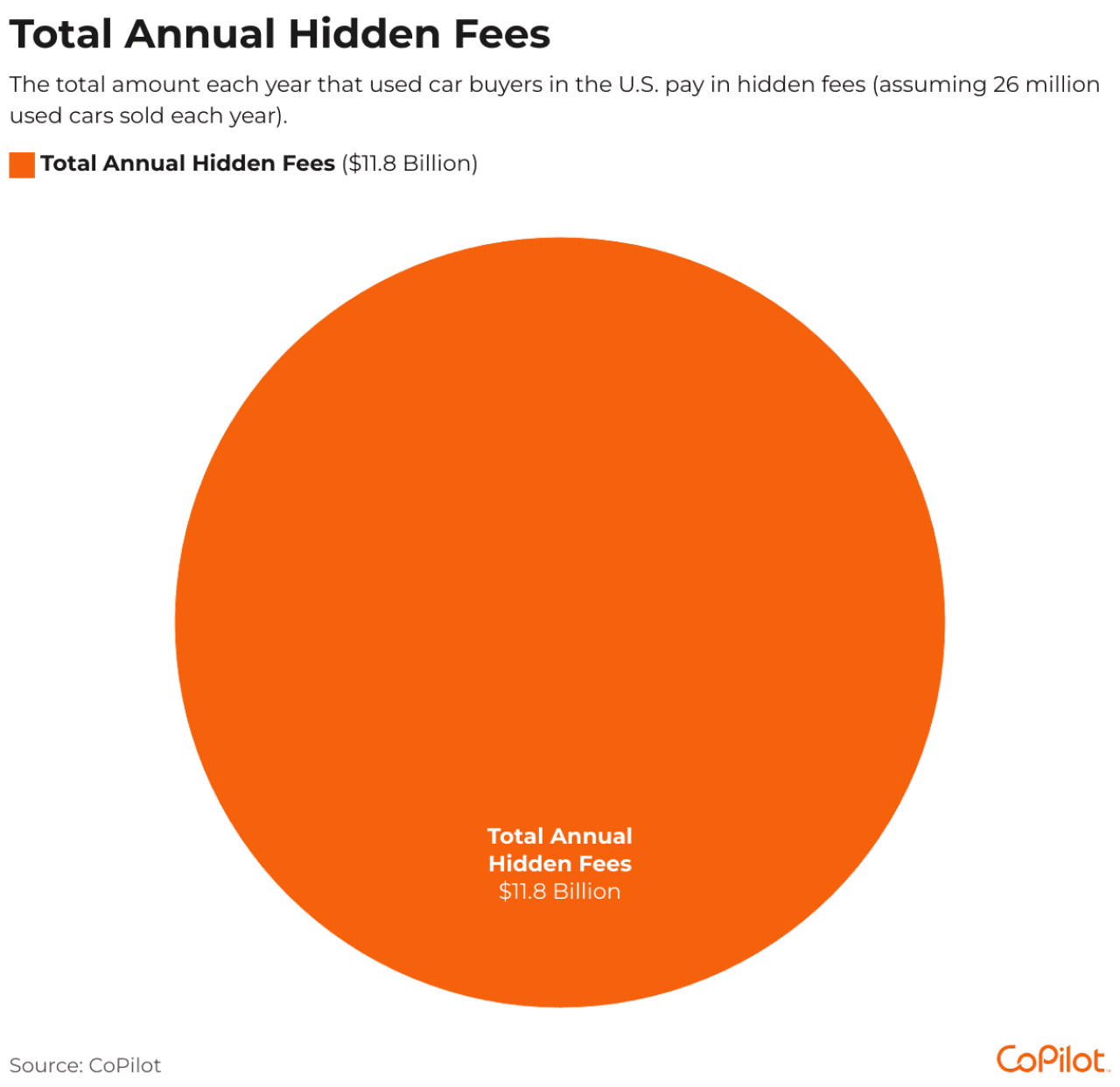
In total, bait-and-switch pricing amounts to a $11.8 billion problem annually in the U.S. This is how it happens

Few customer experiences can evoke as much anxiety, uncertainty, and frustration as walking into a car dealership. As a consumer, you may find the perfect car online at an advertised price within your budget, only to drive to the dealership to be met with an arsenal of psychological and emotional manipulation tactics — all with the express purpose of driving up the final purchase price without your full knowledge, understanding, or consent.
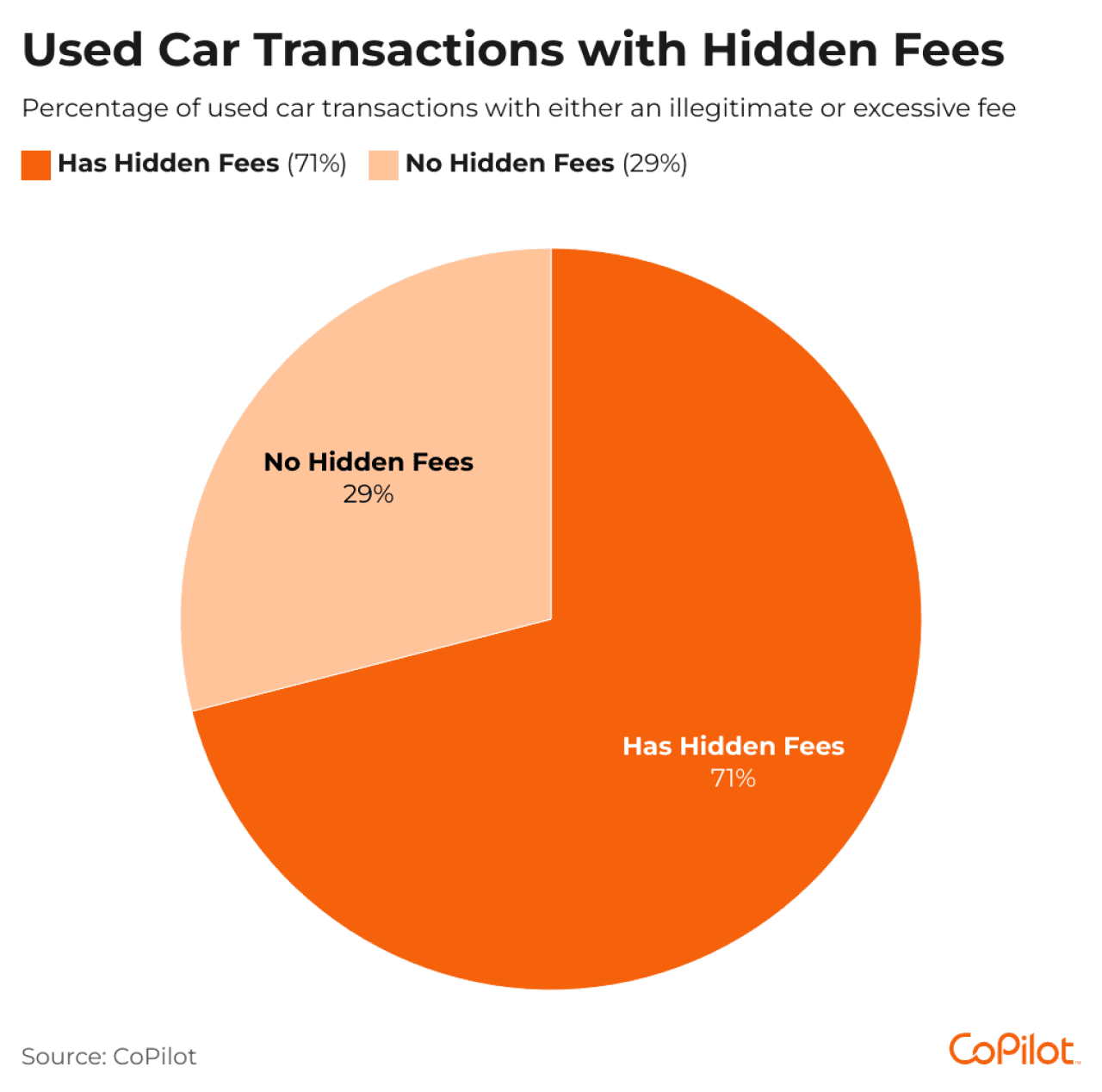
This all-too-common car dealership experience is the result of a strategy called bait-and-switch pricing — and sadly, it’s the reality for 71% of used car buyers in the U.S. In total, bait-and-switch pricing amounts to a $11.8 billion problem annually in the U.S. This is how it happens: Dealers advertise a lower price to “bait” the consumer to go into the dealership. Once they’re at the dealership, the price is then “switched” to a higher out-the-door purchase price, through a range of manipulative tactics.
It’s important to be clear, however, about what and who are causing the problem of bait-and-switch pricing. While the stereotype of the shady used car salesman is well-known, the real issue lies with the dealer business model, rather than individual rogue salespeople.
During the COVID-19 pandemic, car shortages drove up prices and dealer profits substantially — and dealerships now have a significant incentive to maintain those profits. With used cars still in short supply from the pandemic, and with the recent onset of auto tariffs, dealers have the clear upper hand with consumers who have more limited options and who are rushing to buy before prices increase even more. As a result, CoPilot has found that bait-and-switch pricing has become an even more prevalent issue for car shoppers in recent months.
Over the past year, CoPilot has spoken with car shoppers around the country and analyzed used car transactions across the U.S. This data, for the first time ever, quantifies how much consumers were charged in hidden fees on their used car purchases and brings actionable insights and data to this problem. And we’re only just getting started pulling back the curtain on the scope of the problem of bait-and-switch pricing, which dealers are the worst offenders, and how much it’s costing consumers. The ultimate goal? End bait-and-switch pricing, for once and for all.
Bait-and-switch pricing is defined as car dealers deploying one or several of the following tactics.
It is important to note, however, that dealers do charge legitimate fees — reasonable charges for additional equipment or services provided during the sale process. Some research on common fees and their average cost in your state should reveal whether a fee on your out-the-door price is legitimate.
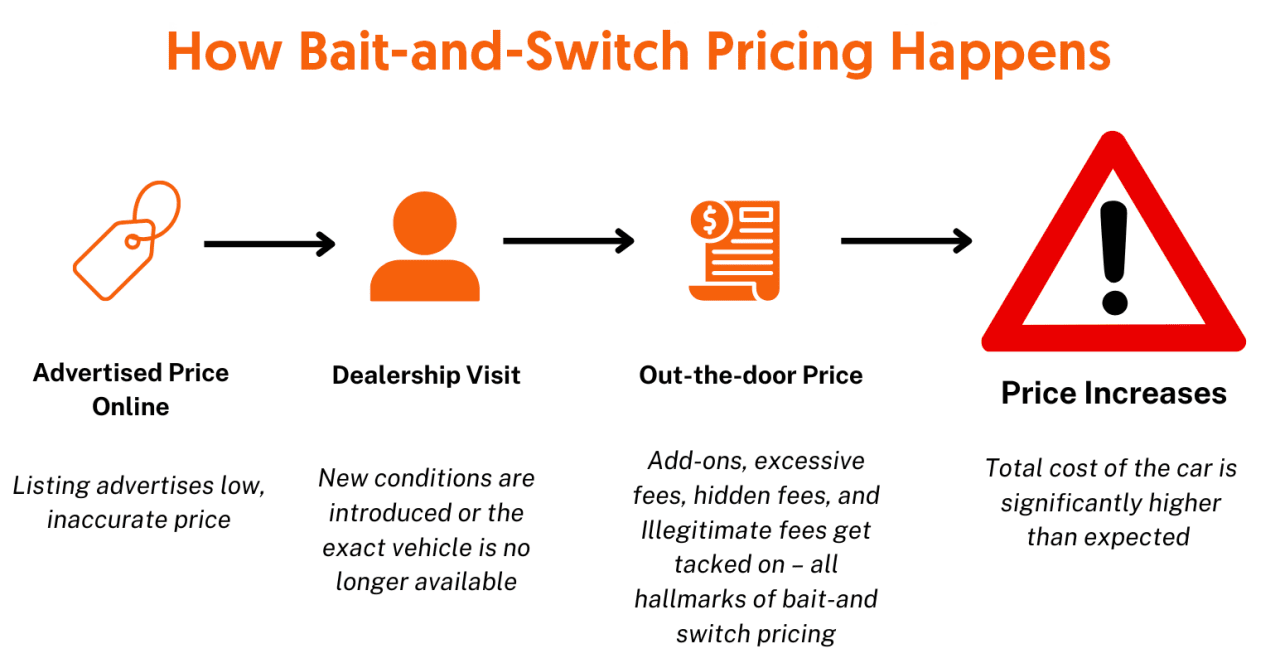
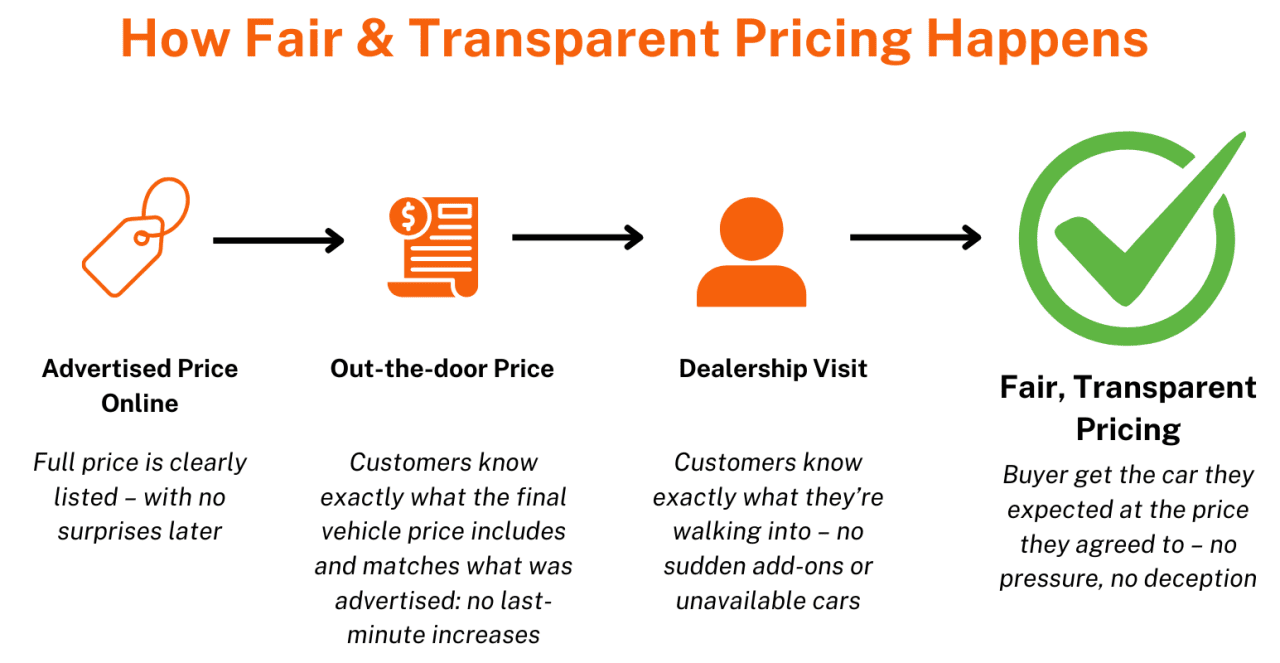
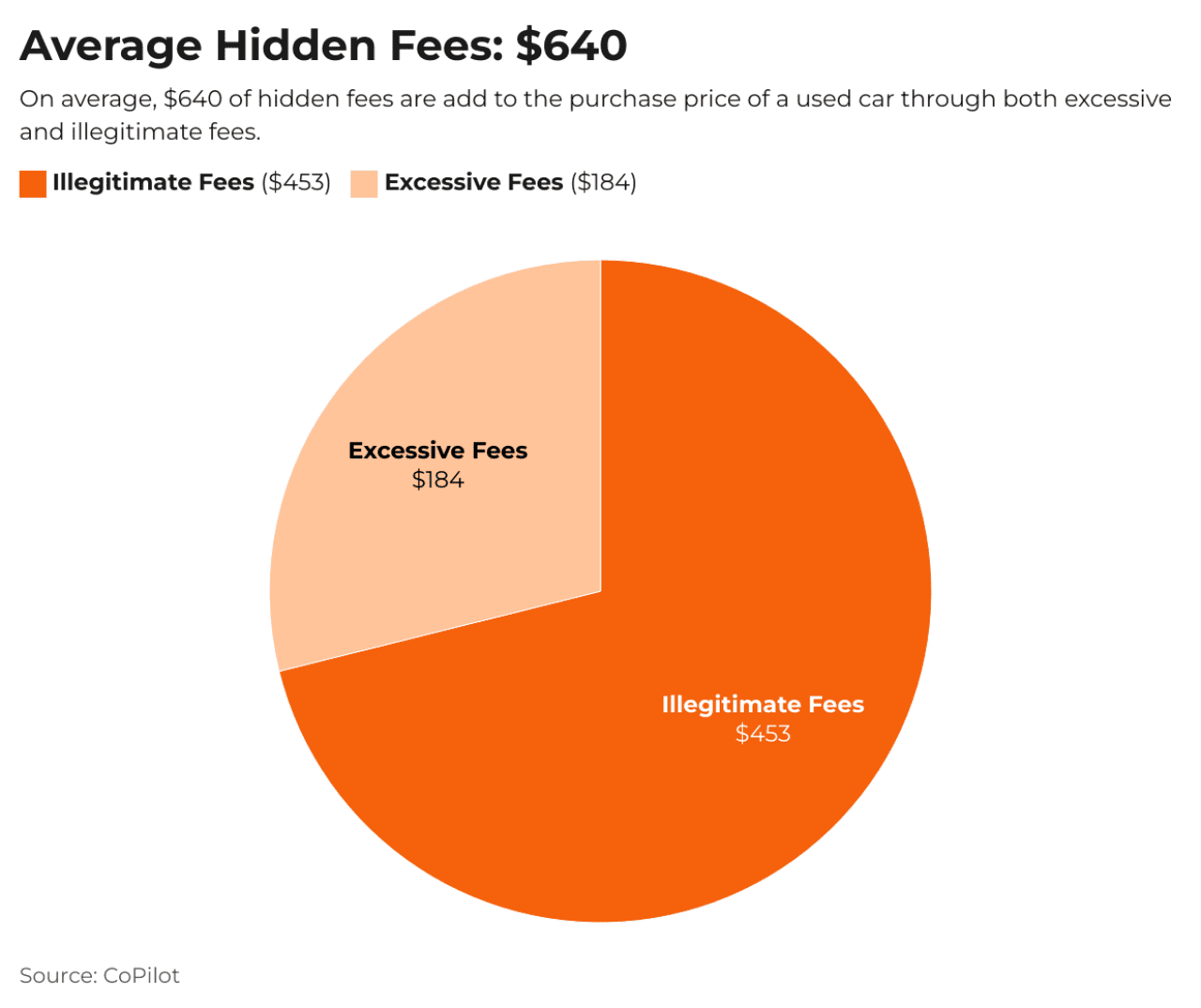
Hidden fees, part of a broader pattern of bait-and-switch pricing, are defined as excessive or illegitimate charges that are added onto the final purchase price of a used car, without being clearly communicated to the customer.
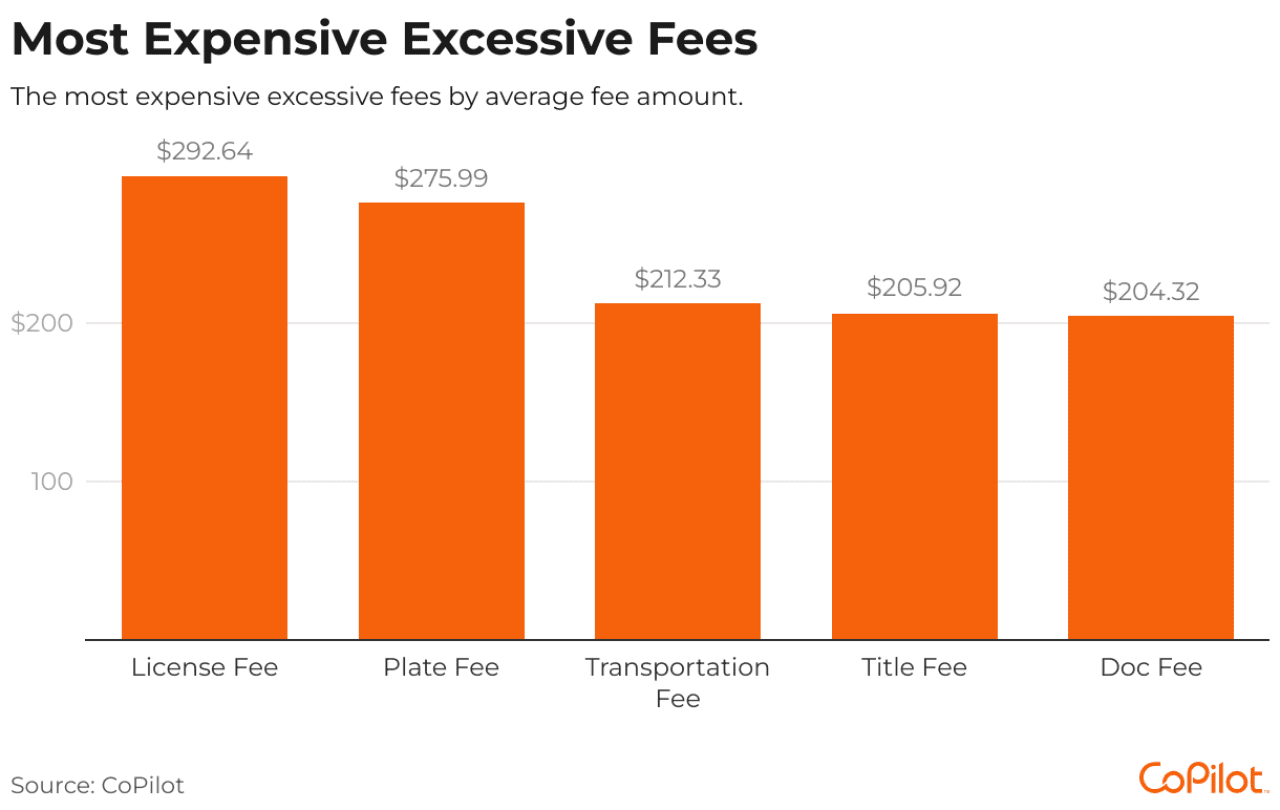
1. License Fee: $292.64
2. Plate Fee: $275.99
3. Transportation fee: $212.33
4. Title fee: $205.92
5. Doc fee: $204.32
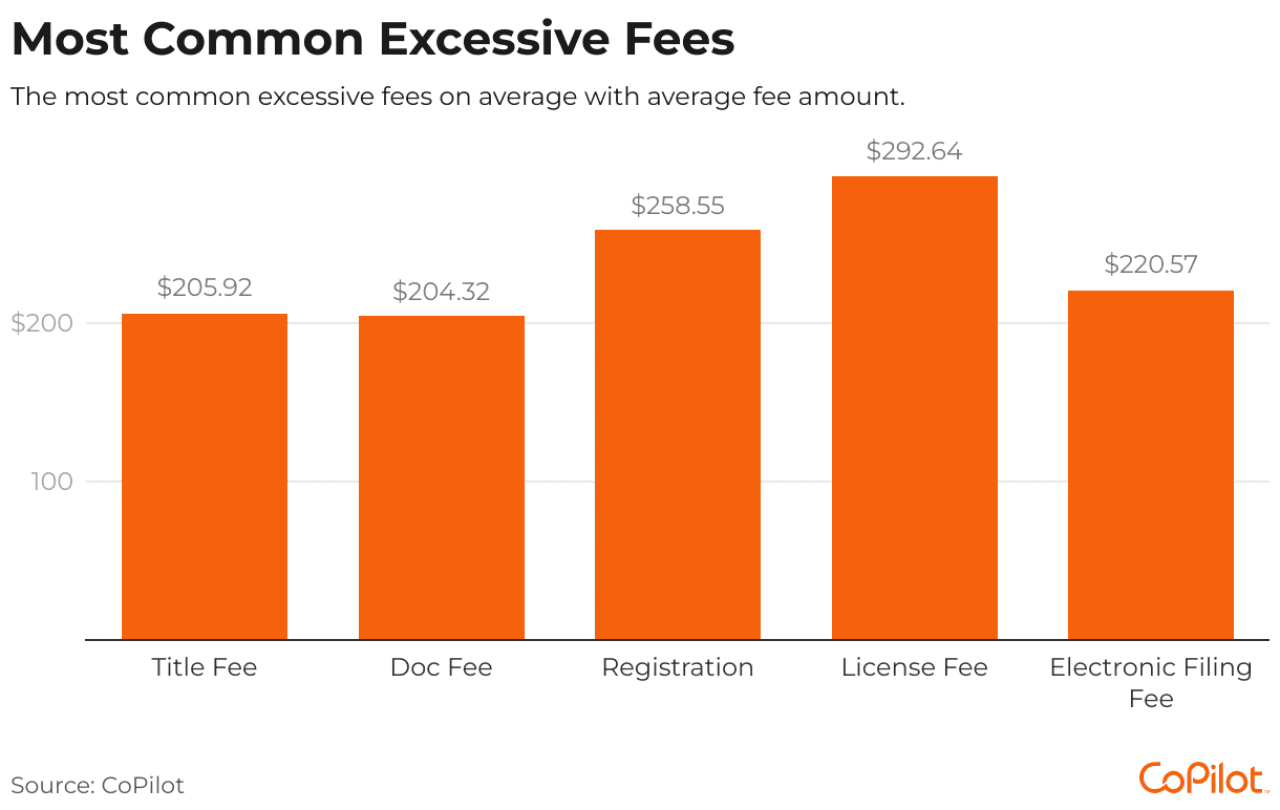
1. Title fee: $205.92
2. Doc fee: average $204.32
3. Registration: average $258.55
4. License fee: average $292.64
5. Electronic filing fee: average $220.57
The illegitimate fees below fall into a few categories. They can include charges for added features that were pre-installed on the vehicle, but are not included in the final purchase price to the consumer. They can also refer to extra features that the dealer added to the car during the purchase process, without asking the consumer.
The common thread here is that while these fees describe actual add-ons or services, what makes them illegitimate is that they were added to the final purchase price of the car without the consumer’s knowledge or consent.
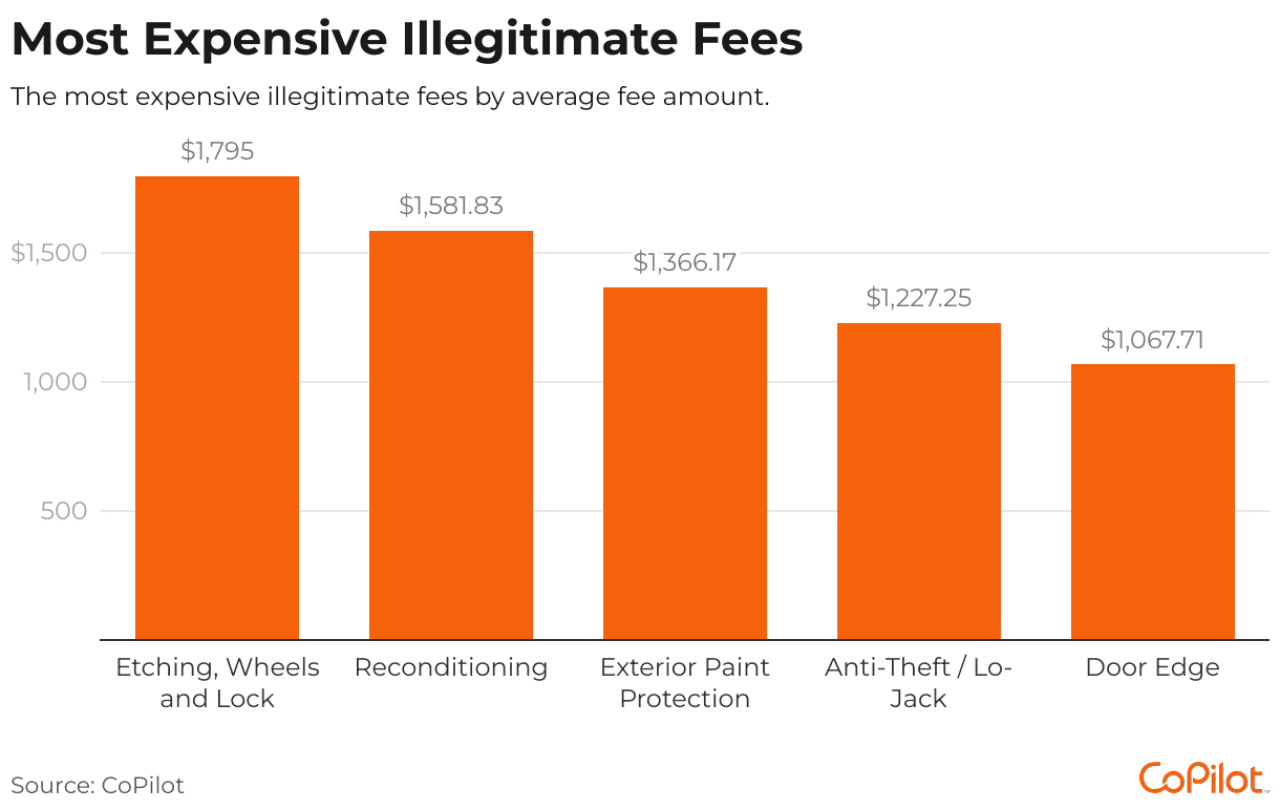
1. Etching, wheels and lock: $1,795.00
2. Reconditioning: $1,581.83
3. Exterior paint protection: $1,366.17
4. Anti-theft/lo-jack: $1,227.25
5. Door edge: $1,067.71
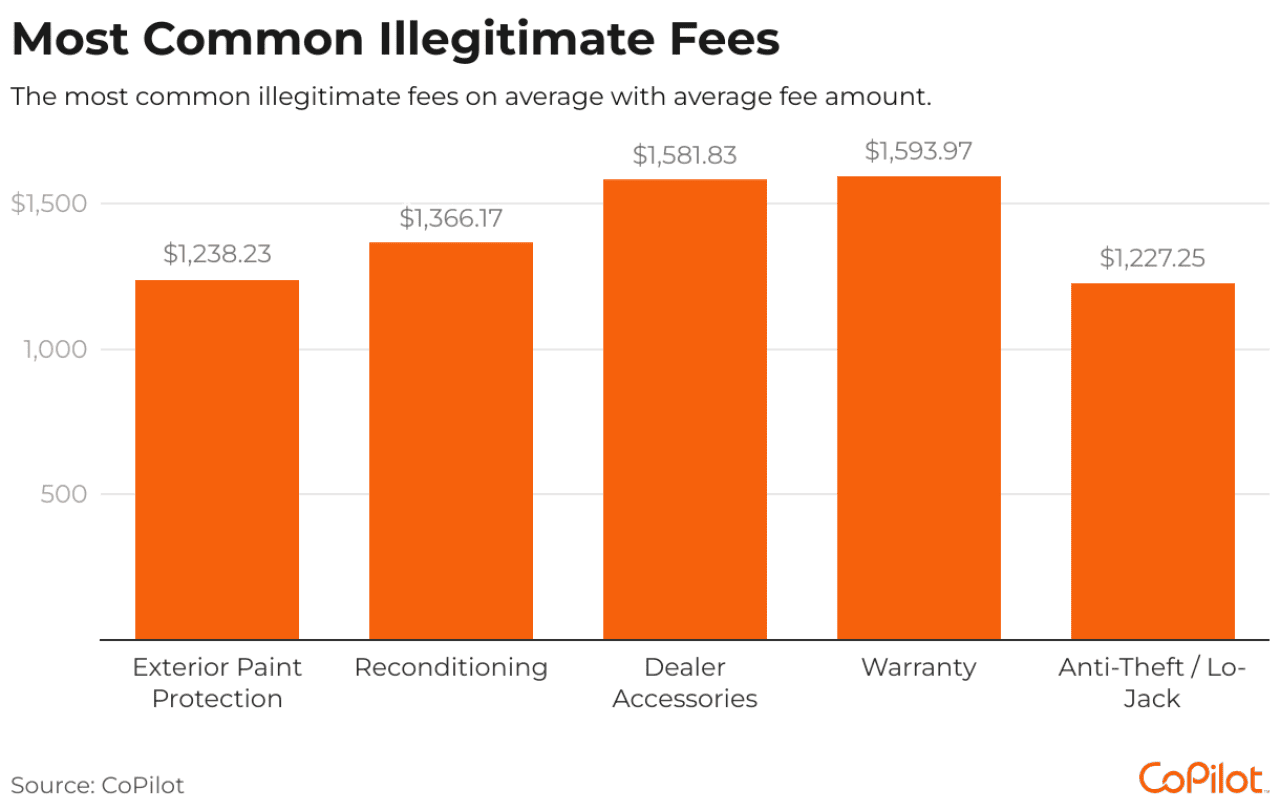
1. Exterior paint protection: $1,238.23
2. Reconditioning: $1,366.17
3. Dealer accessories: $1,581.83
4. Warranty: $1,593.97
5. Anti-theft: $1,227.25
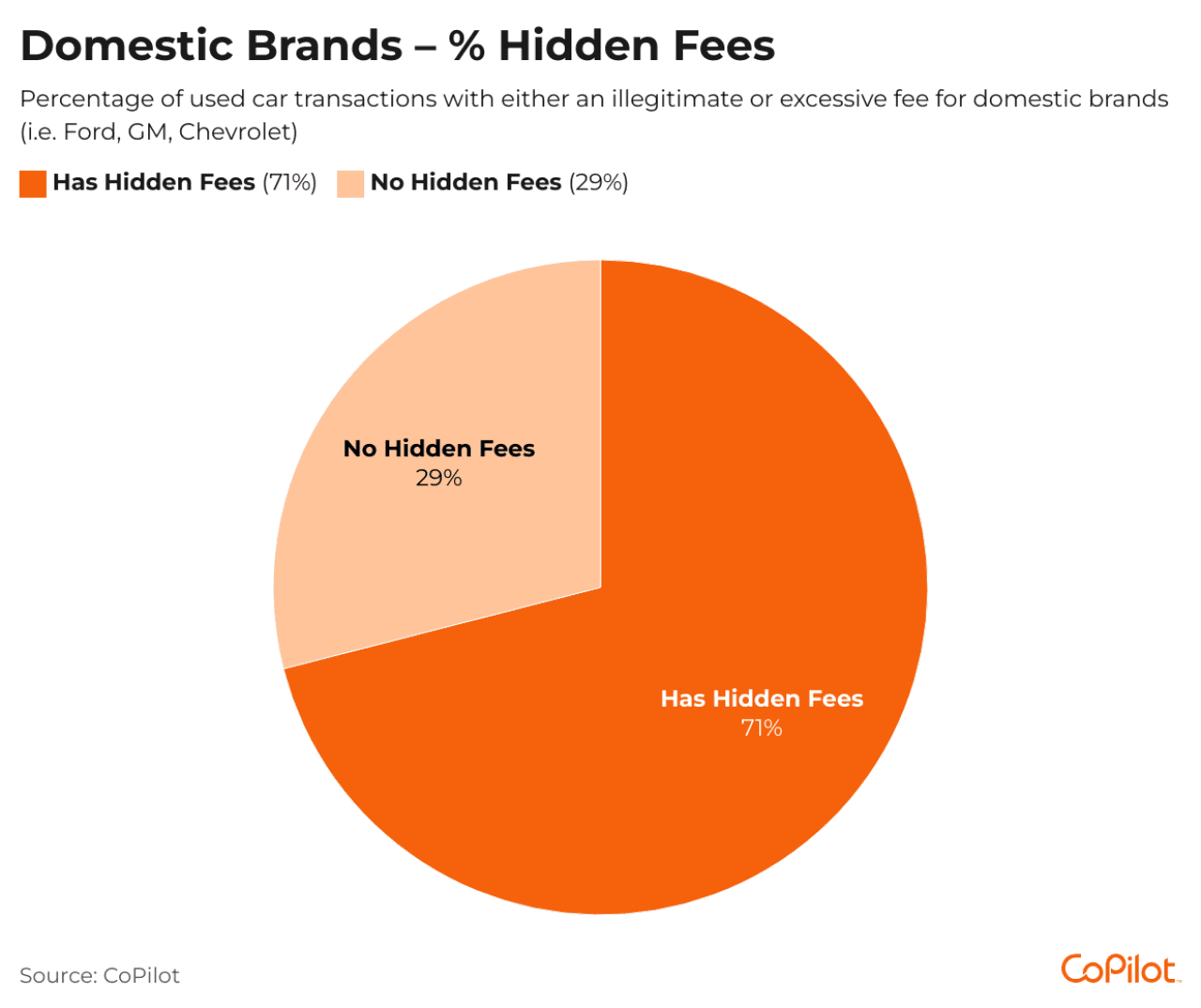
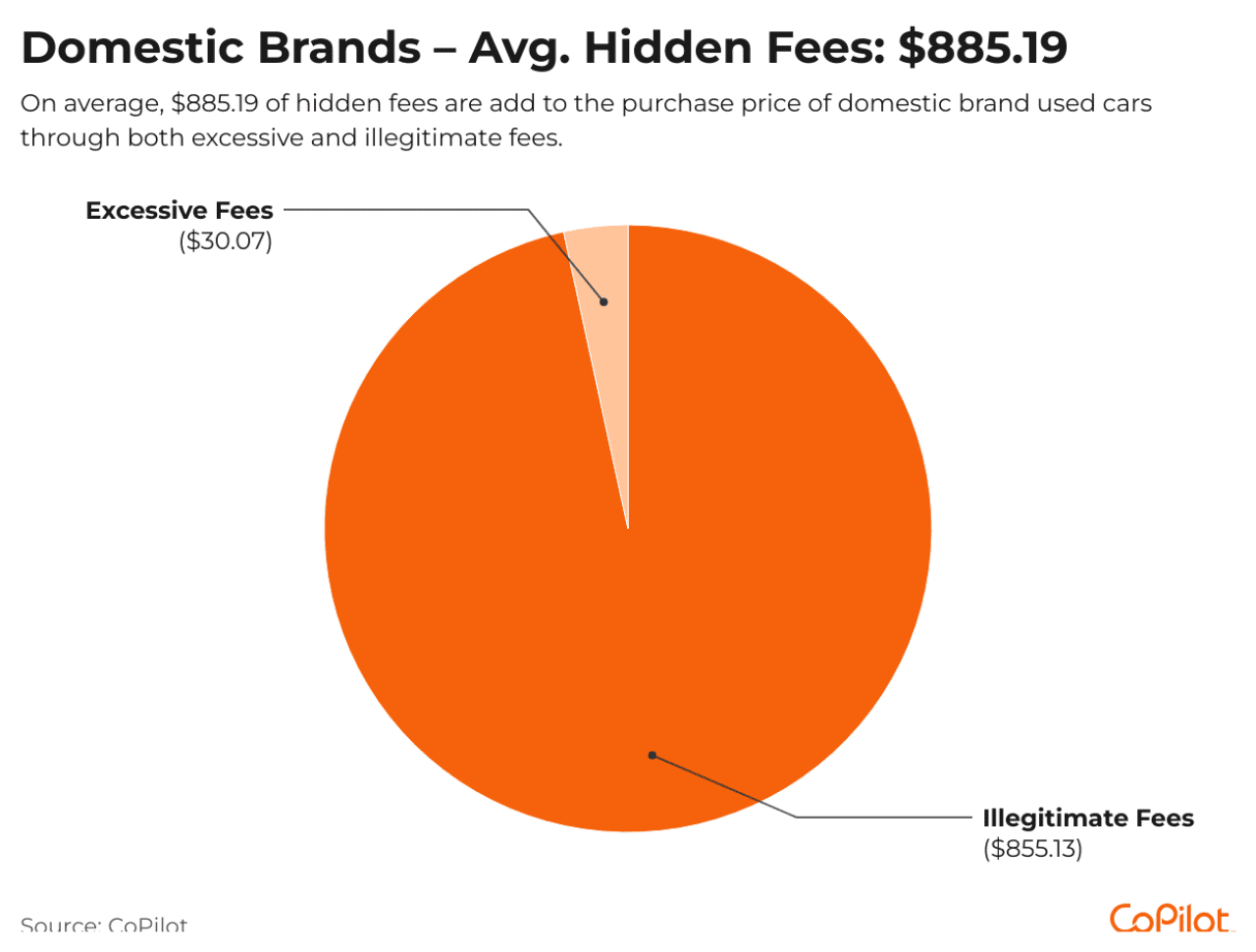
Domestic Brands, e.g., Ford, GM, Chevrolet
71% of purchases had hidden fees
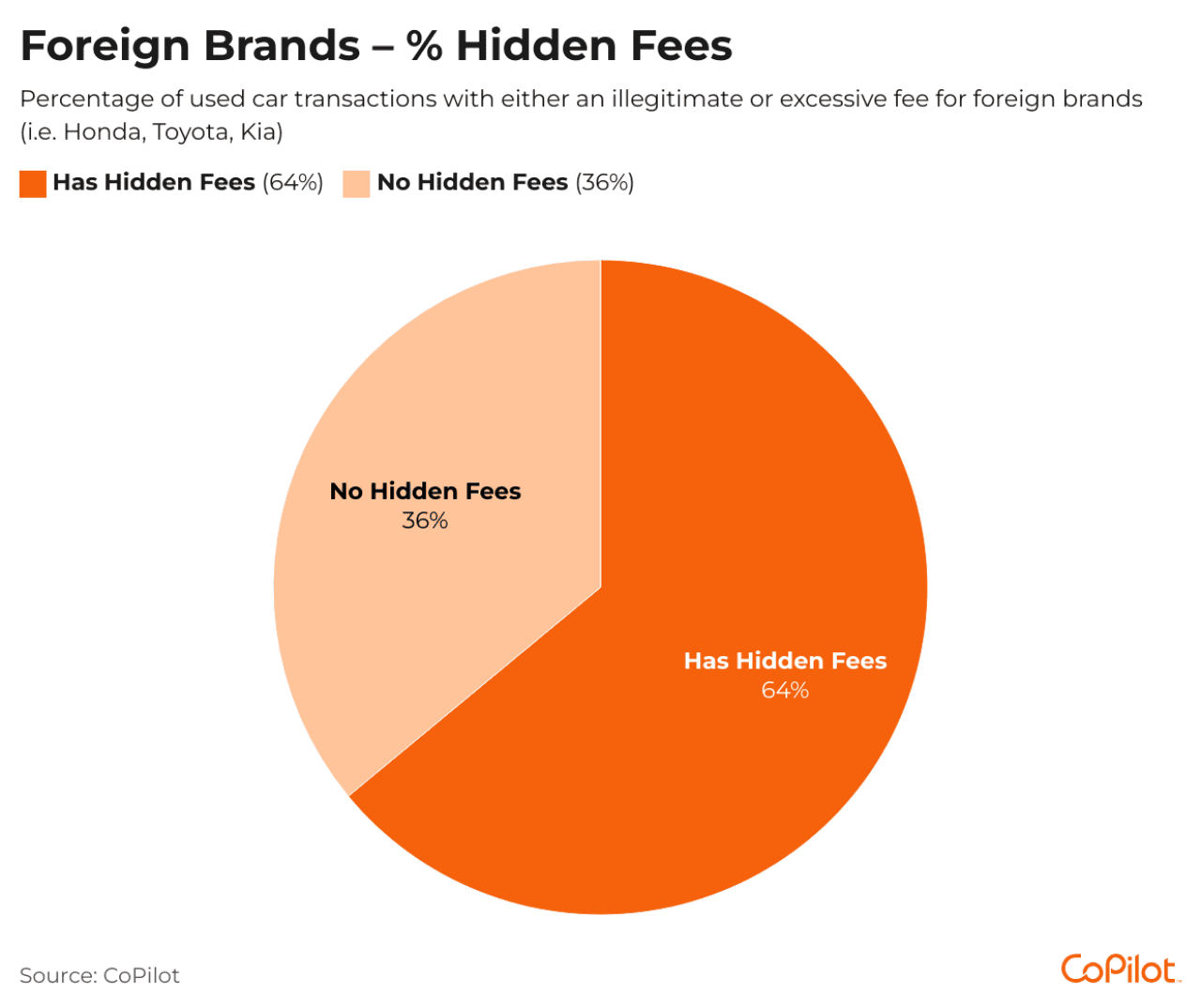
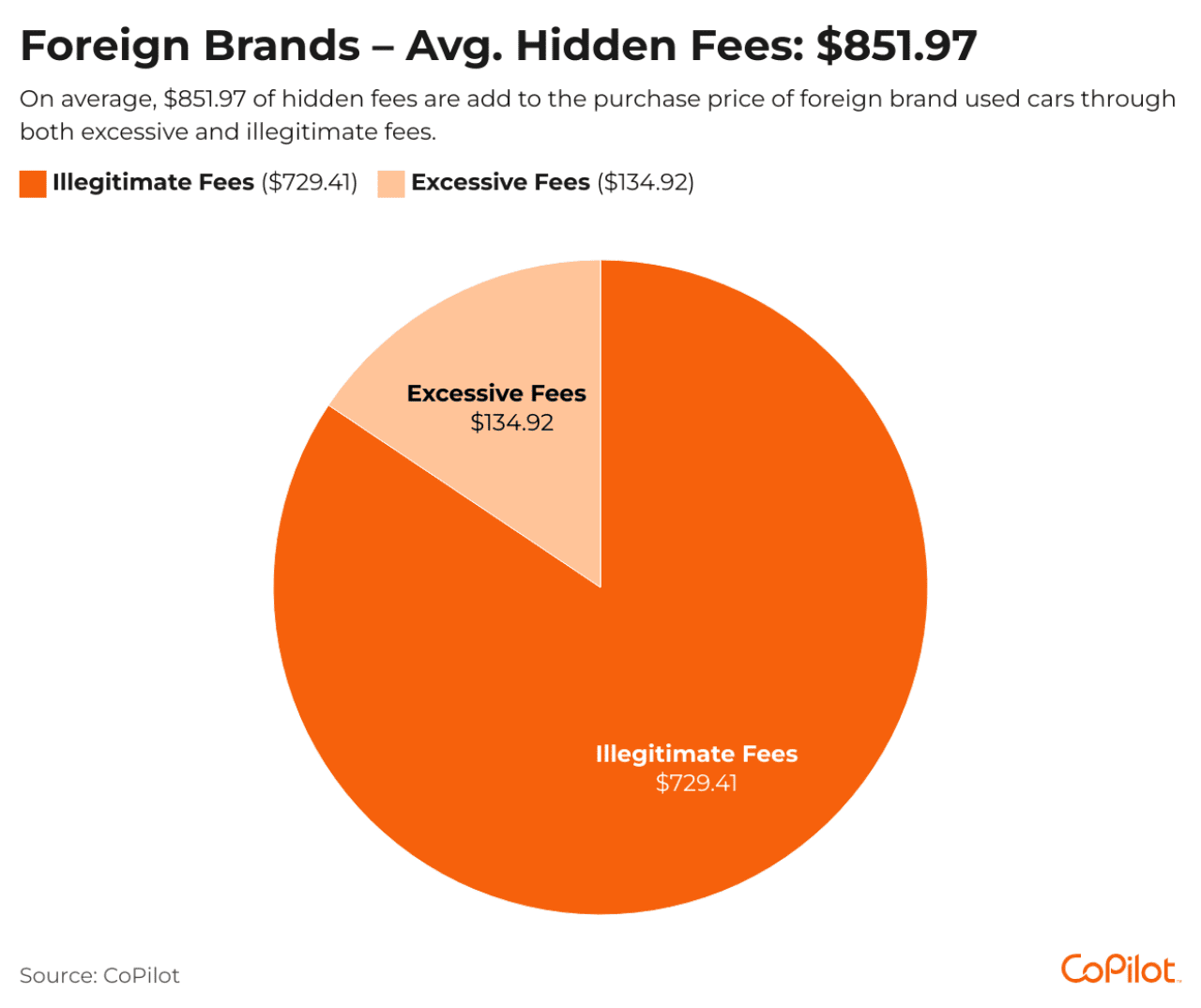
Foreign Brands, e.g., Honda, Toyota, Kia
64% of purchases had hidden fees
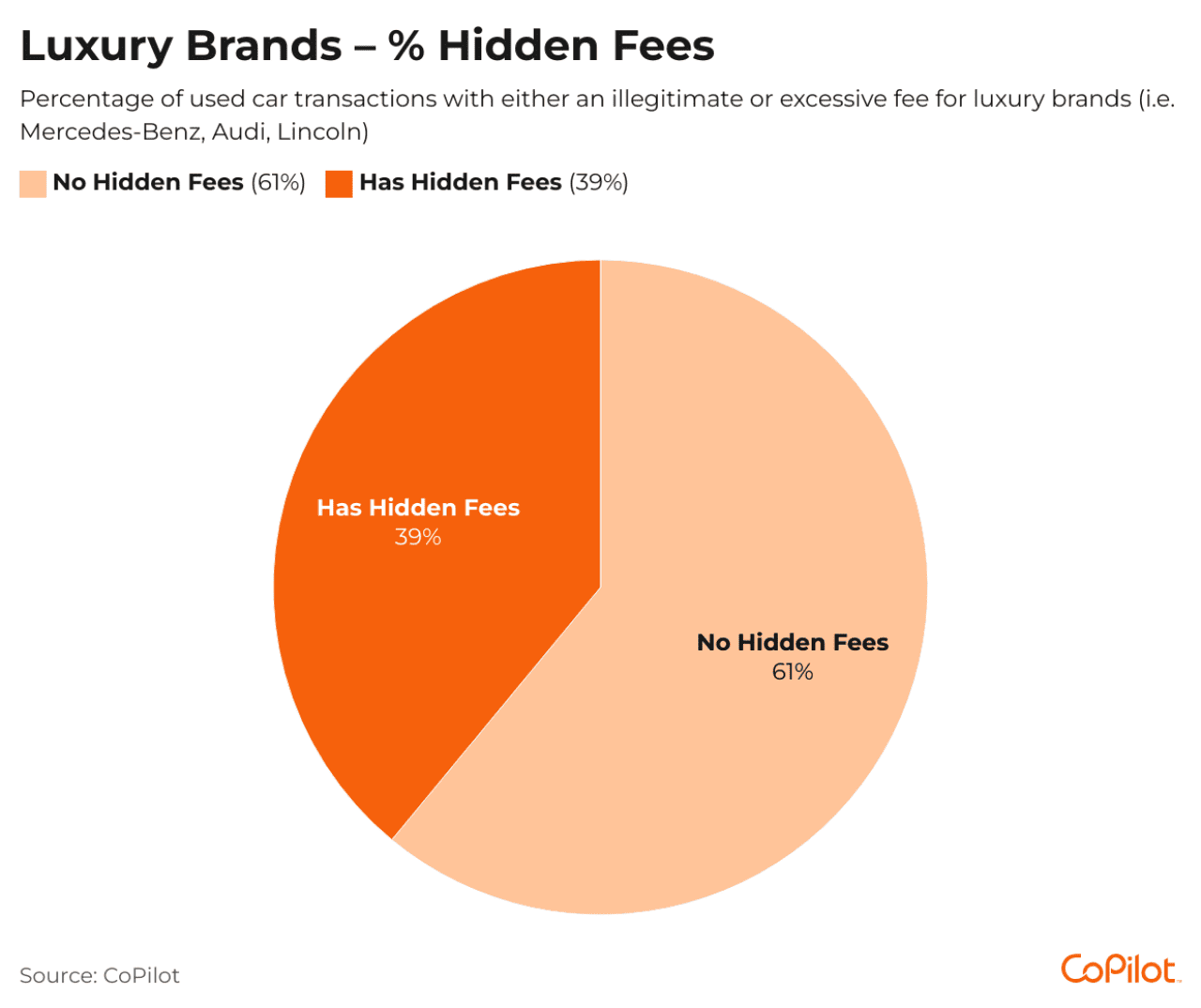
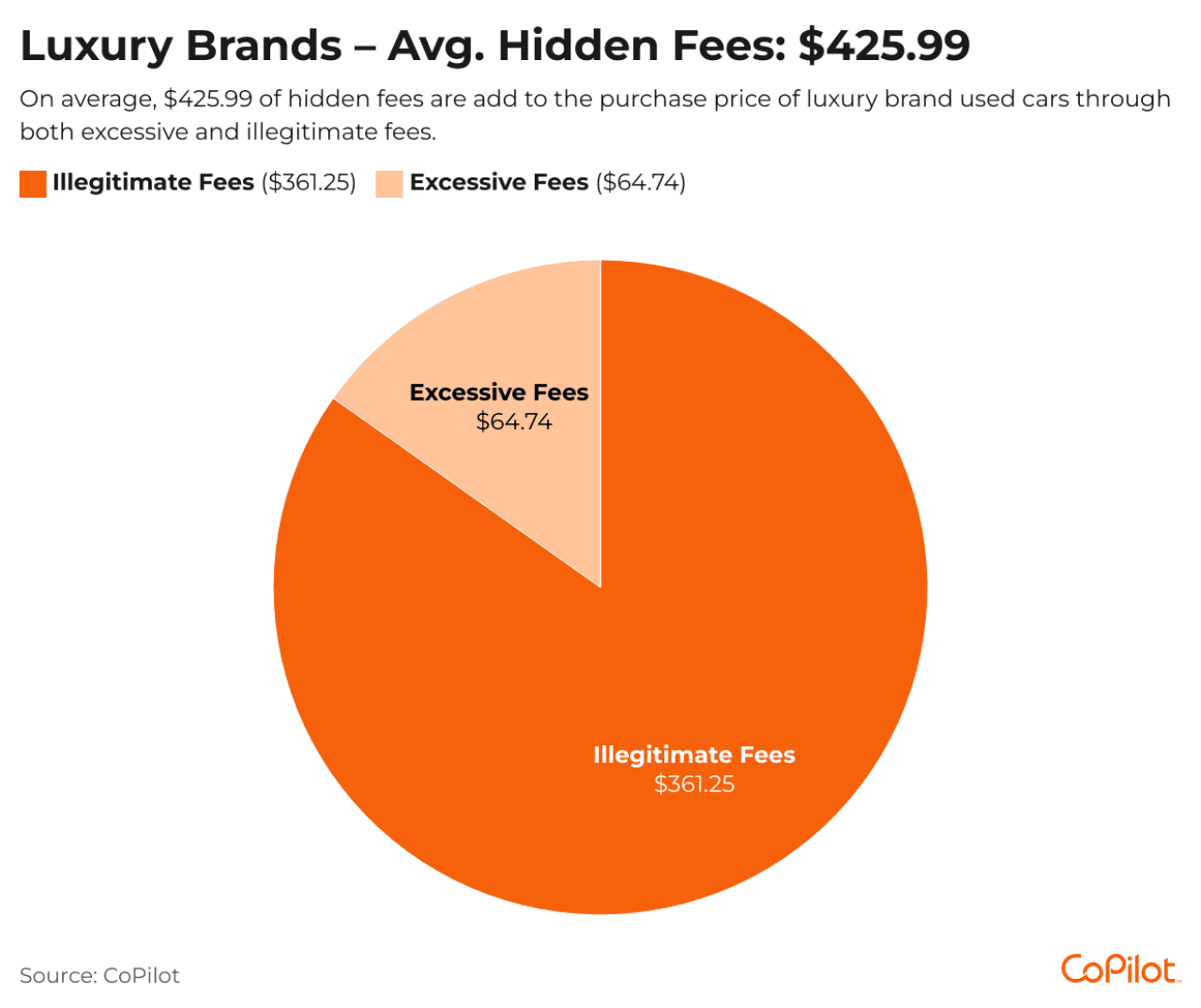
Luxury Brands - i.e., Mercedes-Benz, Audi, Lincoln
39% of purchases had hidden fees
New car prices skyrocketed during the COVID-19 pandemic, due to a range of factors, including supply chain constraints and the semiconductor shortage causing new car inventory to plummet. At the same time, consumer demand for cars heightened. This created a perfect storm of supply-and-demand issues in the car market, one that still impacts car shoppers today when they step onto the dealer lot.
The price increases in the new car market then trickled into the used car market, causing these prices to soar as well.
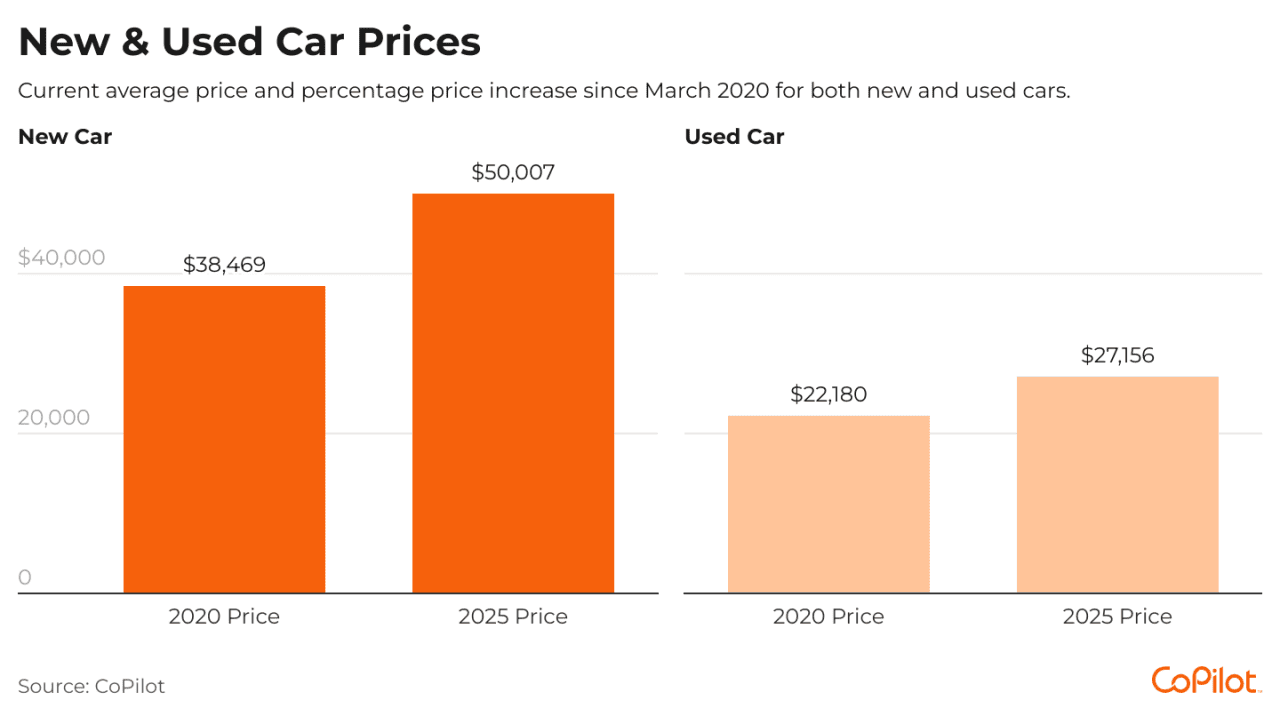
New car supply started to rebound in mid-2023, as automakers were finally able to produce more cars. However, car prices have yet to come down significantly from their peaks. New car prices, for instance, fell by just 1% in 2024. Meanwhile, dealers, who became accustomed to record profits during the COVID years, are unwilling to give those up.
Today, more than ever, the dealer business model is incentivized to engage in nontransparent and at times deceptive pricing practices, resulting in hundreds and sometimes thousands of dollars extra added onto car purchases each year.
Unfortunately — with the overturn of the Federal Trade Commission’s Combatting Auto Retail Scams Rule in 2024, which had mandated that dealers transparently communicate vehicle pricing and limited add-ons and hidden fees — there is no regulatory solution to this problem. Without strong consumer protections in the car buying process, it’s now incumbent on car shoppers to be able to identify hidden fees and push back on the dealer when they try to add these onto a purchase.
To that end, there are a few steps that consumers can take to be prepared when they encounter bait-and-switch pricing at the car dealership:
This story was produced by CoPilot and reviewed and distributed by Stacker.


Reader Comments(0)