
Community, Diversity, Sustainability and other Overused Words


Community, Diversity, Sustainability and other Overused Words
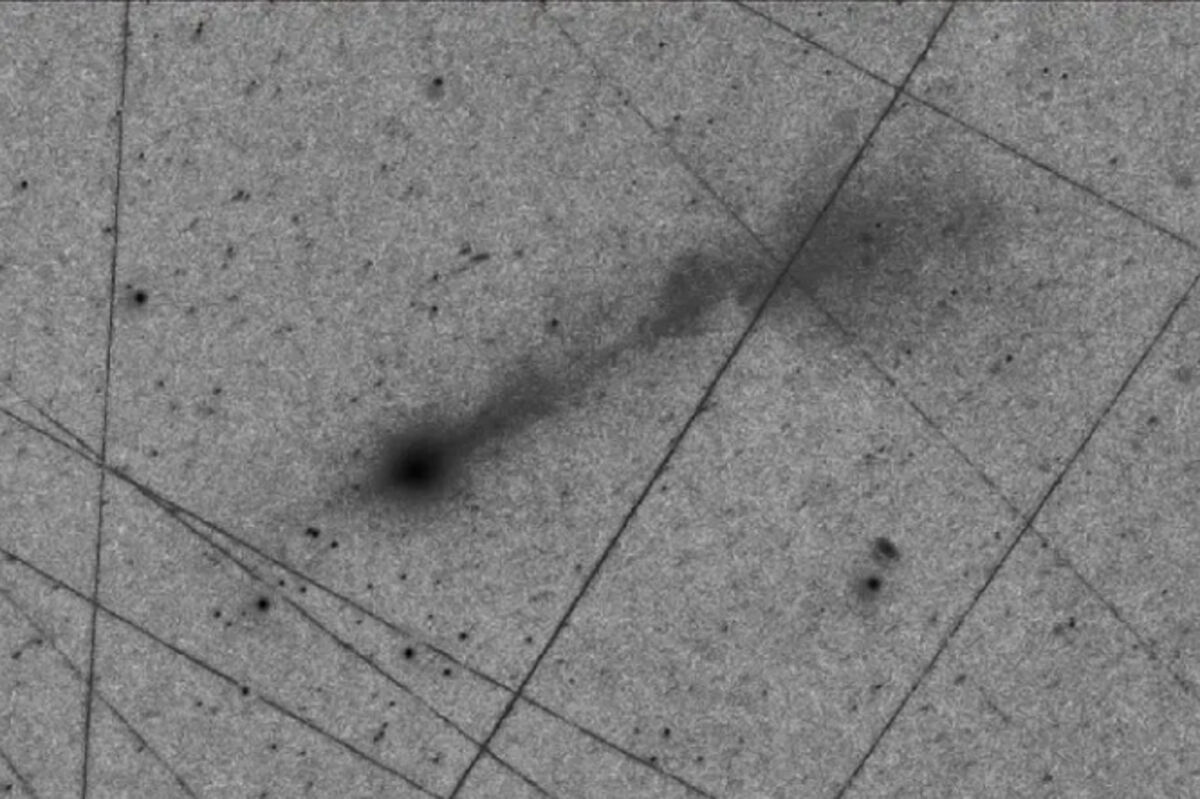
Avi Loeb just released an extraordinary analysis of today's deep stacked image showing anti tail jets stretching toward the Sun and a massive collimated tail extending 30 arcminutes across the sky.
Avi Loeb just released an extraordinary analysis of today's deep stacked image, showing anti tail jets stretching toward the Sun and a massive collimated tail extending 30 arcminutes across the sky.
3I/Atlas
Published: November 9, 2025, 8:48 PM PSTHarvard astrophysicist Avi Loeb has ignited a scientific firestorm, asserting that 3I/ATLAS, the third confirmed interstellar object to enter our solar system, may not be a natural comet but an alien spacecraft. The bold claim, detailed in a report released today and shared on the X account @UAPWatchers
, is backed by extraordinary new data from a deep-stacked image captured on November 9, 2025.
The image reveals 3I/ATLAS, currently 326 million kilometers from Earth, exhibiting anti-tail jets extending 0.95 million kilometers toward the sun and a massive collimated tail jet stretching 2.85 million kilometers-equivalent to the scale of a small star. Loeb notes that the jet structure's density exceeds the ram pressure of the solar wind, a phenomenon he deems impossible for typical cometary outgassing.Further analysis shows 3I/ATLAS losing mass at an astonishing rate of 50 billion tons per month, nearly equaling its estimated total mass of 33 billion tons.
For a natural object, this rate is unprecedented, leading Loeb to calculate a 0.0005% chance of such a large interstellar object entering our solar system within a decade. Its alignment within 5 degrees of the ecliptic on a retrograde orbit further reduces the probability of a natural origin to 1 in 100 million.
Loeb proposes an alternative: if the jets are technological thrusters, the required fuel would constitute less than 1% of the spacecraft's mass, suggesting highly efficient propulsion. Upcoming spectroscopic observations from the James Webb Space Telescope (JWST) and Hubble Space Telescope will analyze the object's composition and jet velocities to determine whether this reflects natural outgassing or artificial activity.
The object, moving at 58 km/s relative to the sun, follows a hyperbolic trajectory and is expected to exit the solar system, consistent with its interstellar origin near the constellation Sagittarius. Loeb emphasizes caution, stating, "Let's stop pretending we know everything and keep monitoring," as the data could redefine our understanding of cosmic visitors.X users have weighed in, with @jakki2004 questioning the object's circuitous route as potentially deliberate, while @PowMan33 criticized premature dismissals by other astronomers. As JWST and Hubble prepare to deliver definitive insights, 3I/ATLAS remains the most anomalous interstellar object in recorded history, challenging conventional astrophysics. #3IATLAS #AviLoeb #InterstellarObject #UAPWatchers
The post from X.com: 3I/ATLAS is venting jets nearly 3 million kilometers long
Avi Loeb just released an extraordinary analysis of today's deep stacked image showing anti tail jets stretching toward the Sun and a massive collimated tail extending 30 arcminutes across the sky.
At 326 million km away, that's 2.85 million kilometers of jet structure, the scale of a small star. The anti tail's ram pressure exceeds the solar wind. That means the jets are denser than the solar wind itself, an impossible feat for normal comet gas. Loeb calculates a mass loss rate of 50 billion tons per month, nearly the total estimated mass of the object. For a natural comet, that's absurd.
He lays out the odds: Chance of a natural object this large entering our solar system within a decade: 0.0005%/. Aligned within 5° of the ecliptic, on a retrograde orbit, 1 in 100 million probability it's natural.
"If the jets are technological thrusters," Loeb writes, "the required fuel would be less than 1% of the spacecraft's mass."
Upcoming Webb and Hubble spectra will determine whether we're seeing outgassing or propulsion.
Either way, this is the most anomalous interstellar visitor in recorded history, and yes I know there has only been three. So lets stop pretending we know everything and keep monitoring.



Reader Comments(0)