
Community, Diversity, Sustainability and other Overused Words


Community, Diversity, Sustainability and other Overused Words
People searching for popular statin medications are often trying to understand the differences between the drugs, how they work, and which one might be the best fit for their health needs

Statins are among the most commonly prescribed medications for reducing high cholesterol and lowering the risk of heart attack and stroke. People searching for popular statin medications are often trying to understand the differences between the drugs, how they work, and which one might be the best fit for their health needs. They may also be curious about side effects, cost comparisons, alternatives, and long-term benefits.
This guide from SaveHealth, a prescription discount/savings card website, breaks down 10 of the most widely used statins, how they compare, and what to consider when discussing options with a healthcare provider.
Statins reduce cholesterol by blocking an enzyme in the liver called HMG CoA reductase. This mechanism helps lower LDL cholesterol, often referred to as bad cholesterol, and can also modestly increase HDL, often referred to as good cholesterol. Statins can also help lower triglyceride formation, often referred to as fatty cholesterol, by reducing the fat in the blood. Lastly, statins slow the growth of fatty plaque formation, thus stabilizing the arteries, which helps to prevent heart attacks and strokes. Due to their dynamic effects on the body, statins are the gold standard for better cholesterol.
Core benefits of statins
Below is a list of the most frequently prescribed statins, including both brand name and generic options.
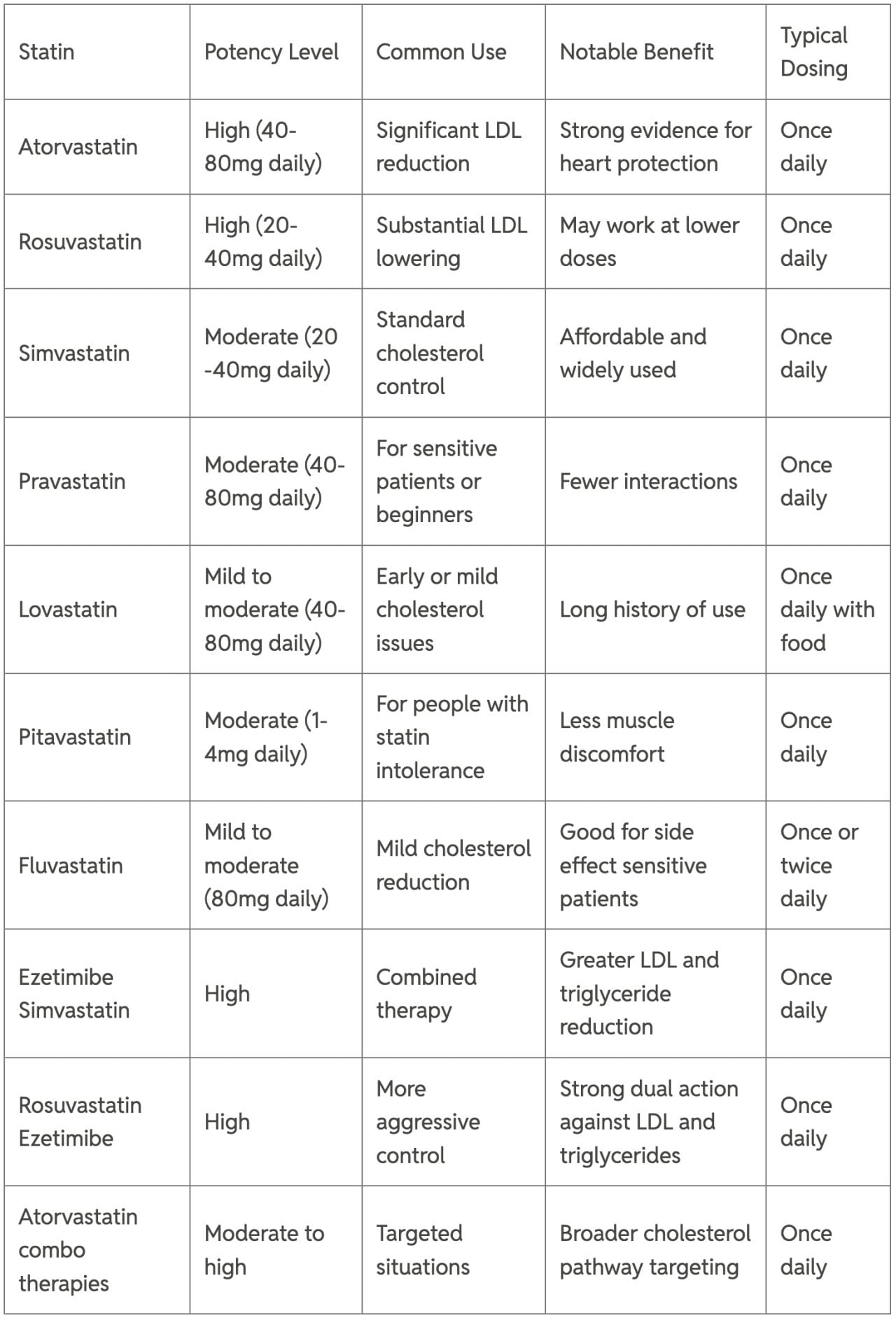
1. Atorvastatin: Atorvastatin, the generic for Lipitor, is one of the most widely prescribed cholesterol medications. It is known for its potency and strong LDL-lowering ability.
2. Rosuvastatin: Rosuvastatin, the generic version of Crestor, is another high-intensity statin. It may be more effective for people needing substantial LDL reduction.
3. Simvastatin: Simvastatin, the generic for Zocor, is widely used due to its affordability and long history. It is usually prescribed for moderate cholesterol lowering.
4. Pravastatin: Pravastatin, the generic for Pravachol, is often chosen for people who are sensitive to stronger statins. It has fewer drug interactions and fewer muscle-related side effects, making it a good option for beginners.
5. Lovastatin: Lovastatin, the generic for Mevacor, is one of the earliest statins and remains popular today. It is often taken with food to improve absorption.
6. Pitavastatin: Pitavastatin, the generic for Livalo, is known for having fewer drug interactions and may be suitable for people who cannot tolerate other statins.
7. Fluvastatin: Fluvastatin, the generic for Lescol, is considered one of the milder statins and is another good option for those with muscle-related side effects.
8. Ezetimibe and Simvastatin Combination: This combination, often known by the brand Vytorin, pairs simvastatin with a cholesterol absorption inhibitor for added LDL and triglyceride reduction.
9. Rosuvastatin and Ezetimibe Combination: This combination, often known by the brand Roszet, offers strong LDL and triglyceride reduction for patients who need a more aggressive therapy.
10. Atorvastatin Extended Use in Combination Therapy: At times, atorvastatin is paired with other medications that target different cholesterol pathways for enhanced effect.
Patients comparing these common statins often also want a simple side-by-side breakdown. The table below summarizes the key differences.
While statins are safe for most people, they can cause side effects. Many are mild and improve over time.
Common side effects
Less common but more serious side effects
Effectiveness varies based on the specific cholesterol goals and health profile.
High-intensity statins
These are often prescribed for people who have had a heart attack or are at high cardiovascular risk.
Moderate-intensity statins
These are suitable for many adults with elevated cholesterol but without major heart disease risk.
Low-intensity or gentle options
These are typically chosen for those with statin intolerance.
Statins do more than lower cholesterol. Over time, they provide a range of protective benefits.
Benefits of statin therapy
People at high cardiovascular risk often see the greatest benefit.
For those who cannot tolerate statins or who need additional cholesterol lowering, several alternatives exist.
Common statin alternatives
Choosing a statin depends on health history, cholesterol levels, risk factors, budget, and tolerance.
Factors to consider
Statins remain one of the most effective tools for managing high cholesterol and reducing cardiovascular risk. With several widely used options available, understanding the strengths and differences of each medication can help patients make informed decisions.
This story was produced by SaveHealth and reviewed and distributed by Stacker.


Reader Comments(0)