
Community, Diversity, Sustainability and other Overused Words


Community, Diversity, Sustainability and other Overused Words
"Sir, You're Inebriated. Please Sit Down." America's ER's are full of people who should really be in jails or drunk tanks or rehab. Why Does the UCLA ER Look like a refugee camp in Gaza?
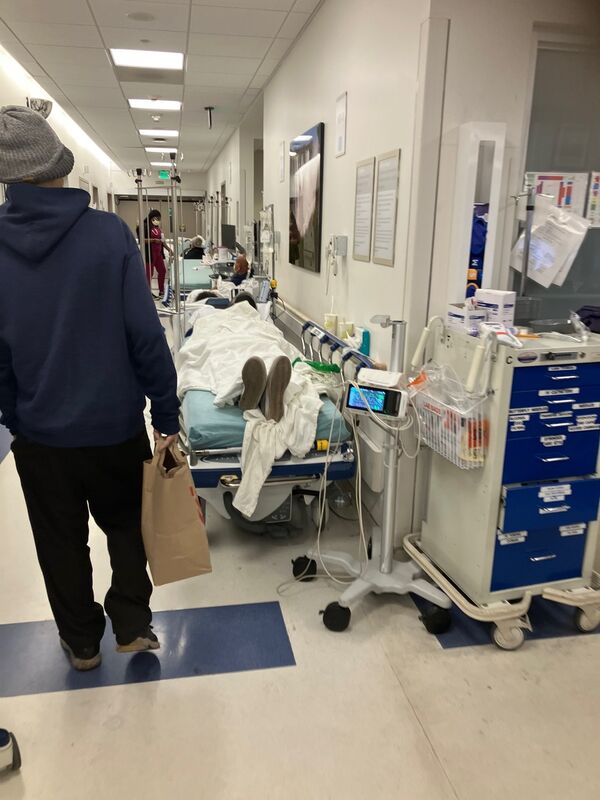
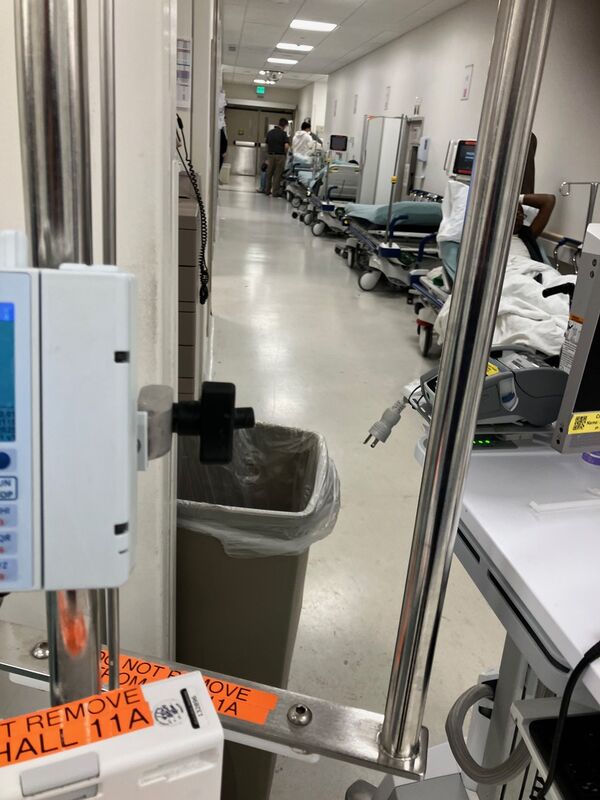
ER at UCLA is lined with patient beds, where patients wait to be boarded.jpeg
Outdoor ER at UCLA is in a tent
ER at UCLA is lined with patient beds, where patients wait to be boarded.jpeg
My brother was discharged from St. John's Hospital in Santa Monica after a week of treatment for a serious liver condition. Just days later, his hemoglobin had plummeted to a dangerously low 6.6 (normal levels are around 13–17 for men). His primary care doctor urgently directed us to the emergency room at UCLA Ronald Reagan Medical Center in Westwood.
What we encountered was shocking - a scene that felt more like a war zone than a state-of-the-art hospital. Beds lined the corridors, where admitted patients waited days - sometimes 3 or 4 - for an inpatient room. They lay side by side with people experiencing mental health crises or those simply seeking shelter from the streets. Outside, two large tents served as overflow areas, packed with coughing patients, many elderly and disoriented. A towering 10-story building with helicopters landing on the roof seemed almost surreal against this chaos - yet the ER had clearly outgrown its space, spilling into these temporary structures, likely a lingering adaptation from the COVID era.
The waiting room and hallways were a cross-section of society: a young college student who had torn his Achilles tendon climbing a dorm fence, everyday families, housewives, and quietly desperate people. One soft-spoken older woman sat politely with her mentally ill brother, who was on suicide watch. She explained calmly that she had brought him here because she had nowhere else to turn.
After four long hours, the only intervention had been a blood draw. Despite my brother's critically low hemoglobin and obvious need for care, we decided to leave. Two young doctors - internists in training - approached us. A nurse explained they were required to try talking us out of it and issue an AMA (Against Medical Advice) warning. We left anyway, concerned about the risks of staying in such an overwhelmed environment.
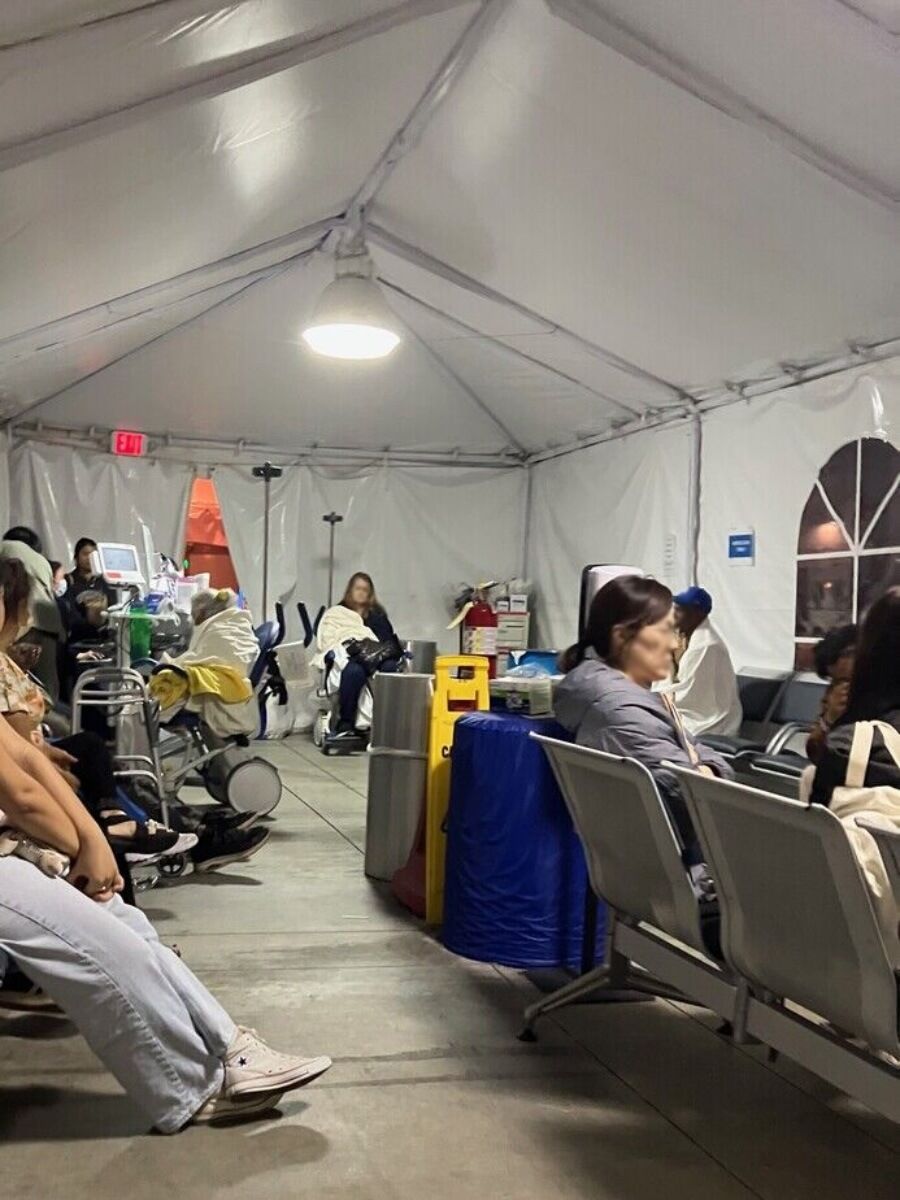
Outdoor ER at UCLA is in a tent
Amid the controlled chaos, one moment stood out: a short, young woman in hospital scrubs repeatedly addressed a wobbling, visibly intoxicated homeless man. As he rocked back and forth, she repeated:
"Sir, you're inebriated. Please sit down."
"Sir, you're inebriated. Please sit down."
Her voice was calm but firm - the same phrase repeated like a mantra in the midst of exhaustion. ER's in the United States can turn down no one, regardless of insurance. Like libraries, they're a place to go if you're homeless.
I asked the two young doctors why the ER looked this way. One replied matter-of-factly, "Every ER in America looks like this." The other, who had just interned at Massachusetts General, confirmed it was the same there. When I pressed for the root cause, they pointed to boarding - the practice of holding admitted patients in the ER until inpatient beds open up.
They attributed much of it to insurance dynamics and hospital incentives: insurers often reimburse based on inpatient status, but delays in transferring patients keep the ER gridlocked. One doctor urged me: "Please tell anyone you want. Tell my supervisor, tell the world. We need more resources here."
This isn't just our bad night - it's a widespread crisis. Emergency department overcrowding and boarding have been documented as major issues in California and nationwide. Reports from organizations like the American College of Emergency Physicians (ACEP) and recent studies highlight that boarding - especially of admitted patients in hallways - contributes to longer wait times, higher risks of medical errors, and burnout among staff. In California, factors like limited inpatient beds, rising behavioral health needs (including mental illness and substance use), and the ongoing homelessness emergency exacerbate the problem. Tents and hallway care have been reported at UCLA and other major hospitals, with patients sometimes waiting days for proper rooms.
What I saw at UCLA Westwood wasn't an isolated failure - it was a glimpse into a strained system where emergency rooms have become de facto holding areas for the sick, the vulnerable, and the unhoused. Until hospitals gain more capacity, better insurance alignment, and expanded resources for mental health and homelessness support, these scenes will continue.
Two different friends with serious medical problems told me that over the last 2 years, each was admitted into UCLA after 3 days in the hallway at the ER. They were grateful to UCLA for resolving their serious and life threatening health issues. Each regards UCLA Medical Center as one of the world's great centers of medical research, learning and practice. which it undeniably is.
My brother eventually received care elsewhere, but the experience left me deeply unsettled. Emergency rooms are supposed to be the safety net - not the breaking point.
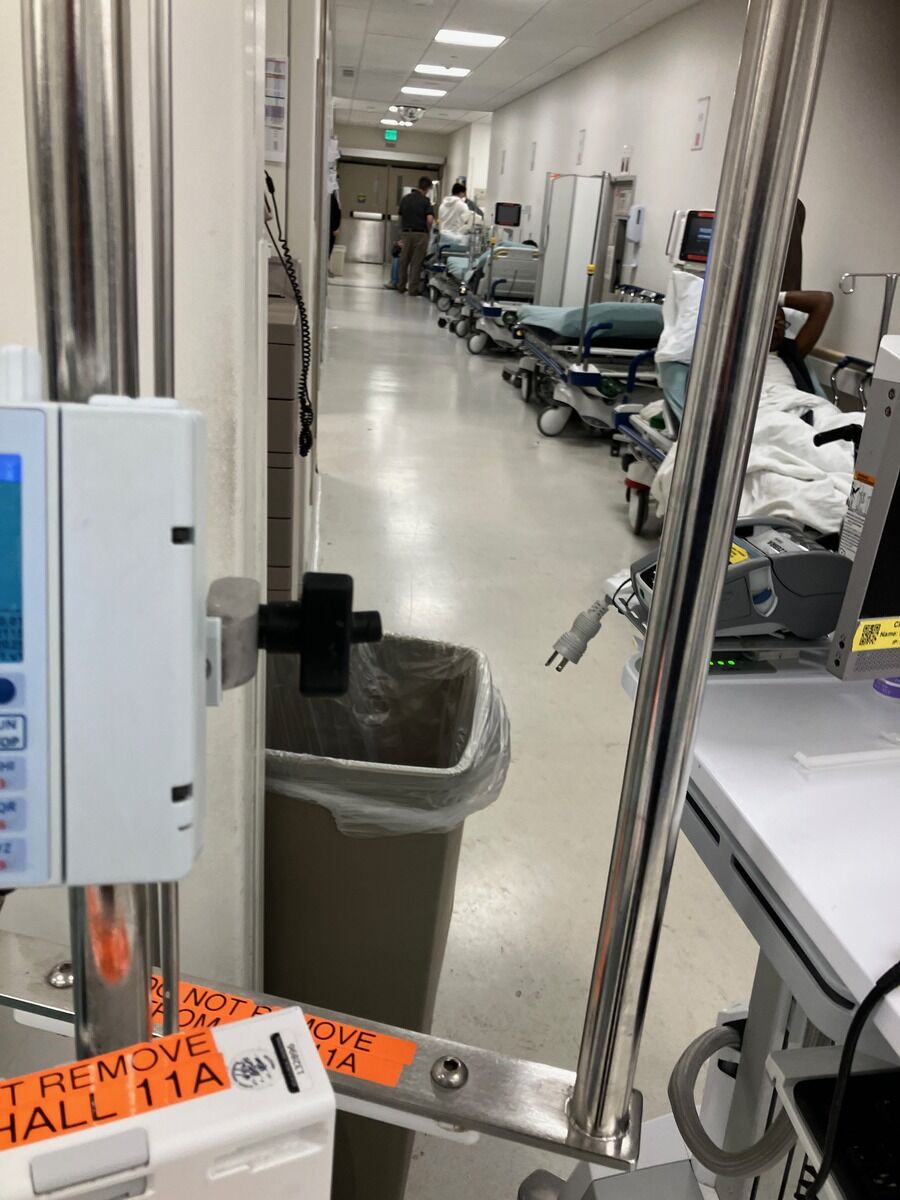
ER at UCLA is lined with patient beds, where patients wait to be boarded.jpeg
Note: Above is the revised article. Here is the unrevised version, as initially posted: “Sir. You’re Inebriated. Please sit down.”
What I learned hanging out in the Emergency Room at UCLA Hospital in Westwood
My brother had a liver problem and spent a week at St. Johns Hospital in Santa Monica. They sent him home and a week later, his Hemoglobin level was half what it should have been (6.6 instead of say 13). So his GP called him and told him to come in to the ER
What we saw was so eye opening that I thought it deserved an article. The ER in Westwood looks like it’s in Gaza City. There are beds lining the corridors, where admitted patients wait 3 or 4 days for a bed, lying next to mentally ill people or those who are simply homeless.
There are two tents in front filled with coughing people, people who look old, out of it. A ten story building with helicopters landing on the roof. Yet somehow the ER doesn’t fit into the building and spills out onto the streets in the form of two tents. A holdover from Covid, maybe?
All kinds of people fill the ER. There was a young man from the dorms who had injured his achilles heel climbing over the fence. There were criminals and drug dealers and housewives and a quiet older woman who was with her brother. She was soft spoken and polite. She said he was mentally ill, and she brought him here on suicide watch.
In the end we had been there for 4 hours and they had done nothing but take blood. We decided to leave, despite my brother’s obvious medical problems. Two young doctors came to speak to us. A nurse said they had to try to talk us out of leaving, then give us an AMA warning—leaving against medical advice.
And then there’s the homeless. “Sir. You’re Inebriated. Please sit down….. Sir. You’re Inebriated. Please sit down.” Said a young short woman in a hospital uniform, to a homeless man who was wobbling from side to side, visibly drunk.
I asked two young doctors, internists really, why the place looked like this. “Every ER in America looks like this.” The other guy said he was just interning at Massachusetts General and it looks the same. Why?
“In the insurance companies. This is boarding. They want us to board the patients here until a room opens up, for insurance reasons.”
“Please tell anyone you want. Tell my supervisor, tell the world. We need more resources here.”



Reader Comments(0)