
Community, Diversity, Sustainability and other Overused Words


Community, Diversity, Sustainability and other Overused Words
Trump has recently signaled strong de-escalation, telling reporters the U.S. expects to wrap up operations. Will He Declare Victory and Go Home?
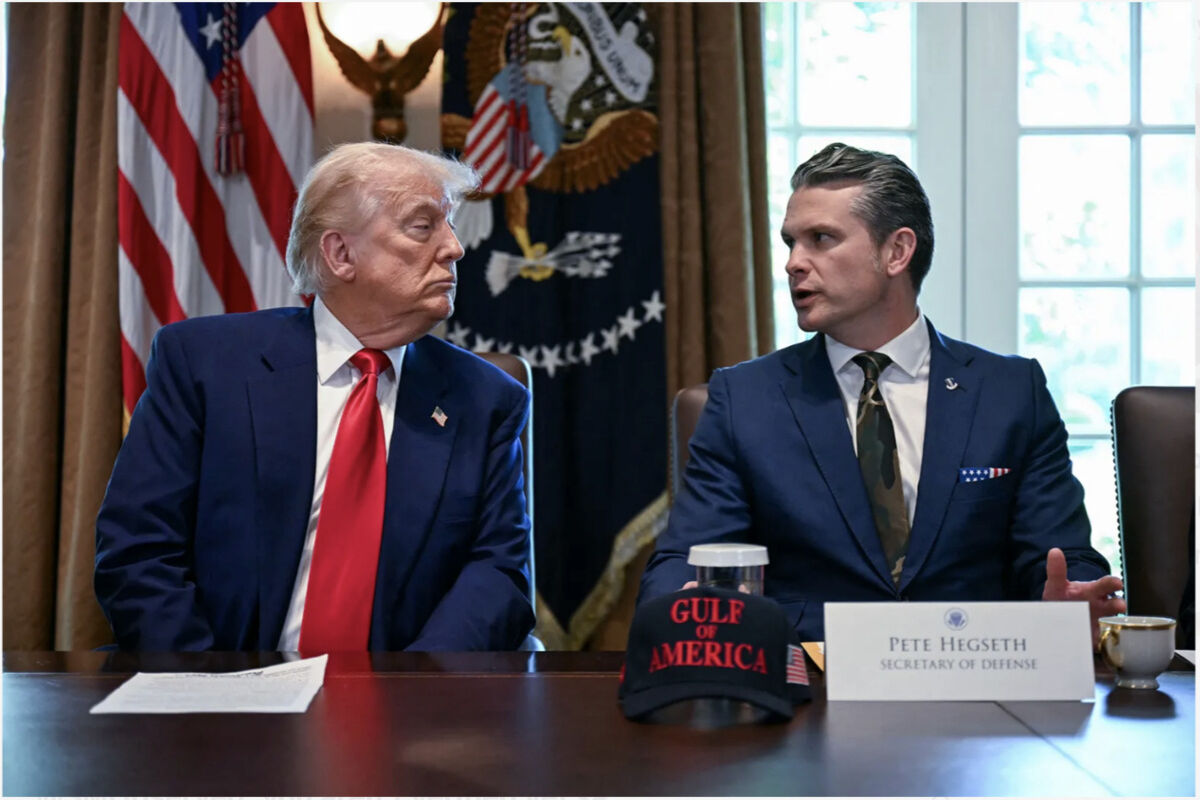
US President Donald Trump and Secretary of War Pete Hegseth
President Trump is scheduled to deliver a prime-time Address to the Nation on Wednesday, April 1, 2026, at 9 p.m. ET, providing an "important update on Iran." What is he likely to say?
This comes amid a roughly five-week-old U.S.-Israel military campaign against Iran (which began with strikes on February 28, 2026). Trump has recently signaled strong de-escalation, telling reporters the U.S. expects to wrap up operations and withdraw forces from Iran in "two or three weeks" because "there's no reason for us to do this" and "We'll be leaving very soon."
Trump's Likely Tone and Key ThemesBased on his recent public statements, Truth Social posts, and interviews in late March 2026, Trump's speech will likely be victory-oriented, boastful, and framed around "peace through strength." He often mixes claims of overwhelming U.S. military success with offers of negotiation, while issuing tough warnings.He will probably emphasize these points:
Mission largely accomplished - The U.S. (with Israel) has "decimated," "obliterated," or "bombed out" Iran's capabilities: no navy, no air force, missile production and facilities heavily damaged, nuclear enrichment set back or eliminated, leadership layers hit hard, and Iranian defenses rendered ineffective. He'll say something like: "We're hitting them very hard... Look what's happening in Iran. Everything's been bombed out." Or "We've won this... They can't do a thing about it. We have planes flying over Tehran."
Quick wind-down and withdrawal - U.S. involvement is a short-term success, not a long occupation. Expect lines like "We leave because there's no reason for us to do this" or "This was just an excursion... We're getting very close to finishing that." He may frame it as ahead of schedule and not requiring a prolonged presence.
Deal-making and a "new, more reasonable" Iran - Negotiations (possibly via intermediaries like Pakistan) are progressing. Iran is "begging" for a deal and has made concessions. He might say the U.S. is talking to "the right people" and a deal "probably" will be reached soon, without needing full Iranian capitulation on every issue (e.g., he has signaled willingness to exit even if the Strait of Hormuz isn't fully reopened immediately).
Tough warnings and leverage - If Iran doesn't get serious or open the Strait of Hormuz, the U.S. could still "obliterate" remaining targets like power plants, oil wells, or Kharg Island. He'll portray this as a last resort while praising U.S. restraint so far ("We have purposefully not yet 'touched'" certain infrastructure).
Criticism of allies and others - Allies should "start learning how to fight for yourself" and handle their own oil/security in the region (e.g., "go get your own oil" from the Strait). He'll contrast this with America's decisive action and downplay or mock Iranian threats/responses.
Broader narrative - This fits "peace through strength," prevented a nuclear Iran, protected allies, and avoided a wider/ground war. He may invoke past grievances against the Iranian regime (e.g., terrorism support, hostage crisis) to justify the initial action while claiming regime change has effectively occurred in key ways.
The delivery will be classic Trump: repetitive for emphasis, with superlatives ("tremendous," "beautiful," "total," "the likes of which"), personal anecdotes or asides ("I told Netanyahu..."), and a mix of swagger and deal-maker pragmatism. It won't be deeply policy-wonky; it'll aim to reassure markets/Americans that the conflict is ending successfully without endless entanglement.
This is an educated projection from his consistent recent messaging (e.g., "great progress," short-term operation, threats paired with optimism about talks). The actual speech could shift if new developments occur overnight, but the trajectory points to declaring significant victory and signaling an imminent exit. Tune in at 9 p.m. ET to hear it directly.
Update as of April 1, 2026 (morning/early afternoon ET): No full details or leaked excerpts of the speech have been released yet. The White House has kept the content deliberately vague, with Press Secretary Karoline Leavitt simply announcing that President Trump will deliver a prime-time Address to the Nation at 9 p.m. ET tonight (April 1) to provide an "important update on Iran."
bbc.com
What we do know from Trump's recent comments (mostly from March 31)Trump has been signaling the direction strongly in Oval Office remarks, Truth Social posts, and interviews. The speech is very likely to expand on these themes:Short timeline for winding down — The U.S. military campaign in Iran will wrap up in "two or three weeks" (or "very soon"). Trump has repeatedly said "We'll be leaving very soon" and "there's no reason for us to do this." He frames it as the "hard part" already being done, with Iran "essentially decimated."
bbc.com
No requirement for a full deal — Trump has indicated the U.S. can end operations even without a formal agreement with Iran. A deal is still possible and "probably" coming, but it's not a prerequisite for withdrawal.
Strait of Hormuz shift — The U.S. will not take responsibility for reopening the Strait. Trump has bluntly told allies (especially European countries) to "go get your own oil," "build up some delayed courage," and handle it themselves. He said securing the strait "is not for us" and that other nations reliant on it should step up.
washingtonpost.com
Success narrative — Expect emphasis on major damage inflicted on Iran's military capabilities, nuclear program setbacks, and overall "mission largely accomplished" without a prolonged U.S. ground presence or endless entanglement.
Mixed tone on negotiations — Trump has mentioned "great progress" in talks (possibly via intermediaries) and dealing with a "new, and more reasonable" Iranian side, while still holding out threats of further strikes (e.g., on power plants, oil infrastructure, or Kharg Island) if needed.
Defense Secretary Pete Hegseth has echoed the unpredictable/military-focused stance, declining to rule out ground troops and saying the U.S. will "negotiate with bombs" in the meantime.Bottom lineThe address will almost certainly be a victory-oriented wind-down speech — declaring significant success, setting a clear (short) exit timeline, shifting future regional responsibilities away from the U.S., and mixing optimism about a potential deal with continued toughness. It fits Trump's "peace through strength" style: boast about results, criticize allies for not doing enough, and reassure Americans that this won't become another long war.Nothing more specific (e.g., exact policy announcements or new concessions) has leaked publicly as of now. The speech is only hours away, so we'll know the precise wording soon. If major developments break between now and 9 p.m. ET, the tone could shift slightly, but the trajectory from the last 24–48 hours is consistent.Would you like me to check for any last-minute updates closer to airtime, or anything else related?

Reader Comments(0)