
Community, Diversity, Sustainability and other Overused Words


Community, Diversity, Sustainability and other Overused Words
The RN has 13 major surface escorts in service: 6 Type 45 destroyers + 7 Type 23 frigates (numbers have fluctuated slightly with retirements and maintenance).
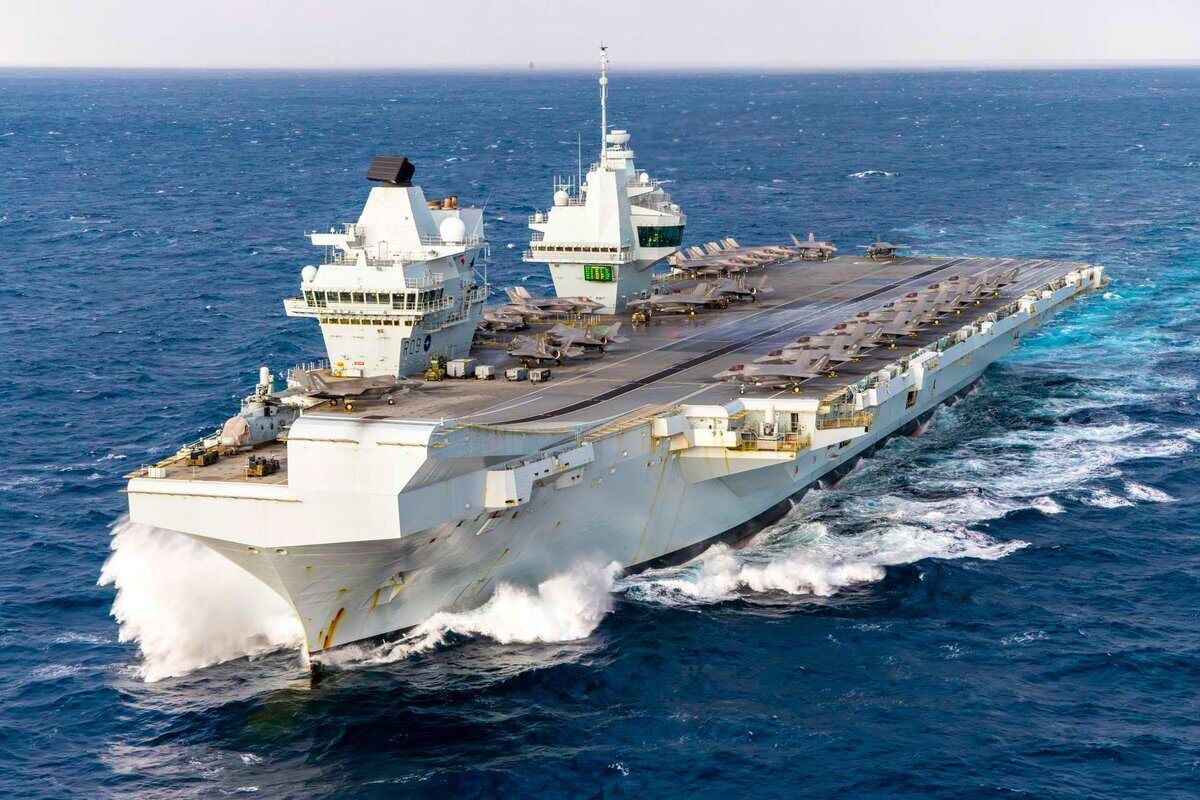
HMS Prince of Wales (R09) is the second of the UK's two Queen Elizabeth-class aircraft carriers and currently serves as the Fleet Flagship of the Royal Navy. She is one of the largest and most advanced warships ever built for Britain, designed primarily for Short Take-Off and Vertical Landing (STOVL) operations with F-35B Lightning II stealth fighters.
HMSQE Returning to HMNB Portsmouth, April 24, 2026. First docking at home port since July 2025 departure for Rosyth. This marks the end of her 9-month rectification period, restoring the UK's dual-carrier strike capability alongside HMS Prince of Wales.
In the spring of 2026, the Royal Navy faced a stark structural imbalance: parliamentary records confirmed approximately 134 admirals and flag officers across the Naval Service and Royal Marines, a figure that comfortably exceeded the total number of major surface combatants then in commission.
At that moment, the fleet comprised precisely six Type 45 air-defence destroyers and seven Type 23 anti-submarine frigates as its core escort force. A total of 13 ships. Availability remained lower still. Routine deep maintenance, power-plant upgrades on the Type 45s, and crew work-up cycles meant that, on any given day, only a fraction of these hulls could be considered immediately deployable at high readiness. The two Queen Elizabeth-class carriers, including the Fleet Flagship HMS Prince of Wales, provided strategic mass and air power, but they required dedicated escorts to form a credible Carrier Strike Group.
This numerical disparity was not merely anecdotal. It crystallised decades of post-Cold War rationalization, during which the surface fleet contracted from dozens of escorts in the 1980s–90s to its present minimal configuration. The Type 23 class, originally designed for sustained blue-water operations, had seen successive early retirements to manage hull-life limits and rising sustainment costs. The Type 45 destroyers, while technologically advanced with their integrated electric propulsion and sophisticated SAMPSON radar, suffered from known reliability issues that necessitated extensive refits, further constraining operational tempo.
Compounding the material constraints were systemic budgetary pressures within the Ministry of Defence. The National Audit Office had previously quantified a multi-billion-pound shortfall in the ten-year Equipment Plan, with subsequent internal assessments pointing to a potential £28 billion gap over a four-year horizon. Inflation in defence procurement, coupled with the fixed costs of the nuclear deterrent and strategic submarine programmes, placed acute strain on conventional naval recapitalisation.
Major programmes experienced slippage. The Type 26 global combat ship (City-class) programme faced documented delays to initial operating capability, driven by supply-chain disruptions, gearbox integration challenges, and engineering refinements. The lighter Type 31 general-purpose frigates carried their own cost and delivery risks. Meanwhile, the planned Type 83 air-defence destroyer replacement for the Type 45 class appeared vulnerable to further deferral as the department sought to close immediate funding holes through reprogramming and de-scoping.
In June 2025, the Strategic Defence Review articulated a conceptual response: a shift toward a "more powerful but cheaper and simpler fleet" organised around a hybrid high-low mix. This vision emphasised greater integration of autonomous surface and sub-surface vessels, uncrewed systems, and artificial intelligence-enabled decision support, alongside continued investment in nuclear-powered attack submarines (with an aspiration to grow the fleet toward up to 12 boats under the AUKUS framework). The review explicitly prioritised NATO interoperability, High North deterrence, and protection of critical undersea infrastructure.
Yet delivery remained contingent on the long-delayed Defence Investment Plan, whose publication slipped repeatedly into 2026 amid ongoing fiscal negotiations. Without predictable, multi-year funding profiles, industry faced "procurement paralysis," with shipyards and suppliers struggling to maintain skills and capacity.
Operationally, the Royal Navy continued to demonstrate commitment despite these constraints. In late April 2026, HMS Prince of Wales sailed from Portsmouth following post-deployment maintenance to commence preparations for Operation Firecrest - the next Carrier Strike Group deployment focused on the North Atlantic and High North. The carrier would embark Merlin and Wildcat helicopters together with emerging drone capabilities, training alongside allies under NATO's Arctic Sentry framework. Earlier, the ship had completed an eight-month Indo-Pacific deployment under Operation Highmast, underscoring the UK's intent to maintain forward presence east of Suez even as core escort numbers remained minimal.
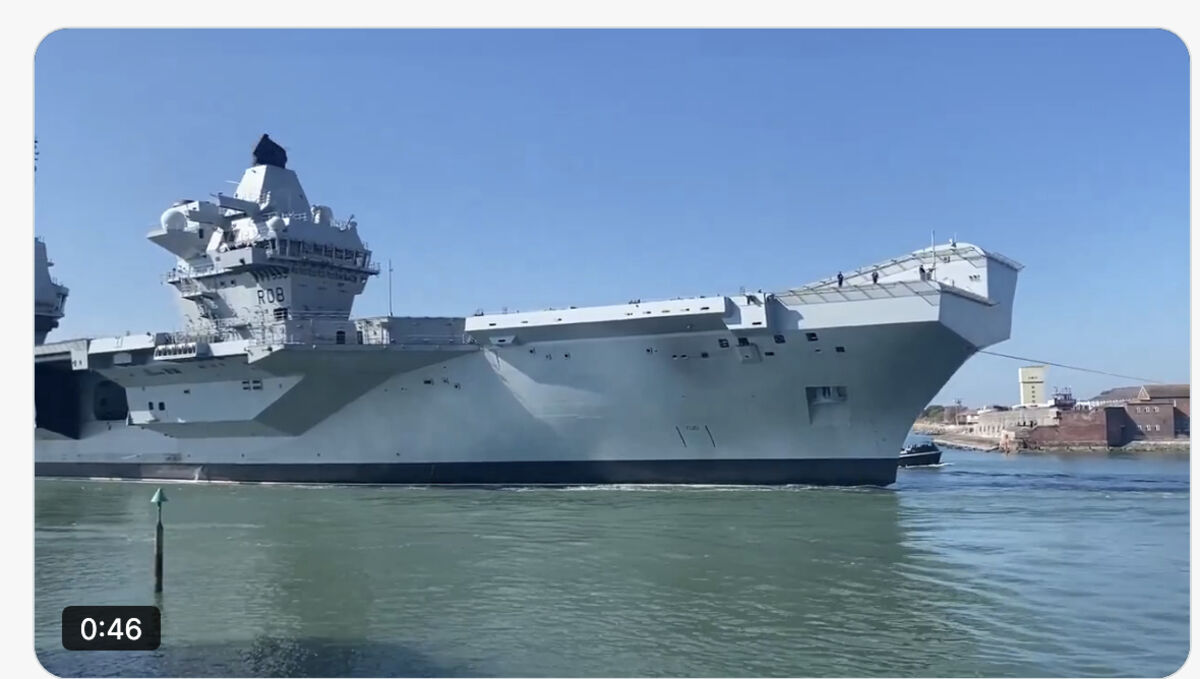
HMSQE Returning to HMNB Portsmouth, April 24, 2026. First docking at home port since July 2025 departure for Rosyth. This marks the end of her 9-month rectification period, restoring the UK's dual-carrier strike capability alongside HMS Prince of Wales.
The question of whether this configuration can credibly meet Britain's defence commitments hinges on several engineering and strategic variables. Modern naval warfare increasingly rewards qualitative factors: sensor fusion, networked command systems, precision munitions, and the ability to integrate with allied forces. A smaller but highly capable fleet, augmented by autonomous systems, can theoretically generate disproportionate effect if availability, crew training, and munitions stocks are sustained. However, the rule-of-thirds heuristic for complex warships (one-third deployed, one-third preparing, one-third in maintenance or regeneration) implies severe limits on concurrent tasking when the baseline hull count is already low.
Standing commitments - continuous at-sea nuclear deterrence, forward-deployed mine countermeasures, NATO Article 5 obligations in the North Atlantic, and potential surge requirements in the Indo-Pacific - impose competing demands. With only a handful of escorts routinely available, the margin for concurrent high-intensity operations or attrition becomes uncomfortably thin.
The 2025 Strategic Defence Review correctly diagnosed the need for systemic reform: moving away from annual budgeting cycles toward longer-term investment planning, reforming procurement to reduce cost growth, and accelerating the adoption of attritable autonomous platforms. Realising that vision requires not only political will but also resolution of the underlying fiscal arithmetic.
As of late April 2026, the Royal Navy retained world-class platforms, highly trained personnel, and a proven ability to project power when hulls and air wings could be assembled. Whether that capability scale matches the breadth of Britain's global defence obligations - in an era of renewed great-power competition and hybrid threats - remains an open engineering, economic, and strategic calculation. The imbalance between flag officers and fighting hulls served as a visible symptom; the deeper challenge lay in aligning resources, industrial tempo, and doctrinal innovation to close the gap between ambition and executable capacity.



Reader Comments(0)