
Community, Diversity, Sustainability and other Overused Words


Community, Diversity, Sustainability and other Overused Words
Soccer's Dark Side: Fan Violence Mars Celebrations After Mexico's 1-0 Win Over South Korea in LA's Koreatown
On June 18, 2026, Mexico defeated South Korea 1-0 in a Group A match of the FIFA World Cup at Estadio Akron in Guadalajara, Mexico. Luis Romo scored the decisive goal in the 50th minute after a goalkeeping error by South Korea's Kim Seung-gyu. The victory advanced Mexico, the tournament co-host, to the knockout stage as group leaders.
Large watch parties took place across Los Angeles, particularly in Koreatown, home to significant Mexican and South Korean communities. Organizers promoted the event as a celebration of shared cultural ties, with events at Seoul International Park featuring food, music, and family-friendly activities. Crowds of thousands gathered in festive atmospheres blending green-and-red Mexican flags with South Korean support.
What began as a vibrant party quickly turned chaotic. Video from the scene, shared widely on social media, captured pushing, shoving, and physical altercations amid dense crowds, metal barriers, scattered debris, and bystanders filming on phones. Security and staff intervened as tensions escalated.
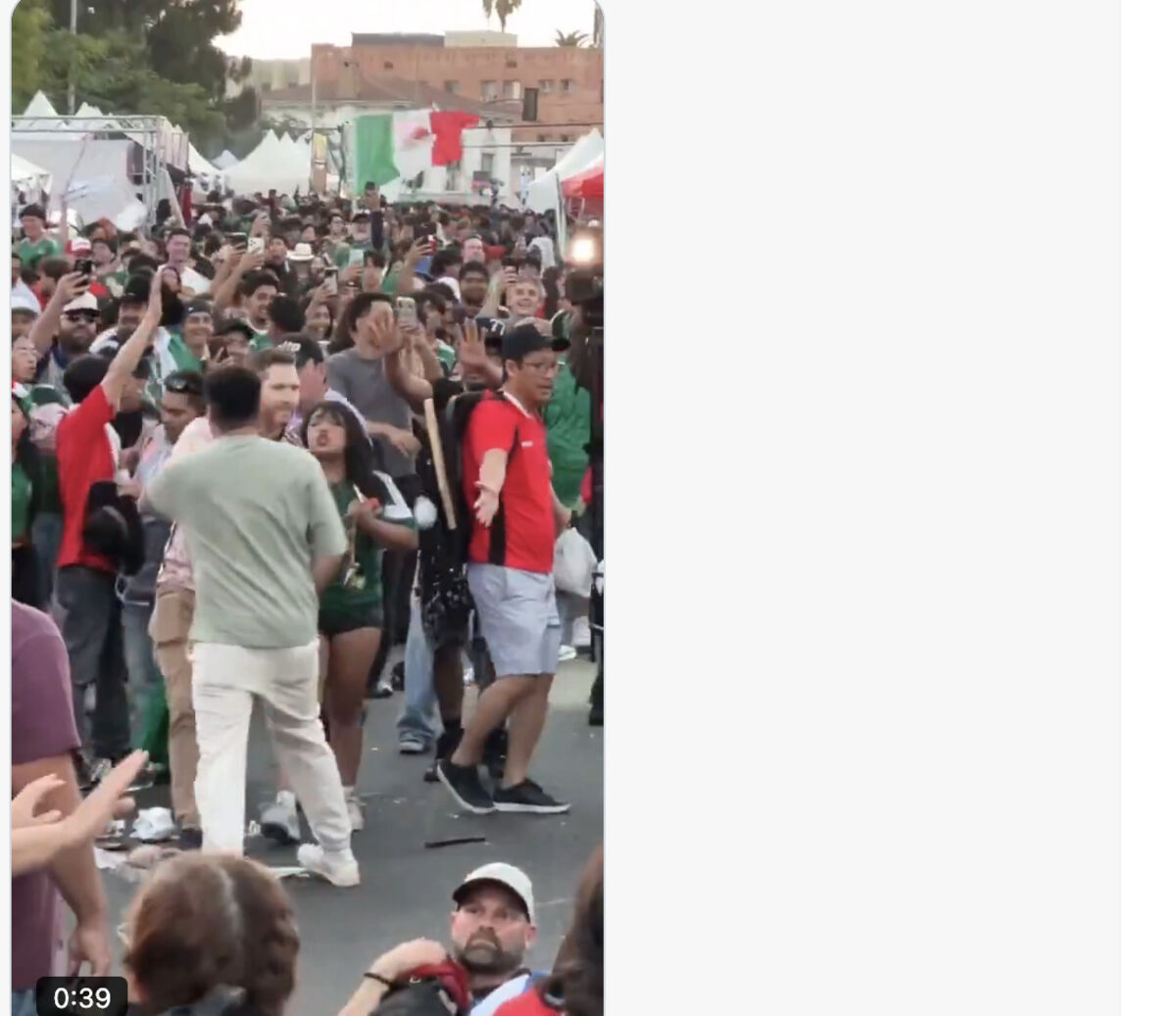
A more serious incident occurred nearby: LAPD reported a shooting around 6:40-7 p.m. near Irolo Street and James M. Wood Boulevard, just blocks from the main watch party. A 19-year-old suspect allegedly fired into the air and then shot a 50-year-old man multiple times during a confrontation. One victim was injured; the suspect was detained. Street takeovers and additional disorder followed Mexico's win across parts of LA.
While most fans behaved responsibly and the communities have long enjoyed positive relations-often highlighted as "Coreano-Hermano" brotherhood-the sport's global track record shows a recurring pattern. Passionate rivalries frequently spill into violence, property damage, and injuries. From European hooliganism to Latin American ultras clashing with police, soccer too often serves as an excuse for tribal aggression that civilized society should not tolerate. Alcohol-fueled crowds, weak crowd control, and a culture that romanticizes "ultras" exacerbate the problem.
FIFA and local organizers bear responsibility for promoting massive, high-emotion gatherings without adequate security scaling. In a city like Los Angeles, already strained by public safety challenges, expecting thousands of energized fans in tight urban spaces to remain perfectly orderly ignores human nature under the influence of competitive fervor and substances.



Reader Comments(0)