
Community, Diversity, Sustainability and other Overused Words


Community, Diversity, Sustainability and other Overused Words
Conspiracy theory: Lindsey Graham, a hawk on Ukraine and Iran, visits Zelensky in Ukraine. Hours later he dies of a sudden cardiac arrest. To some the rational explanation is the obvious one......
Laura Loomer Says Iran Killed Lindsey Graham, Asks for Secret Service Protection.
Senator Lindsey Graham (R-SC), appearing overall outwardly healthy, spoke to reporters yesterday in the Ukrainian capital of Kyiv, expressing support for the White House's decision to impose tougher sanctions on Russia. Roughly 24 hours later, he was dead from sudden cardiac arrest at his home in Washington.
IRGC Linked media claims responsibility for the sudden death of Lindsey Graham.
"A sudden cardiac arrest 24 hours after a Kyiv appearance is the kind of timeline that raises more questions than answers. Publicly healthy, politically active, then gone. The sequence is hard to ignore."
"Amid speculation that Russia may have assassinated Senator Graham by using a sophisticated biochemical agent designed to mimic a natural heart attack that uses the body's natural metabolic processes to destroy the evidence, modern forensic methods will likely identify it." tweeted Igor Sushko.
"Senator Lindsey Graham (R-SC), appearing overall outwardly healthy, spoke to reporters yesterday in the Ukrainian capital of Kyiv, expressing support for the White House's decision to impose tougher sanctions on Russia. Roughly 24 hours later, he was dead from sudden cardiac arrest at his home in Washington." OSINT Defender on X.com
"Have had two close friends in their 40s, both fit and trim, have sudden heart attacks. One died paddling an outrigger canoe off Waikiki. The other survived. Lindsey was 71, a white male, extreme hard worker with a history of high blood pressure and high stress. Occam's Razor?" Jack Tar.
Senator Lindsey Graham (R-SC), appearing overall outwardly healthy, spoke to reporters yesterday in the Ukrainian capital of Kyiv, expressing support for the White House's decision to impose tougher sanctions on Russia. Roughly 24 hours later, he was dead from sudden cardiac arrest at his home in Washington.
In the humid summer night of July 11, 2026, Washington, D.C., stirred with the kind of uneasy quiet that precedes a storm. Senator Lindsey Graham, the hawkish Republican from South Carolina who had spent decades shaping American foreign policy, had just returned from Kyiv. There, he stood tall, outwardly healthy, urging tougher sanctions on Russia and unwavering support for Ukraine. Less than 24 hours later, paramedics rushed to his Capitol Hill home after reports of chest pains. He suffered cardiac arrest and was pronounced dead at 71. Official statements cited a "brief and sudden illness." To many, it seemed too convenient. To others, it screamed foul play.
Whispers turned to roars on social media. Conspiracy theories exploded: Had Graham been poisoned? Was it retaliation for his lifelong advocacy of hardline measures against America's adversaries? Fingers pointed first at Russia, then Iran, and soon, a shadowy alliance of both.
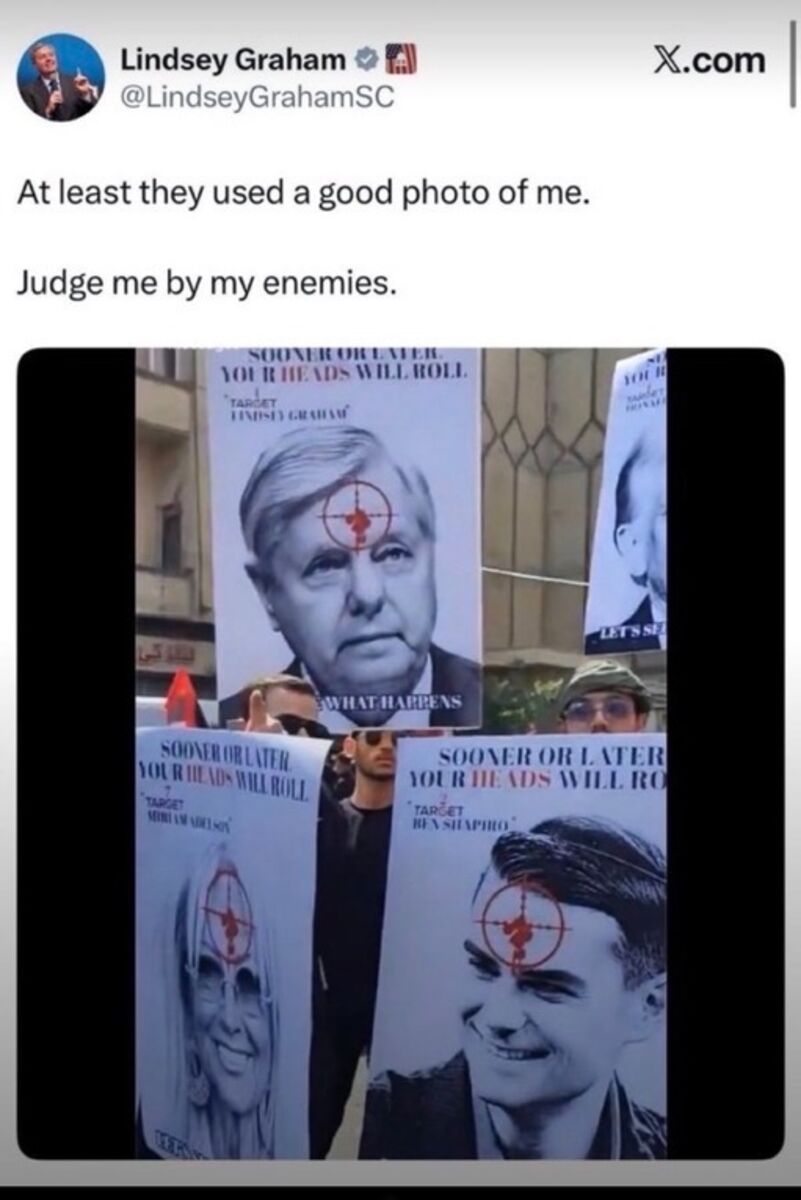
Enter Laura Loomer, the fiery investigative journalist and Trump ally known for her unfiltered takes. On the morning of July 12, as news of Graham's death spread, Loomer took to X with a series of posts that lit the fuse. She reminded the world of threats issued just days earlier at the extended state funeral of Iran's Supreme Leader Ali Khamenei. IRGC operatives and mourners had brandished posters featuring bullseyes and images of targets: President Donald Trump, Senator Lindsey Graham, Loomer herself, and others. The messages translated roughly to calls for their heads to roll.
Loomer detailed how Graham had publicly responded to the threats with characteristic defiance. He posted a photo of the poster featuring his face, quipping, "At least they used a good photo of me. Judge me by my enemies." Now, Loomer argued, that enemy had struck. "5 days ago, the IRGC publicly called for Senator Lindsey Graham to be assassinated," she wrote. "He was traveling abroad to a war zone... He's been home for less than one day, and tonight, his staff said he passed away from a 'brief and sudden illness'. Was he poisoned by a foreign adversary?"
Her thread escalated. Loomer connected the dots to Russia, noting a delegation from Moscow at the Tehran funeral where anti-American rhetoric peaked. She referenced past calls from Russian figures like Alexander Dugin for Graham's assassination and speculated on poison's ability to induce cardiac arrest. "Did Russia just poison Lindsey Graham?" she asked pointedly. "There seriously needs to be an investigation."
Crucially, Loomer highlighted her own vulnerability. She revealed that she, alongside President Trump and Graham, had been explicitly named in the IRGC threats. "They threatened to assassinate me and President Trump as well," Loomer posted, sharing images of the funeral posters. Citing the Iranian regime's propaganda video that appeared to mock Graham's death and list her as "next," she directly appealed for protection: "I feel like my life is in danger from the IRGC... @FBIDirectorKash the FBI should provide security to those who the Iranian regime is now promising to assassinate."
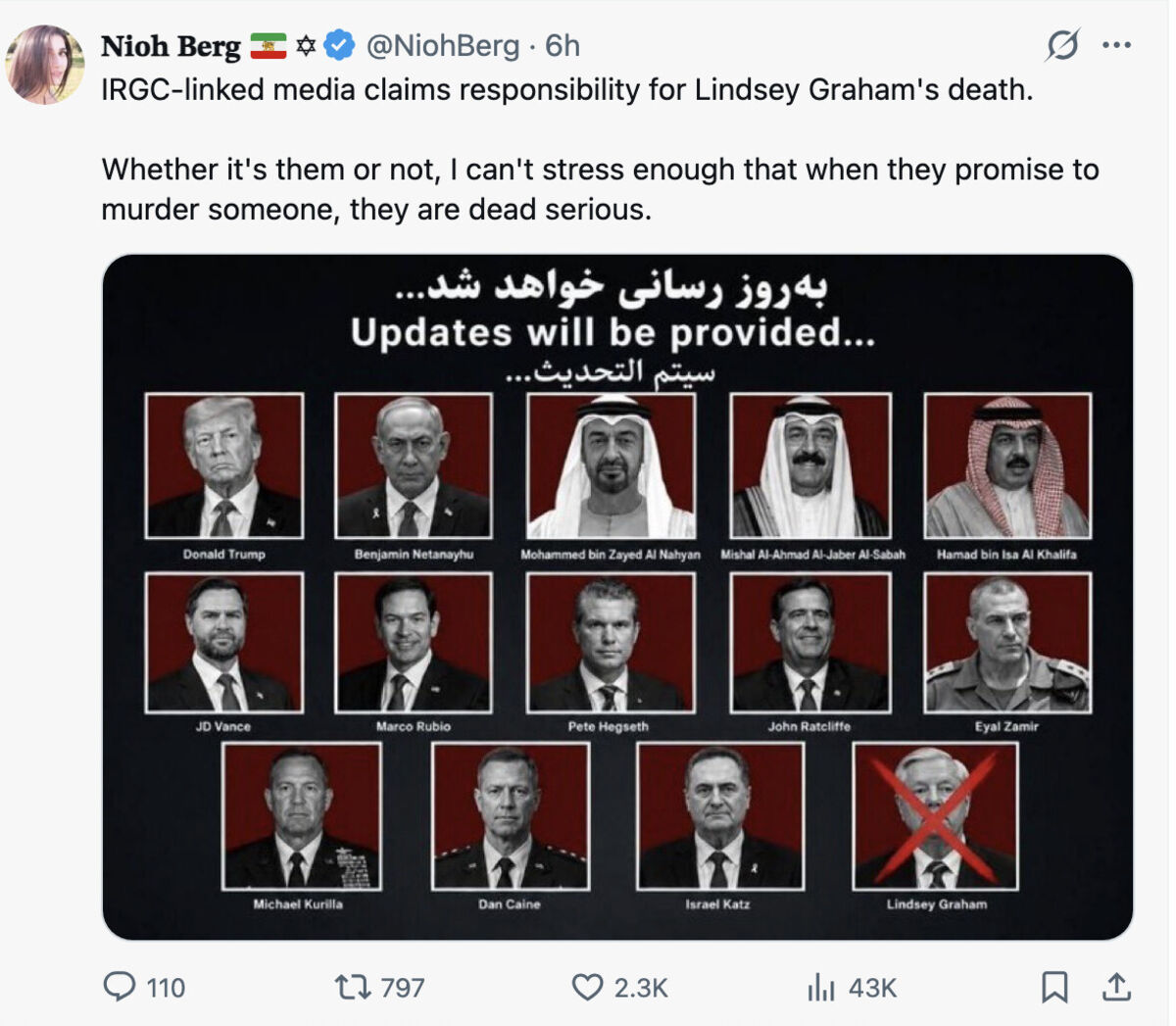
IRGC Linked media claims responsibility for the sudden death of Lindsey Graham.
Her calls resonated. The FBI announced it was assisting local authorities with every resource available. Loomer demanded a thorough toxicology report, dismissing the D.C. crime lab's capabilities and urging federal oversight. Supporters flooded replies with theories of coordinated hits-Russia leveraging its ties to Iran, or Iran acting through proxies after Graham's vocal support for regime change and military pressure.
Skeptics pushed back: Graham was 71, with a family history of heart issues, and sudden cardiac events are tragically common. Yet the timing-mere hours after advocating sanctions from a conflict zone-fueled doubt. Was it natural causes, or had adversaries finally silenced one of Washington's most persistent voices on Ukraine, Israel, and confronting Iran?
The Soviet Union (and later Russia) developed and used poisons and chemical agents in assassinations that could induce symptoms consistent with cardiac arrest or heart failure, often to make deaths appear natural.Key historical examples:KGB poison guns (1950s): Operatives used devices spraying hydrogen cyanide or similar compounds. Victims like Ukrainian nationalists Lev Rebet (1957) and Stepan Bandera (1959) died with symptoms and autopsies initially pointing to heart attacks.
Laboratory 12 / Kamera program: A secret Soviet facility developed undetectable toxins, including digitalis-like compounds (e.g., Compound C-2) and others that could trigger heart failure. Some were tested on prisoners and designed to leave no clear trace.
Modern cases: Nerve agents like Novichok (used in the Skripal 2018 and Navalny 2020 attacks) inhibit acetylcholinesterase, leading to overstimulation of the nervous system, respiratory failure, and cardiac arrest. These are engineered in Russia and far more sophisticated than Cold War methods.
Russia has long invested in "plausible deniability" toxins-odorless, hard-to-detect substances that mimic natural causes like myocardial infarction. This fits a pattern seen in multiple opposition figures and defectors.
That said, sudden cardiac arrest is common globally (especially at age 71, with travel stress, etc.), and no public evidence yet links Graham's death to foul play. Official reports point to natural causes, though the FBI is assisting with the investigation. Conspiracy claims remain unproven speculation.



Reader Comments(0)