
Community, Diversity, Sustainability and other Overused Words


Community, Diversity, Sustainability and other Overused Words
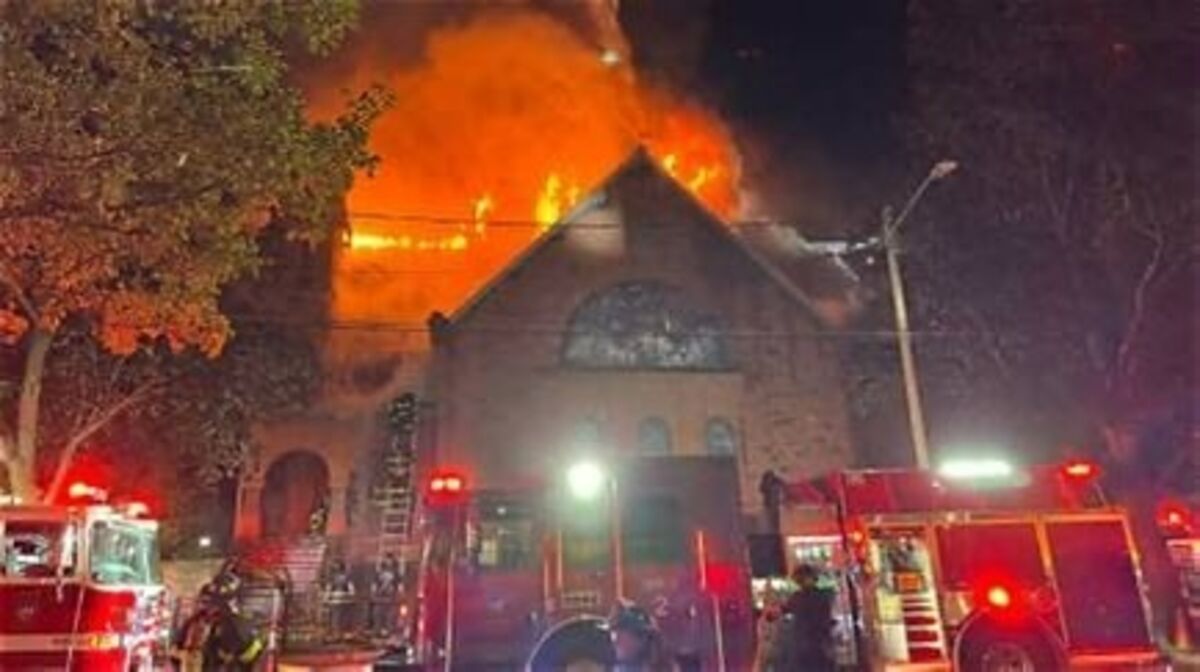
Latest Church Fire: A 133-year-old former Seventh-Day Adventist building owned by LaGrave Avenue Christian Reformed Church in Grand Rapids, Michigan
A 133-year-old former Seventh-Day Adventist building owned by LaGrave Avenue Christian Reformed Church in Grand Rapids, Michigan burned to the ground the evening of August 26, 2026.
A 133-year-old former Seventh-Day Adventist building owned by LaGrave Avenue Christian Reformed Church in Grand Rapids, Michigan, was destroyed by fire overnight August 26-27, 2026. The blaze began in the basement around 11 p.m., spread through walls and void spaces, and caused floor and roof collapse. The church's main sanctuary next door was undamaged. Fire officials said the cause remains under investigation. The structure, built around 1894, had been slated for renovation into a housing respite center.
No complete official nationwide total of church fires for 2026 is yet available. The most recent federal data from the Bureau of Alcohol, Tobacco, Firearms and Explosives (ATF) Bomb Arson Tracking System covers calendar year 2025 and recorded 244 fire incidents at houses of worship, of which 58 were classified as incendiary.
Family Research Council, which compiles publicly reported hostile acts against churches (vandalism, arson, threats and related crimes), documented 55 arson or attempted-arson cases in its most recent full-year report covering 2024. Those incidents formed part of 415 total events affecting 383 congregations in 43 states. No equivalent compilation for 2025 or 2026 has been released.
Reported fires in 2026 have occurred in multiple states, including Michigan, Montana, California, Kansas, Texas, New York and Ohio. Earlier tracking showed higher raw numbers in more populous states rather than a single concentrated region.
A limited number of 2026 fires have been publicly ruled arson. Examples include a juvenile arrest after fires at two Topeka, Kansas, churches in February, an Amarillo, Texas, fire tied to an attempted copper theft, and a Cleveland, Ohio, Baptist church fire determined to be intentional. Many other cases, including the Grand Rapids fire, remain under investigation with no official cause announced. Historical U.S. Fire Administration data indicate that accidental causes such as electrical faults, lightning and construction work account for a substantial share of fires at religious buildings.
Some observers and social-media users have pointed to the frequency of church fires and the number still listed as undetermined, suggesting a possible pattern of arson. Authorities have not endorsed that interpretation and continue to treat each incident individually pending forensic results.



Reader Comments(0)