
Community, Diversity, Sustainability and other Overused Words


Community, Diversity, Sustainability and other Overused Words
George Soros at more than $100 million, Reid Hoffman at more than $60 million, Michael Bloomberg at more than $150 million, Laurene Powell Jobs at more than $120 million, and Bill Gates at more than $100 million
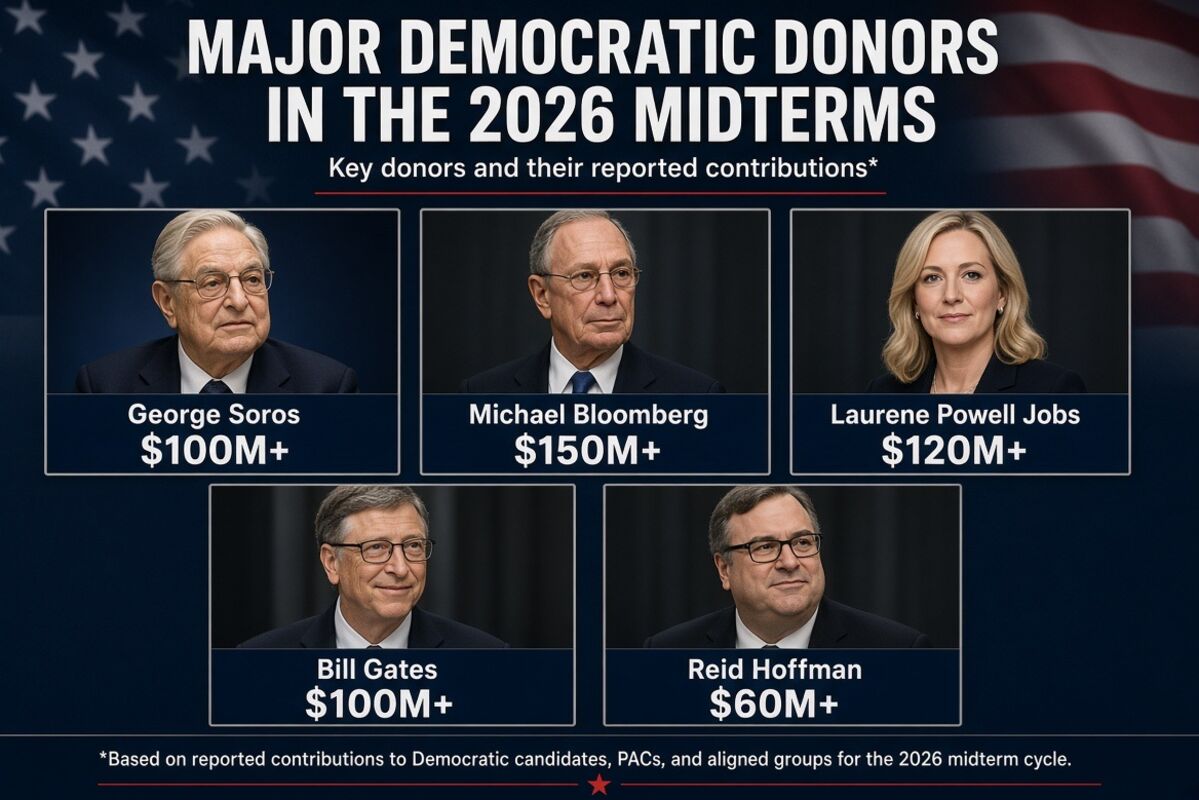
The Democrat Party is funded this year as follows: George Soros at more than $100 million, Reid Hoffman at more than $60 million, Michael Bloomberg at more than $150 million, Laurene Powell Jobs at more than $120 million, and Bill Gates at more than $100 million
Elon Musk responded to claims that he was donating $100 million to Republican PACs, by issuing a list of major Democratic-aligned billionaire donors and asked why Senator Bernie Sanders had not directed similar criticism at them.
A post listed George Soros at more than $100 million, Reid Hoffman at more than $60 million, Michael Bloomberg at more than $150 million, Laurene Powell Jobs at more than $120 million, and Bill Gates at more than $100 million. It contrasted those figures with Sanders' criticism of Musk's support for Republican candidates and included a short video collage featuring photos of Soros, another donor, and Musk.
Federal Election Commission data compiled by news organizations in mid-2026 show George Soros and entities he controls as the largest single Democratic donor in the cycle. The Washington Post reported $102 million from Soros-linked vehicles, primarily Democracy PAC, in the first half of the year. Later analyses by The New York Times put the Soros family total at $103.7 million. These amounts already exceeded the family's contributions in the prior cycle and positioned Soros as the standout Democratic megadonor while most of the other top 20 individual donors backed Republicans.
The higher rounded figures circulating for Bloomberg, Powell Jobs, Gates, and Hoffman originated in a viral graphic that spread in early September. More granular tracking of disclosed large donations placed Michael Bloomberg at roughly $22 million in one Washington Post compilation and Reid Hoffman in the mid-teens of millions in other tallies. Gates and Powell Jobs have long funded Democratic and progressive causes through foundations and related groups, but their cycle-specific disclosed totals did not match the $100 million-plus thresholds in the graphic. Campaign-finance reporting often lags and does not capture every 501(c)(4) or dark-money transfer, which can produce discrepancies between viral summaries and official tallies.
Elon Musk ranked among the top overall donors. The same Washington Post list placed him fourth with $90.6 million directed to Republican-aligned groups, including his America PAC. News reports indicated he was prepared to spend additional tens of millions before November. Sixteen of the 20 largest donors in a Financial Times analysis of recent filings favored Republican committees. Total fundraising for the 2025–26 cycle had already reached record levels, with more than one-third of the money coming from the 20 biggest megadonors.
Sanders has repeatedly described large political spending by billionaires as a threat to democracy. In August he posted a list of the top 50 megadonors that included Soros at $102 million alongside several Republican donors and stated that billionaires of either party should not be able to buy elections. He has also singled out Musk by name, calling plans for $100 million in Republican midterm spending an example of oligarchy and urging an end to Citizens United and super PACs. Sanders' broader platform includes a wealth tax and public financing of elections. Critics of the @warDaniel47 post noted that Sanders has criticized the campaign-finance system as a whole rather than remaining silent on Democratic donors.
The 2026 midterms have featured unusually concentrated spending from a small number of ultra-wealthy individuals and industry groups, especially in technology, cryptocurrency, and gambling. Both parties rely on these sources. The post and the graphic it referenced illustrate how quickly simplified donor lists can spread on social media and how they become part of partisan arguments about consistency and "dark money." Official FEC filings remain the most reliable public record, even as they understate the full flow of funds through nonprofits and other vehicles that do not require the same level of disclosure.


Reader Comments(0)