
Community, Diversity, Sustainability and other Overused Words


Community, Diversity, Sustainability and other Overused Words
Iranian Protests Enter 13th Day Amid Unverified Rumors of Leadership Upheaval and Dramatic Acts of Defiance
Together with the cigarette lighting woman, this image of protestors waving the Iranian monarchy flag has become the iconic image of the Iranian revolution.
January 12, 2026: As of January 12, 2026, Iran is experiencing a major nationwide anti-government uprising that began in late December 2025 (around December 28) and has now entered its third week (approximately Day 15–16). What started as demonstrations against severe economic hardship—including hyperinflation, a collapsing rial currency, soaring food and fuel prices—has rapidly escalated into widespread calls for regime change, the end of Supreme Leader Ali Khamenei's rule, and the downfall of the Islamic Republic.Scale and Nature of the ProtestsDemonstrations have spread to all 31 provinces, occurring in hundreds of cities and locations (reports range from 186 to over 350 sites), including major urban centers like Tehran, Mashhad, Isfahan, Shiraz, Tabriz, Karaj, and Kurdish regions, as well as smaller towns previously seen as regime strongholds.
Protests often occur at night, feature large crowds chanting slogans such as "Death to the dictator/Khamenei," "Woman, Life, Freedom," and calls associated with exiled opposition figures like Reza Pahlavi. Demonstrators have burned regime symbols, set fires to police kiosks and IRGC-linked sites, and displayed pre-1979 flags.
Women continue to play a leading role, with public defiance of hijab rules and symbolic acts of resistance.
Activity has shown some fluctuations (e.g., lower rates on certain days like January 11), but reports indicate ongoing rallies, strikes (including in bazaars and provinces like Shiraz and Shahrekord), and clashes.
Casualties and Government CrackdownRights groups provide varying figures due to a nationwide internet and communications blackout (ongoing for days, severely limiting verification and footage):Human Rights Activists News Agency (HRANA) (US-based): At least ~500–572 protesters killed (with some reports citing 490–544 protesters plus ~48 security personnel), and over 10,600–10,700 arrests.
Iran Human Rights (IHRNGO) (Norway-based): At least 648 killed (including children and minors), with warnings that the true toll could be significantly higher (some unverified estimates suggest thousands).
Additional deaths continue to be reported daily, including recent cases of protesters shot in cities like Tehran, Mashhad, and Kermanshah.
Security forces (including IRGC, Basij, and police) have used live ammunition, tear gas, and raids on hospitals to detain injured individuals. The regime has accused protesters of being "terrorists" backed by the US and Israel, while claiming restraint and blaming external forces for deaths.
Regime Response and International DimensionIranian officials, including the foreign minister, claim the situation is "under total control" and have held pro-government rallies in Tehran with tens of thousands participating as a show of force.
Supreme Leader Khamenei has condemned protesters as "vandals" and "mercenaries," vowing harsh measures and warning of no leniency.
The regime has imposed severe repression, including threats of mass executions and fast-tracked death sentences. A prominent case involves 26-year-old Erfan Soltani, arrested in early January in Fardis (near Karaj) for protest participation; he faces imminent execution by hanging (scheduled for January 14) without a lawyer, trial, or due process, drawing urgent international alerts from groups like Hengaw and NUFDIran.
Global ReactionsUS President Donald Trump has issued strong warnings, threatened military intervention if crackdowns continue, imposed new tariffs on countries doing business with Iran, and discussed options like providing Starlink access to bypass the blackout.
Western leaders (e.g., from France, Germany) have condemned the violence, while the regime accuses the US and Israel of fomenting unrest.
The situation remains highly fluid, with the blackout obscuring full details, but the protests represent one of the most geographically widespread and sustained challenges to the Islamic Republic in recent years.
Information is compiled from multiple rights organizations (HRANA, IHRNGO, Hengaw), international media (CNN, BBC, Reuters, Al Jazeera, The Guardian), and activist reports, as official Iranian sources downplay or deny much of the unrest. The death toll and scale continue to rise amid ongoing repression.
Tehran, Iran - January 9, 2026 - Nationwide anti-government demonstrations in Iran reached their 13th consecutive day on Friday, with massive crowds taking to the streets in Tehran and dozens of other cities despite a near-total internet blackout imposed by authorities. The protests, initially sparked by severe economic hardship and the collapse of the Iranian rial, have evolved into widespread calls for the overthrow of Supreme Leader Ayatollah Ali Khamenei and the end of the Islamic Republic.
"My own contact in Tehran could barely reach me for a few seconds. He said exactly: "Western Tehran is twice as crowded as last night. The IRGC doesn't dare to shoot. We're not afraid. Get our voices out to the world." @hesamaryia 01.10.26
#اين_آخرين_نبرده_پهلوى_برميگرده
#جاويدشاه
Human rights groups report at least 45–51 protesters killed since the unrest began on December 28, 2025, including several children, with more than 2,000 arrests. Security forces have responded with tear gas, live ammunition, and mass detentions, while the government has accused the United States and Israel of orchestrating the demonstrations.
Social media has been flooded with powerful images and videos of defiance. In one widely circulated clip from snowy nighttime conditions, a young woman boldly sets fire to a portrait of Supreme Leader Khamenei against the backdrop of the Iranian flag. She then uses the flames to light a cigarette - a striking symbolic rejection of the regime's religious and moral mandates, particularly around women's dress and behavior.
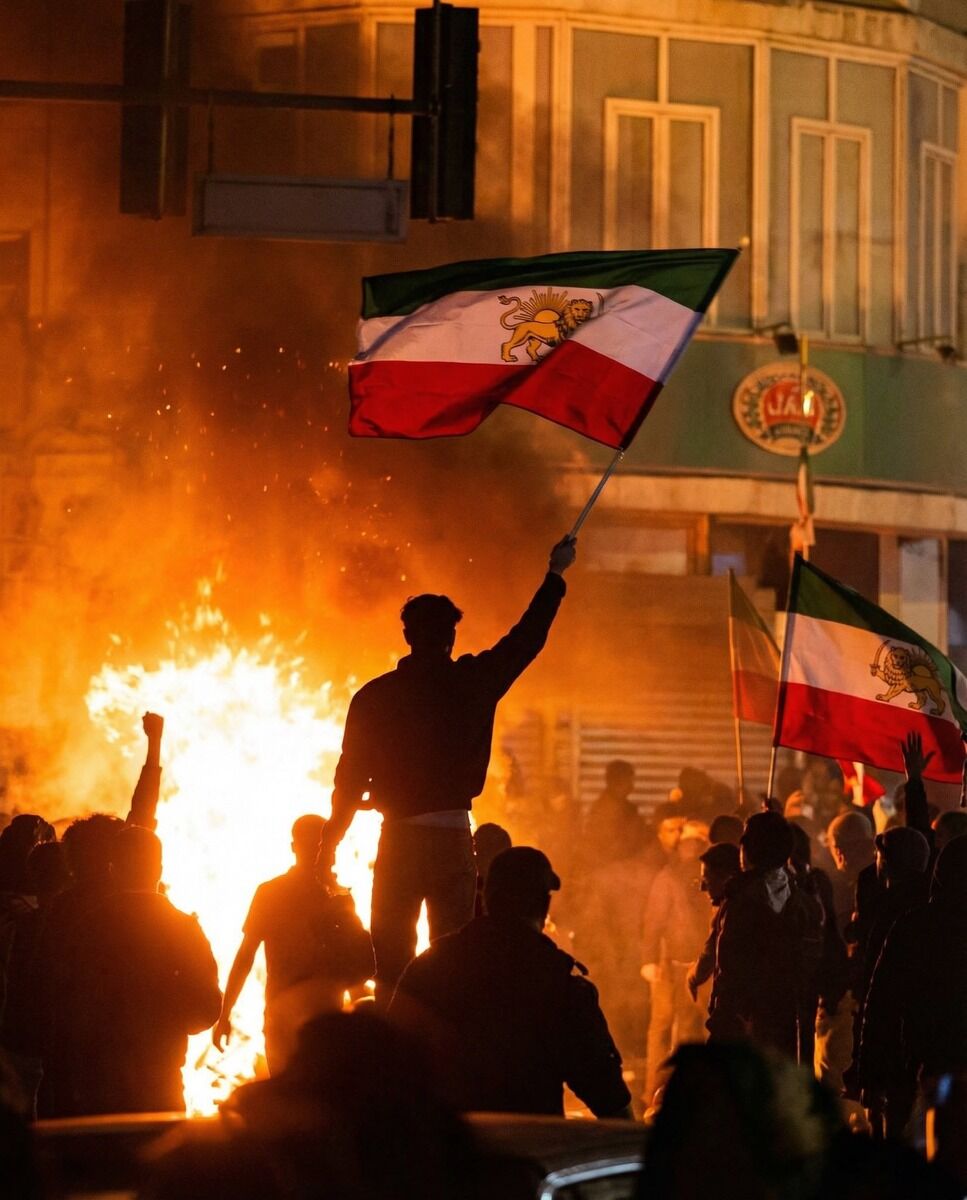
Together with the cigarette lighting woman, this image of protestors waving the Iranian monarchy flag has become the iconic image of the Iranian revolution.
These acts echo the creative resistance seen in previous waves of protests, but the current movement has gained unprecedented coordination, including a nationwide call by exiled Crown Prince Reza Pahlavi for synchronized demonstrations at specific times.
Online, unverified rumors have spread rapidly - including claims that President Masoud Pezeshkian has resigned and that Supreme Leader Khamenei has been "eliminated." While no credible sources have confirmed these reports, the speculation reflects deep frustration with the leadership. Pezeshkian's government has faced internal erosion, with multiple senior aides and officials resigning in recent weeks amid criticism of its inability to address the economic crisis or restrain hardline security forces.
President Pezeshkian has acknowledged public grievances, urging security forces not to harm peaceful protesters, but his administration lacks control over key paramilitary groups like the Basij, which answer directly to Khamenei. In a speech on January 9, Khamenei doubled down, framing the unrest as a foreign plot and refusing major concessions.Analysts describe the situation as a deepening legitimacy crisis for the clerical establishment. While the protests have not yet reached the scale of the 2022–2023 Mahsa Amini uprising in terms of sustained duration, their rapid spread to all 31 provinces and the regime's resort to extreme measures like nationwide internet shutdowns signal significant pressure.As communications remain severely restricted inside Iran, the world watches to see whether this wave of anger - fueled by inflation, unemployment, currency collapse, and long-simmering demands for freedom - will force meaningful change or face another brutal crackdown.
For now, the streets remain defiant, and symbolic acts like burning portraits continue to inspire hope among supporters of change.



Reader Comments(0)