
Community, Diversity, Sustainability and other Overused Words


Community, Diversity, Sustainability and other Overused Words
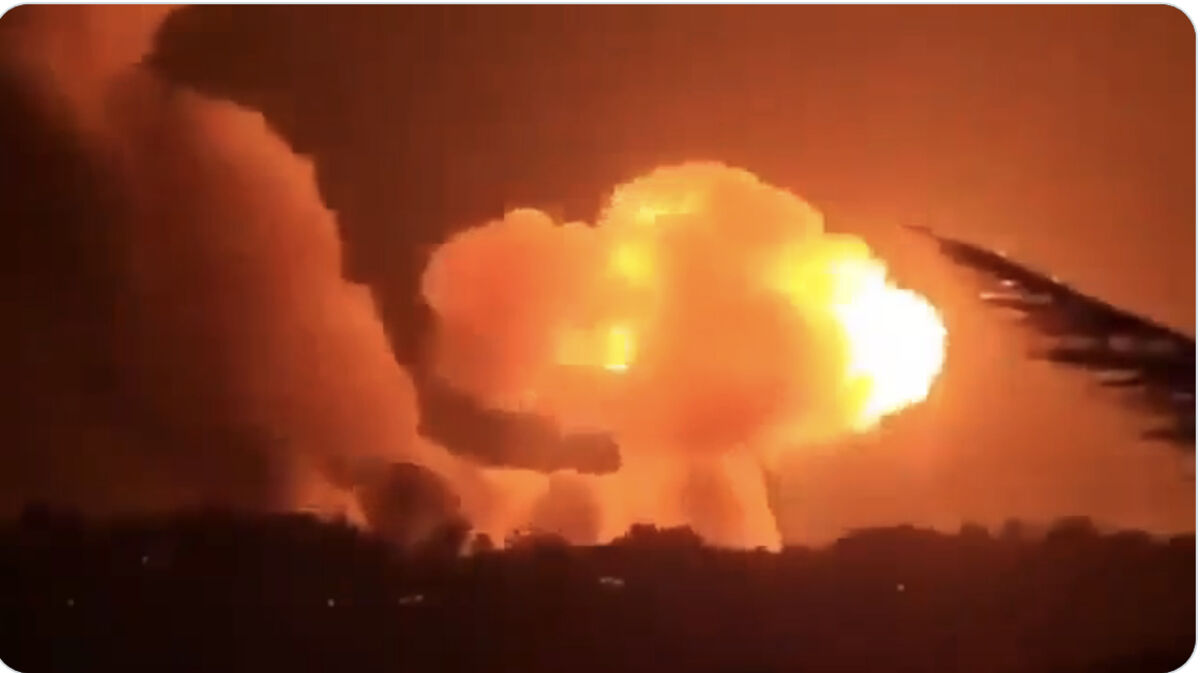
Video showed a large fireball and secondary blasts, which analysts and witnesses described as one of the most significant detonations observed since the US-Israeli campaign began on February 28, 2026
Massive Explosion Rocks Isfahan, Iran, As US-Israeli Alliance Destroys Underground Missile City
March 31, 2026A powerful nighttime explosion illuminated the skies over Isfahan, a major central Iranian city with a population of approximately 2.3 million, as part of sustained US and Israeli airstrikes in the ongoing conflict with Iran.
Video footage circulating on social media, https://x.com/Osinttechnical/status/2038762229839868151?s=20 showed a large fireball and secondary blasts, which analysts and witnesses described as one of the most significant detonations observed since the US-Israeli campaign began on February 28, 2026. President Donald Trump reportedly shared similar video on his Truth Social account, drawing widespread attention to the event.
Reports indicate the strike targeted military infrastructure in the Isfahan area, including facilities linked to Iran's ballistic missile production, assembly, and storage. Isfahan is home to key sites such as the Badr military airbase and various defense industry complexes involved in missile development. US officials, cited in media accounts, described the use of 2,000-pound bunker-buster munitions against a major ammunition depot, triggering secondary explosions from stored munitions.
The explosion was reportedly large enough to register on geostationary weather satellite imagery, confirming its scale. Iranian media and local witnesses reported intense strikes lighting up the night sky, with plumes of smoke rising over the city. Isfahan has been a repeated target in the conflict due to its strategic role in Iran's missile and, in some cases, nuclear-related programs, though specific damage assessments to any nuclear components remain unconfirmed in public reporting.
This latest incident occurs against the backdrop of a broader US-Israeli operation that has involved hundreds of strikes on Iranian military, leadership, and infrastructure targets. The campaign, which followed the breakdown of negotiations and Iranian actions, has included efforts to degrade Iran's ballistic missile capabilities and air defenses. Iranian sources have reported civilian and military casualties in prior strikes on the city, including at industrial sites and a university.
No immediate official casualty figures were available for the most recent blast in Isfahan. Iranian authorities have condemned the attacks as aggression, while US and Israeli statements have framed them as necessary to neutralize threats from Iranian missiles and proxies. The conflict has seen reciprocal actions, with Iran launching missiles toward Israel and regional targets, some causing damage such as fires at Israeli infrastructure.
No, the massive explosion in Isfahan, Iran, on the night of March 30–31, 2026, was not nuclear.What Caused the BlastReliable reports from US officials, media outlets, and open-source analysis indicate that the strike involved conventional bunker-buster munitions (specifically 2,000-pound / ~900 kg penetrator bombs) dropped by US forces on a major underground ammunition depot and associated military infrastructure.
The large fireball and secondary explosions resulted from the detonation of stored munitions, fuel, or missile components inside the facility—not from a nuclear detonation. Isfahan is a key hub for Iran’s ballistic missile production and has nuclear-related sites nearby (including storage of enriched uranium), but the targeted site in this specific strike was described as an ammunition/missile complex.
Why It Wasn't Nuclear: No nuclear detonation signature: A true nuclear explosion would produce a distinct bright flash, extreme heat, electromagnetic pulse effects, immediate widespread radiation, and a characteristic mushroom cloud with different thermal and seismic profiles. None of these have been reported by independent monitors, the IAEA, or seismic networks.
No radiological release reported: The International Atomic Energy Agency (IAEA) and other monitors have not issued alerts about radiation leaks from this event, despite ongoing concerns about Iran’s nuclear sites.
Weapon used: The US employed non-nuclear “bunker busters” designed to penetrate hardened underground targets and trigger secondary explosions from whatever is stored inside. President Trump shared video of the blast, consistent with conventional high-explosive effects amplified by the facility’s contents.
Some social media posts speculated about a “mushroom cloud” or “nuke,” but these appear to be exaggerations or misinterpretations of the large conventional blast and smoke plume. Similar dramatic footage has circulated before in this conflict without evidence of nuclear weapons use.Context on Isfahan’s Nuclear LinksIsfahan does host important nuclear infrastructure, including uranium conversion facilities and reportedly storage for hundreds of kilograms of enriched uranium (up to 60% purity, according to prior IAEA reporting). Strikes in the broader campaign have hit or come near nuclear-related sites, raising concerns about potential radiological risks if those areas were directly damaged. However, for this particular large nighttime explosion, reporting consistently points to a conventional ammunition depot strike rather than a direct hit on the most sensitive nuclear vaults.
In summary: The blast was spectacular and powerful due to the scale of the munitions and the secondary detonations at a military target, but it was entirely conventional, not nuclear. As with all active war zones, information is still developing, and official damage assessments (including any impact on nearby nuclear material) may take time to confirm.

Reader Comments(0)