
Community, Diversity, Sustainability and other Overused Words


Community, Diversity, Sustainability and other Overused Words
$126 Billion Cost Would Cover Free Flights from LA to San Francisco, For the Next 112 Years
California's High-Speed Rail Project Will Take 216 Years to Complete, as Construction Creeps Forward
California's long-delayed high-speed rail initiative, approved by voters in 2008, now carries an estimated price tag of $126 billion to link Los Angeles and San Francisco - roughly triple the original $33 billion to $45 billion projection that secured Proposition 1A approval.
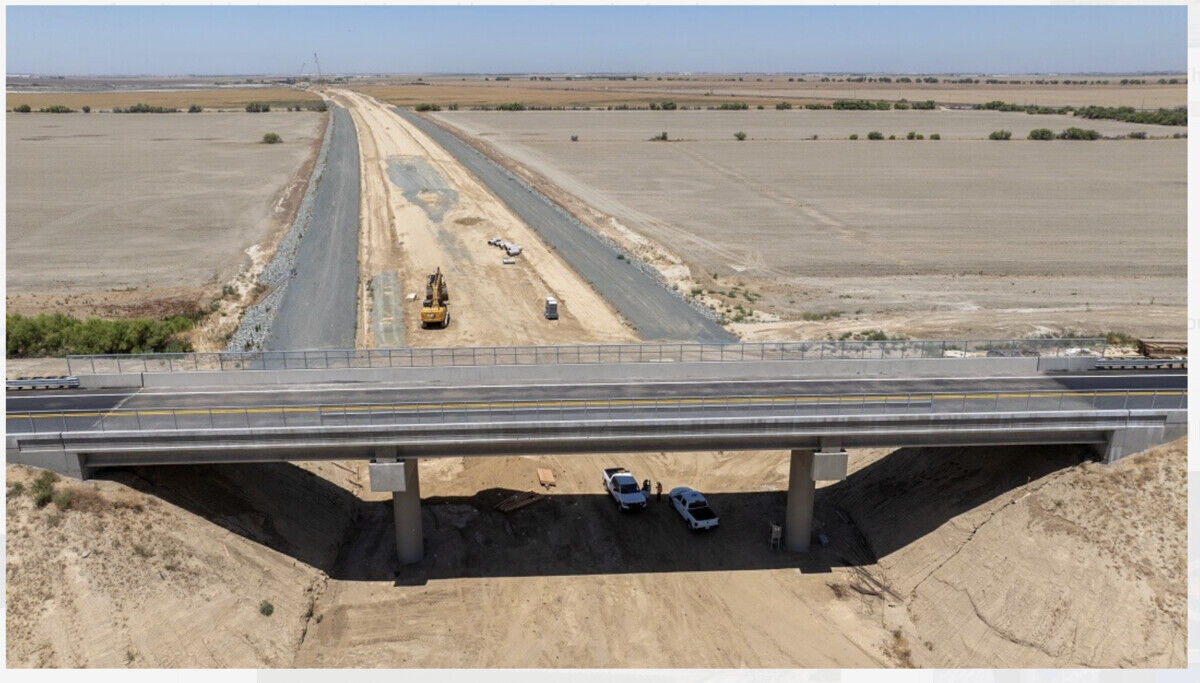
A 60 Minutes segment aired in early April 2026 spotlighted the latest cost escalation, with California High-Speed Rail Authority board member Anthony Williams telling CBS that officials now believe the full Phase 1 system would cost about $126 billion "with the right optimization." The project has already consumed roughly $13.8 billion in state and federal funds, yet no high-speed passenger service is operating. Construction remains concentrated on an initial 119-mile segment in the Central Valley between Merced and Bakersfield, where 80 miles of guideway and 59 structures have been completed. The authority projects revenue service on that limited initial operating segment could begin around 2032, with the full San Francisco-to-Los Angeles system potentially finished between 2038 and 2039 - more than a decade later than originally promised.
Governor Gavin Newsom, who has led the state since 2019, has offered a mixed assessment of the project over time. In his January 2019 State of the State address, he expressed deep skepticism about the original scope: "Let's be real. The current project, as planned, would cost too much and take too long. There's been too little oversight and not enough transparency." Newsom pivoted the effort to focus first on the Central Valley segment while continuing to seek funding for extensions.
More recently, however, Newsom has emphasized tangible progress. During a February 2026 site visit to highlight the start of track-laying at the Southern Railhead Facility near Wasco, he declared: "All of the hard work is behind us. Now we're going to see the fruits of that. We're going to start seeing precisely what you see here, real tracks, real progress." He added that the project is "creating thousands of family-sustaining jobs, with up to 1,700 workers on site daily," and stated, "California is building the nation's first high-speed rail system, and we're proving it can be done."
Critics have been far more blunt. Conservative commentator and former British government adviser Steve Hilton, who frequently highlights what he calls "Califailures," has long targeted the rail project as emblematic of government waste. In recent commentary, Hilton framed the choice starkly: "Remember the high speed rail? Would you complete it, shrink it, or end it?" His answer: "END IT. We need to invest that money in REAL things that help families." He has also labeled the effort "Gavin Newsom's high-speed fiasco," pointing to ongoing delays, ballooning costs, and what he describes as an inefficient business plan that now includes lengthy bus connections in some scenarios.
State transportation officials have acknowledged some of the criticism is valid. Transportation Secretary Toks Omishakin said in the 60 Minutes report, "Some of the criticism on this project, I think, are very fair. I don't think the voters fully understood, and neither did we in the public sector, what it was going to take to actually get this project delivered."
The project faces a roughly $90 billion funding gap for full completion and continues to rely on cap-and-trade revenues, federal grants, and potential private investment. Supporters argue it will deliver zero-emission travel, reduce highway congestion, and create long-term economic benefits in the Central Valley. Detractors maintain that after nearly two decades and billions spent, the money could be better directed elsewhere - a debate intensified by the latest cost revelations. The California High-Speed Rail Authority maintains that construction milestones, environmental clearances covering most of the route, and recent track-installation advances show the project is moving forward despite the challenges.

Reader Comments(0)