
Community, Diversity, Sustainability and other Overused Words


Community, Diversity, Sustainability and other Overused Words
In a continued push to remedy the harms of the "War on Drugs," California, the City of Los Angeles, and Los Angeles County open cannabis licensing programs that prioritize social equity and social justice
Billboard advertising Erba, a Cannabis dispensary in West LA.
Two women walk by a cannabis sign in Santa Monica.
April 21, 2026 -- In a continued push to remedy the harms of the "War on Drugs," California, the City of Los Angeles, and Los Angeles County are operating - or actively developing - cannabis licensing programs that prioritize social equity and social justice. These initiatives aim to give individuals and communities disproportionately affected by past cannabis criminalization a meaningful shot at owning or working in legal dispensaries and other cannabis businesses.
The foundation was laid at the state level in 2018 when the California Legislature passed the California Cannabis Equity Act (Senate Bill 1294). Signed by then-Gov. Jerry Brown on Sept. 26, 2018, the law created a framework for technical assistance, grants, and fee relief to help local governments support equity applicants. The Department of Cannabis Control (DCC) now offers statewide equity fee relief on state licenses, tax credits through partner agencies, and grants to cities and counties to lower barriers for those harmed by prohibition-era policies. http://www.cannabis.ca.gov
City of Los Angeles: A Robust, Active Social Equity ProgramThe City of Los Angeles Department of Cannabis Regulation (DCR) runs one of the state's most established Social Equity Programs (SEP). Verified Social Equity Individual Applicants (SEIAs) receive priority processing, fee waivers (including 2026 license renewal waivers funded by grants), technical assistance, and access to reserved or prioritized retail and delivery licenses through lotteries or application rounds.To qualify as a SEIA, applicants must meet both of the following updated criteria (effective for the 2025 verification window and continuing into 2026):Be "Low Income" per U.S. Department of Housing and Urban Development (HUD) Area Median Income limits for their county and have net assets no greater than four times that low-income threshold (primary residence and qualified retirement accounts are excluded).
Have a qualifying "Cannabis Arrest or Conviction" anywhere in the United States for any crime relating to the sale, possession, use, manufacture, or cultivation of cannabis (arrests or convictions under former Los Angeles Proposition D do not qualify).
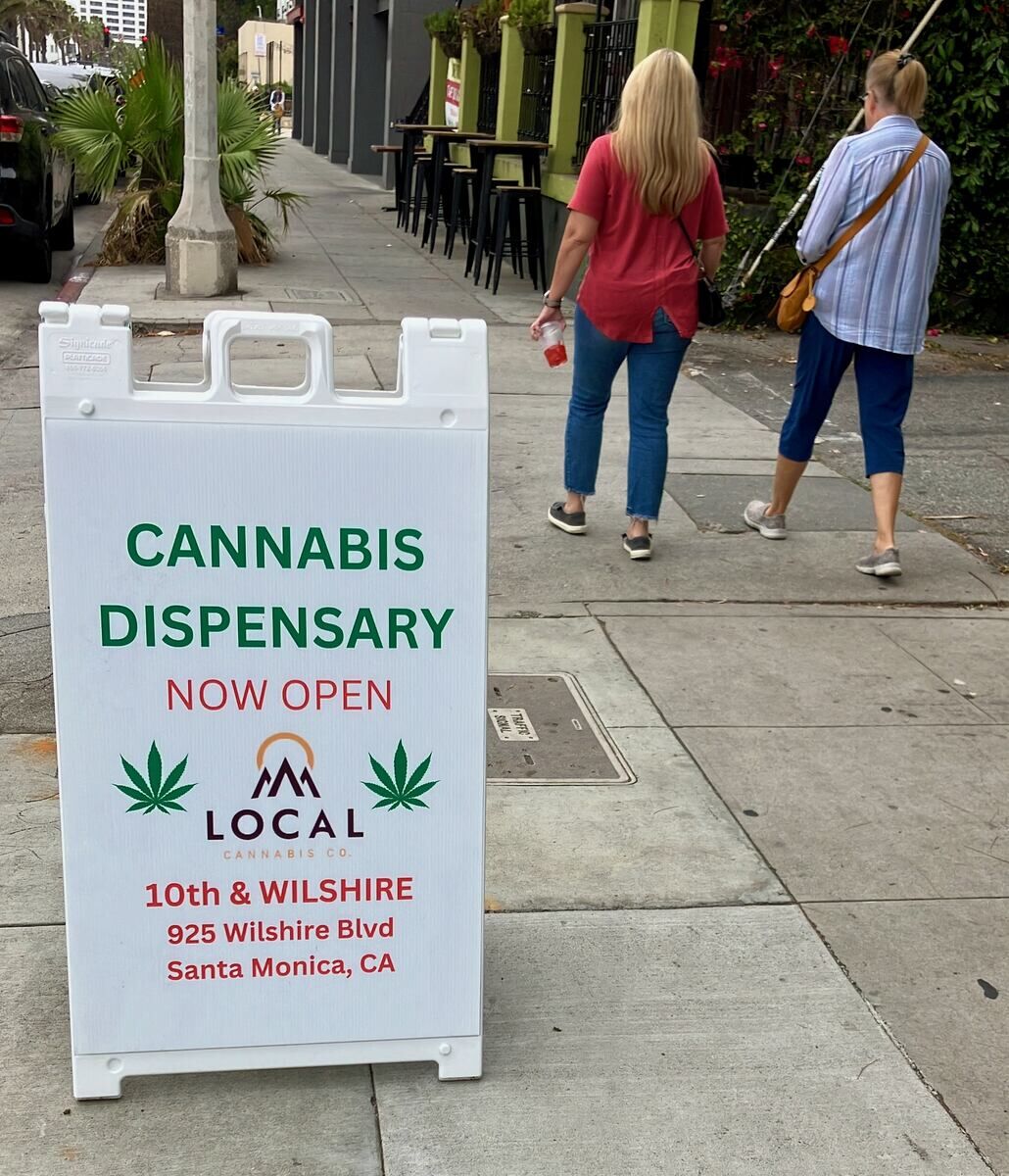
Two women walk by a cannabis sign in Santa Monica.
Key Questions Applicants Must Answer to Determine Qualification
DCR's online verification process requires applicants to attest to and document the following (via the DCR Access portal). These are the core questions that determine eligibility:Do you have a cannabis-related arrest or conviction (any U.S. jurisdiction) for sale, possession, use, manufacture, or cultivation of cannabis? (You must provide court documents, police reports, citations, or expungement letters as proof.)
What is your household size? (Includes spouses/domestic partners, dependent children under 18, and certain temporarily absent members; live-in assistants and foster children are excluded.)
Did your household income in the most recent tax year (2024 or 2025) fall at or below the HUD low-income limits for your county and household size? (Requires full federal tax returns or IRS verification of non-filing.)
Are your net assets (checking/savings accounts, stocks, trusts, non-primary real estate, etc.) at or below four times the applicable low-income threshold? (Requires completion of the official Asset Attestation form – SEP-6003-FORM.)
Does your current address and recent residency history align with the county used for HUD income limits? (Supporting ID and address documents required.)
Verification is not automatic - applicants submit documentation through the DCR Access portal during designated windows (the most recent closed April 1, 2025; new windows are announced on the DCR site). There is a $597 fee, a 7-day period to cure deficiencies, and determinations are final. Previously verified SEIAs from 2019 or 2022 do not need re-verification for certain lotteries. http://www.cannabis.lacity.gov
Los Angeles County: Program in DevelopmentIn unincorporated areas of Los Angeles County, the Office of Cannabis Management (OCM) is building its own Social Equity Program as part of a broader equitable cannabis framework. As of April 2026, commercial cannabis licensing remains restricted, and no dispensary applications are currently being accepted.OCM has completed a comprehensive equity assessment and, in partnership with the Department of Economic Opportunity, is launching the Cannabis Social Equity Entrepreneurship Academy in Spring 2026. The academy will offer training in licensing, compliance, business planning, and applicant protections ahead of future ordinance adoption and licensing. Potential applicants should monitor dcba.lacounty.gov/cannabis for updates on when applications may open.
Why These Programs Matter
State, city, and county leaders describe the initiatives as correcting decades of unequal enforcement that devastated certain neighborhoods. Equity retailers are highlighted on the state's REAL CA Campaign site, and local programs continue to receive millions in grants (e.g., DCR's $3.5 million equity grant for 2026). Officials emphasize that the programs are not quotas but targeted support - fee relief, training, priority review, and capital access - to help those previously excluded participate in the now-legal industry.Next Steps for Interested Applicants City of Los Angeles: Start at cannabis.lacity.gov/social-equity and create an account in the DCR Access portal.
State license (after local approval): Apply for DCC equity fee relief at cannabis.ca.gov.
Los Angeles County: Watch dcba.lacounty.gov/cannabis for academy launch and future licensing news.
Rules and windows change, so applicants should verify directly on official websites and consider free technical assistance offered through DCR and DCC. As one equity business owner noted in state materials, these programs represent a chance for communities long denied economic opportunity in the cannabis space to finally share in its benefits.




Reader Comments(0)