
Community, Diversity, Sustainability and other Overused Words


Community, Diversity, Sustainability and other Overused Words
West Texas Intermediate (WTI) crude futures settled at $90.90 per barrel on Friday, March 6 - up $9.89, or 12.21%, marking one of the biggest daily jumps since 2020
Oil Prices Surge to Multi-Year Highs as Middle East Conflict Disrupts Global Supplies
Oil Prices Surge to Multi-Year Highs as Middle East Conflict Disrupts Global Supplies
New York, March 8, 2026 – Crude oil markets continued their explosive rally today, with benchmark futures surging dramatically as the U.S.-Israeli war with Iran enters its second week, severely disrupting global energy supplies through the Strait of Hormuz and forcing production cuts across the Gulf region.
West Texas Intermediate (WTI) crude futures for April delivery settled at $108.68 per barrel on March 8, up $17.78 or approximately 19.56% from the previous close, marking one of the largest single-day gains in recent history. Intraday trading saw WTI peak at $111.24 before pulling back slightly.
Brent crude, the global benchmark, closed around $107.99–$108.58 per barrel (depending on the contract month), surging roughly 16–17% in the session after opening near $101–$102.
This follows Friday's already massive move, where WTI settled at $90.90 (up 12.21%) and Brent at $92.69 (up 8.52%). Month-to-date, prices have more than doubled in some measures, with year-to-date gains exceeding 50–60% from early 2026 levels around $60 per barrel. Analysts now widely expect further escalation toward or beyond $150 per barrel if the Strait of Hormuz remains largely blocked and Gulf output stays curtailed.
The primary driver remains the intensifying conflict. Iran's effective blockade of the Strait of Hormuz—through which roughly one-fifth of global oil supply normally flows—has slashed tanker traffic to a fraction of normal levels. Reports confirm partial or significant production halts in key producers: Iraq has seen output drop sharply in affected areas, while Kuwait and the United Arab Emirates face storage overflows and forced cuts due to blocked exports. Qatar's energy minister has warned that prolonged disruptions could drive prices to $150 per barrel, a view echoed by Goldman Sachs, which now forecasts potential breaches of $100 within days and even higher peaks if flows remain depressed through March."
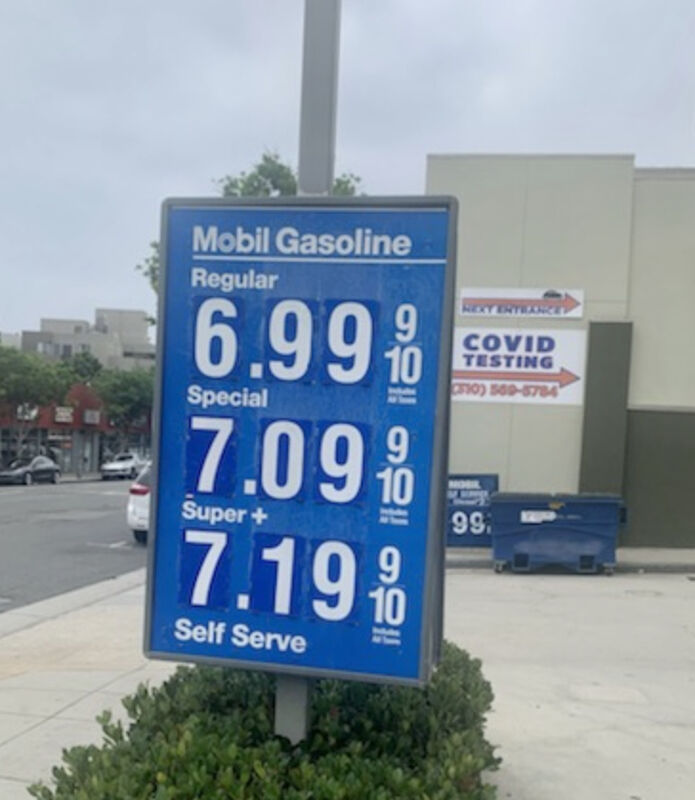
These developments represent a severe supply shock with nonlinear effects," noted one major investment bank in a client note. "Each additional day of disruption amplifies upward pressure on prices, refined products, and energy equities." U.S. Energy Secretary Chris Wright indicated that American naval efforts to secure tanker routes could eventually ease pressures, but markets are pricing in persistent risk, with no immediate de-escalation in sight.U.S. retail gasoline prices have responded sharply, with the national average climbing toward $3.41–$3.50 per gallon (up significantly from pre-conflict levels), according to sources like AAA and GasBuddy. Regional variations are stark, with steeper increases in the Midwest and South. Broader inflationary concerns are mounting, as sustained high energy costs could curb consumer spending, complicate Federal Reserve policy, and ripple through global economies.Energy stocks have outperformed amid the chaos, with majors like Exxon Mobil and Shell posting strong gains on improved margins. However, equity markets overall remain volatile, reflecting fears of wider economic fallout.Traders are watching for any diplomatic breakthroughs or further military developments. While a rapid cooling of tensions could trigger a sharp correction, the current trajectory—fueled by real supply constraints—points to continued upward volatility and risk premiums in the near term.For now, the oil market is firmly in crisis mode, transforming a regional war into a profound global energy shock with implications for inflation, growth, and geopolitics worldwide.Disclosure: The author of this story trades oil futures and is currently "long" the price of oil.


Reader Comments(0)